

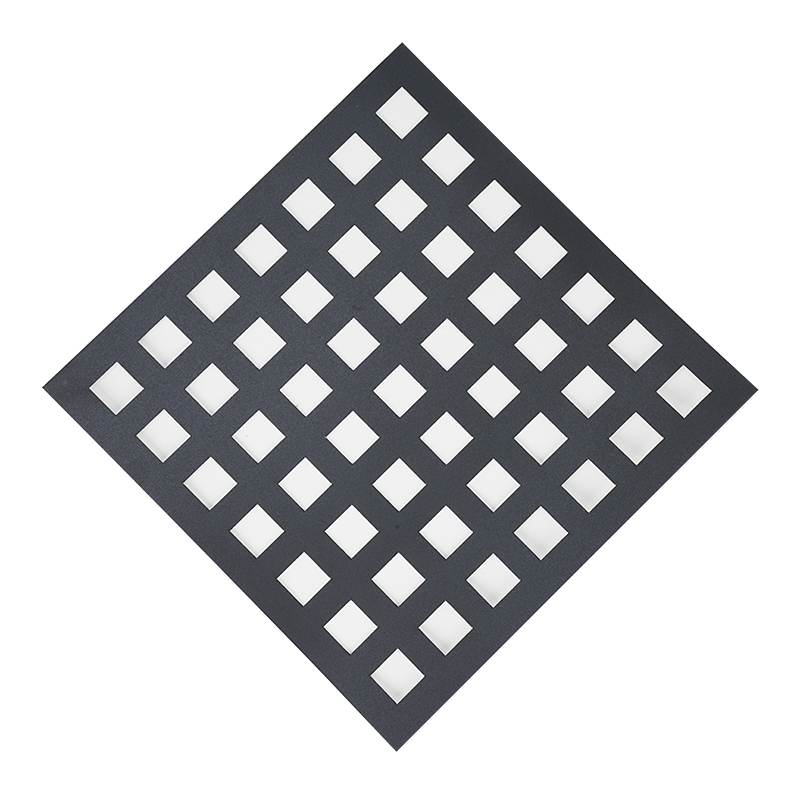
Custom flame-retardant black PC Mylar sheet is a high-performance electrical insulation material designed for applications that require reliable dielectric protection, mechanical durability, flame resistance, dimensional stability, and customized die-cut geometry. In switching power supply insulation boards, battery pack components, electronic assemblies, power modules, and other electrical equipment, polycarbonate film provides a combination of properties that can be difficult to achieve with conventional polyester insulation film.
Although the term “Mylar sheet” is commonly used throughout the electrical insulation industry, it is important to distinguish PET film from PC film. PET, often commercially referred to as Mylar, is widely used for general electrical insulation and has good dimensional stability, dielectric performance, and processability. However, PET typically has a temperature resistance range of approximately 105–120°C and can become relatively brittle under certain operating conditions. Polycarbonate film provides higher temperature capability, significantly better impact resistance, and improved crack resistance. For lithium-ion battery applications, particularly areas positioned close to heat sources, PC film is often preferred over PET when the application requires greater mechanical toughness and thermal durability.
Custom flame-retardant PC insulation sheets can be produced in black, transparent, or white grades. Black is the most commonly selected color because it provides light blocking, a clean industrial appearance, and effective visual integration with dark electronic housings and insulation structures. Transparent PC film is useful when visual inspection or component identification is required, while white PC film can provide a bright appearance and useful contrast for assembly inspection.
The surface structure can also be customized. A common configuration uses a medium-matte sand-finished surface on one side and a glossy surface on the opposite side. The sand-finished surface can be positioned outward to increase friction and reduce the possibility of displacement during assembly. The glossy side can provide a smoother interface against mating components, depending on the specific design and manufacturing process.
Adhesive backing is another important customization option. PC insulation sheets can be supplied without adhesive, with single-sided acrylic pressure-sensitive adhesive, or with double-sided adhesive and a release liner. Adhesive selection should be based on temperature, bonding surface, dielectric requirements, aging conditions, flame-retardancy requirements, and assembly method.
This material is particularly suitable for custom switching power supply insulation boards, PCB insulation barriers, transformer insulation structures, battery pack insulation parts, power electronics, control equipment, industrial electronics, and other applications where electrical insulation and mechanical protection must work together.
1. What Is a Flame-Retardant PC Mylar Sheet?
A flame-retardant PC Mylar sheet is a thin polycarbonate film engineered for electrical, electronic, mechanical, and protective applications. The term PC refers to polycarbonate, a thermoplastic engineering polymer recognized for its combination of impact strength, toughness, dimensional stability, electrical insulation characteristics, and thermal performance.
In practical industrial terminology, PC film may sometimes be called a PC Mylar sheet because it is used in applications traditionally associated with Mylar or polyester insulation film. However, PC and PET are different polymer materials and should not be treated as interchangeable.
Flame-retardant PC film is formulated to improve resistance to ignition and flame propagation. Depending on the grade, thickness, formulation, and applicable testing standard, flame-retardant PC film can be used in electronic housings, electrical insulation barriers, switching power supplies, battery assemblies, power modules, and other applications where fire behavior is an important design consideration.
The sheet can be converted into custom insulation boards through die cutting, punching, slitting, trimming, laminating, and other processing methods. This makes Custom PC Insulation film suitable for components with complex holes, slots, corners, tabs, mounting openings, and irregular outlines.
The material can also be combined with pressure-sensitive adhesive. This allows the finished component to function not only as an electrical insulation barrier but also as a positioning, protective, or bonding component during assembly.
2. PET Mylar Sheet and PC Mylar Sheet Are Not the Same
One of the most important considerations when selecting an electrical insulation film is understanding the difference between PET and PC.
PET is polyethylene terephthalate. It is widely used in electrical insulation because of its good dielectric properties, dimensional stability, chemical resistance, and economical processing characteristics. PET film is commonly associated with the commercial term Mylar.
PC is polycarbonate. Compared with conventional PET film, PC provides a different balance of properties, particularly in applications requiring higher toughness, stronger impact resistance, improved crack resistance, and greater thermal capability.
PET film typically has a temperature resistance of approximately 105–120°C depending on the specific grade, thickness, environment, and continuous or short-term exposure conditions. Under mechanical stress or repeated bending, PET can be comparatively brittle.
PC film provides higher temperature resistance and substantially greater impact toughness. It is therefore attractive for electrical assemblies exposed to vibration, mechanical impact, localized heat, repeated assembly, or structural stress.
For lithium-ion battery packs, material selection becomes especially important because internal components may experience heat generated by electrical current, cell operation, busbars, connectors, power electronics, or charging and discharging processes. Where an insulation component is positioned close to a heat source, PC may be preferred over PET because of its stronger thermal and mechanical characteristics.
This does not mean PC should automatically replace PET in every application. PET remains useful for many electrical insulation applications where its performance is sufficient and where cost, thickness, dielectric characteristics, and processing requirements make it appropriate. The correct selection depends on the actual operating temperature, mechanical loading, voltage, environmental exposure, and safety requirements of the finished product.
3. Why PC Is Often Preferred Near Heat Sources
Heat is a major consideration in switching power supplies, battery systems, power converters, inverters, motor controllers, chargers, and other electronic equipment.
A film used near a heat source must maintain sufficient mechanical integrity and insulation performance throughout its expected service life. The material should not easily crack, deform, or lose its functional position during normal operation.
PC offers several advantages in this environment.
First, PC provides higher temperature capability than many conventional PET insulation films. This makes it useful where localized heat is expected.
Second, PC has superior impact resistance. This is important during manufacturing, transportation, assembly, maintenance, and operation.
Third, PC offers excellent toughness and crack resistance. A brittle insulation film may develop cracks if it is sharply bent, punched, impacted, or subjected to mechanical stress. A tougher polycarbonate substrate can provide greater resistance to such damage.
Fourth, PC can be processed into complex custom shapes while maintaining useful mechanical performance.
For battery packs and power electronics, these characteristics can make PC particularly attractive for insulation barriers positioned around electrical conductors, cell groups, terminals, busbars, connectors, and heat-generating components.
4. Substrate: Flame-Retardant Polycarbonate Film
The primary substrate of this product is flame-retardant polycarbonate film.
The substrate provides the structural foundation of the insulation sheet. Its thickness, mechanical properties, surface treatment, flame-retardant formulation, color, and electrical characteristics can all affect the final performance of the finished component.
Flame-retardant PC film can be selected for applications where electrical insulation must be combined with improved resistance to flame propagation.
The most common color is black.
Black PC film is popular for several practical reasons. It blocks light effectively, creates a consistent industrial appearance, hides minor visual contamination, and integrates naturally with black electronic housings, battery components, wiring structures, and power supply assemblies.
Transparent PC film provides an alternative where visibility is important. A transparent insulation component can allow visual inspection of the underlying structure while maintaining a physical insulation barrier.
White PC film can be used where a light-colored surface is desirable for appearance, inspection, contrast, or specific assembly requirements.
Color selection should not be based only on appearance. Different formulations may have different technical properties, so the selected grade should always be evaluated against the actual application requirements.
5. Black PC Mylar Sheet
Black is the most common configuration for custom PC insulation sheets.
A black flame-retardant PC sheet can provide effective light blocking in electronic assemblies. This can be useful where optical exposure is undesirable or where the insulation component must visually integrate with a black housing.
Black also provides a clean appearance in industrial equipment. It can reduce the visual impact of minor marks, dust, or handling contamination compared with transparent or white materials.
In switching power supplies, black PC insulation film can be used around circuit boards, transformer areas, power terminals, conductive structures, and internal barriers.
In battery assemblies, black PC film can be used for insulation barriers, component separation, protective covers, terminal-area insulation, and other custom die-cut components.
The black color does not by itself determine flame-retardant performance. Flame resistance is primarily related to the polymer formulation, additives, thickness, and applicable testing requirements. Therefore, users should select a qualified flame-retardant PC grade rather than assuming that all black PC films provide identical fire performance.
6. Transparent PC Mylar Sheet
Transparent PC film provides the same basic polycarbonate platform while allowing the underlying component to remain visible.
This can be advantageous for inspection and maintenance. Engineers and assemblers can visually check component positions without completely removing the insulation layer.
Transparent PC insulation film may be used in electronic assemblies, display-related structures, electrical protection components, and battery applications where visibility is beneficial.
The transparency of the film can also make assembly verification easier. Operators can inspect alignment, holes, terminals, labels, and component positions through the material.
However, transparent PC should be selected when its optical characteristics are appropriate for the application. If light blocking is necessary, black PC remains a more suitable option.
7. White PC Mylar Sheet
White PC film provides another color option for custom insulation components.
White surfaces can create strong contrast against dark electronic components and may simplify visual inspection. They can also provide a clean appearance in equipment where black insulation is not preferred.
White PC film can be die cut into the same types of custom shapes as black or transparent grades.
The choice between black, transparent, and white PC should therefore be determined by the combination of functional, optical, mechanical, and aesthetic requirements.
8. Surface Finish: Medium Matte Sand Finish
Surface finish is an important design feature for custom insulation sheets.
A common PC film configuration uses one side with a medium-matte sand finish and the other side with a glossy finish.
The sand-finished side has a textured appearance and provides greater surface friction than a smooth glossy surface. When the sand-finished side faces outward, the increased friction can help reduce displacement of the insulation sheet during assembly and service.
This characteristic can be particularly useful for internal insulation boards that must remain in a predetermined position.
The matte surface can also reduce unwanted reflections and provide a less reflective appearance than a glossy surface.
The texture should be selected carefully because surface roughness may affect contact with adjacent materials, adhesive bonding, printing, heat transfer, and visual appearance.
9. Glossy Surface
The opposite side can be glossy.
A glossy PC surface provides a smoother interface and can be useful when the insulation sheet contacts a smooth plastic or metal component.
Depending on the application, the glossy side may also be suitable for printing, marking, identification, or specific lamination processes.
The combination of matte and glossy surfaces creates a functional two-sided material in which each surface can serve a different purpose.
For example, the sand-finished surface can face outward to increase friction, while the glossy surface can face a smooth internal component.
This configuration should be confirmed during product development because the ideal orientation depends on the geometry and assembly method.
10. Adhesive Backing Options
Custom PC insulation sheets can be supplied with different adhesive configurations.
The main options include:
Non-adhesive PC insulation sheet
Single-sided adhesive PC insulation sheet
Double-sided adhesive PC insulation sheet
Single-sided acrylic PSA
Double-sided adhesive with release liner
Non-adhesive film is suitable when the insulation component is mechanically retained by clips, housing structures, screws, pressure, or other assembly methods.
Single-sided adhesive film can simplify installation by combining insulation and positioning functions into one component.
Double-sided adhesive film can provide bonding on both surfaces and may be useful when the insulation component must be integrated between two materials.
A release liner protects the adhesive before assembly. It can be removed immediately before installation.
Adhesive selection is particularly important for switching power supplies and battery systems because the adhesive may be exposed to elevated temperatures, electrical fields, vibration, chemicals, or long-term aging.
11. Acrylic Pressure-Sensitive Adhesive
Acrylic PSA is a common adhesive option for insulation films.
Pressure-sensitive adhesive allows the finished component to be installed without liquid adhesive, curing equipment, or additional mechanical fastening in many applications.
The adhesive can provide immediate tack and simplify production assembly.
However, not every acrylic adhesive has identical temperature resistance, dielectric properties, flame-retardant performance, aging resistance, or chemical resistance.
For high-temperature electrical applications, the adhesive should therefore be selected according to the actual service conditions.
The adhesive layer is part of the complete insulation system. A high-performance PC substrate does not automatically guarantee the performance of the adhesive-backed component if the adhesive is not suitable for the operating environment.
12. Double-Sided Adhesive with Release Liner
Double-sided adhesive PC insulation sheets can provide a convenient method for bonding the insulation component between two surfaces.
A release liner is normally applied to protect the adhesive before use.
During assembly, the liner can be removed and the adhesive surface pressed against the target component. The second adhesive surface can then be applied to the mating structure.
This construction is useful for applications where the insulation sheet needs to perform both an insulating and bonding function.
However, adhesive thickness, bonding pressure, surface energy, temperature, contamination, and long-term aging should be considered during design.
13. Custom Die-Cut PC Insulation Boards
One of the major advantages of PC film is its suitability for custom conversion.
A flat PC sheet can be transformed into a precise insulation component using die cutting or other precision processing techniques.
Typical custom features include:
Mounting holes
Terminal openings
Wire clearance slots
Corner cutouts
Positioning tabs
Notches
Long slots
Circular holes
Rectangular openings
Irregular outlines
Fold lines
Adhesive zones
Custom die cutting reduces the need for operators to manually trim insulation material during final assembly.
It can also improve consistency across large production volumes.
The exact dimensional tolerance depends on film thickness, die design, equipment, geometry, and processing conditions.
14. Switching Power Supply Insulation Applications
Switching power supplies contain multiple electrical components operating at different voltage potentials.
Insulation barriers may be required between conductive parts, circuit boards, housings, transformers, terminals, heat sinks, wires, and other components.
Custom flame-retardant PC insulation sheets can be used as physical barriers within these assemblies.
Potential applications include:
PCB insulation
Transformer-area barriers
Terminal insulation
Component separation
Heat sink isolation
Housing insulation
Wire routing protection
Connector-area insulation
Internal electrical barriers
Protective covers
The actual insulation design must consider working voltage, creepage distance, clearance distance, material thickness, pollution level, environmental conditions, and applicable safety standards.
15. PC Insulation for Battery Packs
Battery packs contain many conductive components in a compact space.
Cell groups, busbars, nickel-plated strips, terminals, connectors, circuit boards, sensors, and housings may be located close together.
Insulation Materials help prevent unintended electrical contact between conductive components.
Custom PC insulation sheets can be designed to fit specific battery pack geometries.
Possible uses include cell-area barriers, busbar protection, terminal insulation, PCB separation, enclosure insulation, connector-area protection, and component positioning.
The material can be die cut according to the battery pack layout, allowing holes and openings to align with terminals and fasteners.
16. PC Versus PET for Lithium-Ion Battery Applications
Lithium-ion battery systems can generate heat during charging, discharging, high-current operation, and abnormal operating conditions.
Because of this, insulation materials located near heat sources should be selected carefully.
PET film is widely used in battery insulation because of its dielectric properties, dimensional stability, availability, and processability. However, conventional PET film may have a temperature resistance of approximately 105–120°C and can be relatively brittle compared with polycarbonate.
PC provides higher temperature capability, better impact resistance, and improved crack resistance.
Therefore, PC is often recommended over PET when an insulation component is positioned close to a heat-generating area and the application requires greater mechanical toughness and thermal durability.
The final material decision should always be based on actual operating temperature, thermal exposure time, electrical requirements, mechanical stress, chemical environment, and applicable safety standards.
17. Flame Retardancy
Flame retardancy is an important characteristic for electrical and electronic insulation materials.
A flame-retardant PC formulation is designed to reduce the tendency of the material to ignite or support flame propagation.
This is particularly relevant in:
Switching power supplies
Battery packs
Chargers
Inverters
Industrial control systems
Power modules
Electronic housings
Automotive electrical systems
Communication equipment
Consumer electronics
Flame-retardant performance should not be assumed solely from the material name.
The exact performance depends on the specific PC grade, formulation, thickness, testing method, and certification requirements.
For engineering applications, customers should request technical documentation for the selected grade and confirm the applicable flame-retardant classification required by the finished equipment.
18. Electrical Insulation Performance
PC is an electrically insulating material and can be used as a barrier between conductive components.
Electrical insulation performance is influenced by several factors:
Film thickness
Material formulation
Voltage
Frequency
Temperature
Humidity
Surface contamination
Mechanical damage
Aging
Environmental exposure
A thicker film does not automatically guarantee suitability for every voltage application. The complete insulation design must be evaluated.
For high-voltage equipment, engineers should consider dielectric strength, creepage distance, clearance, partial discharge considerations where applicable, and the relevant product safety standards.
Custom PC insulation sheets can be designed to fit around high-voltage terminals and conductive components while maintaining the required physical separation.
19. Mechanical Strength and Crack Resistance
Mechanical durability is one of the major advantages of polycarbonate.
An insulation sheet may experience bending, vibration, impact, compression, installation pressure, or repeated handling.
A brittle film can crack under unfavorable conditions. Cracks may reduce the effective insulation barrier and potentially create reliability concerns.
PC's toughness and crack resistance can therefore be valuable in demanding electrical assemblies.
This is especially important when the insulation component includes multiple holes, narrow sections, corners, or irregular shapes.
Custom geometry should be designed to avoid unnecessarily sharp internal corners and extremely narrow sections when mechanical durability is important.
20. Impact Resistance
Impact resistance is another important characteristic of PC film.
During manufacturing and assembly, insulation components may be handled repeatedly or installed into tight spaces.
A tough material can provide additional resistance to damage caused by handling or accidental impact.
This can improve assembly reliability and reduce the likelihood of damaged insulation components entering the finished product.
In battery pack manufacturing, where numerous insulation components may be installed rapidly, mechanical robustness can be especially useful.
21. Chemical Resistance
Electrical insulation components can encounter oils, cleaning agents, electrolytes, flux residues, plasticizers, or other chemicals depending on the application.
PC provides useful resistance to many environmental substances, but chemical compatibility is application-specific.
A chemical that is harmless to one PC grade may affect another formulation, particularly under elevated temperature or prolonged exposure.
Therefore, chemical compatibility testing should be performed when the insulation sheet is exposed to aggressive chemicals or unusual operating environments.
The adhesive backing should also be evaluated independently because the adhesive may have different chemical resistance from the PC substrate.
22. Dimensional Stability
Dimensional stability is essential for custom die-cut components.
If an insulation sheet changes dimensions significantly during temperature cycling or aging, holes and cutouts may no longer align correctly with the intended components.
PC provides useful dimensional stability for many electronic applications.
Nevertheless, the actual dimensional change depends on film formulation, thickness, temperature, humidity, stress, and processing conditions.
For precision insulation boards, the complete component should be tested under the expected environmental conditions.
23. Custom Thickness Selection
PC insulation film is available in different thicknesses.
The correct thickness depends on:
Required dielectric performance
Mechanical strength
Available installation space
Required flexibility
Die-cut geometry
Temperature
Flame-retardant requirements
Adhesive construction
Creepage and clearance design
Assembly method
Thin film can be useful where space is extremely limited.
Thicker film may provide greater mechanical stiffness and a more substantial physical barrier.
The optimum thickness should therefore be selected according to engineering requirements rather than choosing the thickest available material.
24. Custom Size and Shape
Custom PC Mylar sheets can be produced in a wide range of dimensions.
Manufacturers can convert rolls or sheets into individual components according to customer drawings.
Typical information required for customization includes:
Overall length
Overall width
Film thickness
Hole diameter
Hole location
Slot length
Slot width
Corner radius
Cutout dimensions
Adhesive area
Release liner configuration
Surface finish
Material color
Digital drawings are generally useful for accurate production.
Complex components may require multiple tooling considerations depending on their geometry and production volume.
25. Surface Orientation
For a two-sided surface construction with one sand-finished side and one glossy side, the installation direction should be considered during product development.
If the sand-finished side is intended to face outward, its increased friction can help reduce movement.
The glossy side can face the mating component when a smoother interface is desirable.
The correct orientation depends on the assembly structure.
For adhesive-backed parts, the adhesive side is normally determined by the intended bonding location.
Clear identification of surface orientation can reduce assembly errors in mass production.
26. Adhesive Selection for High-Temperature Applications
Adhesive selection is as important as film selection.
A PC substrate may tolerate a demanding temperature environment while an unsuitable adhesive may soften, lose adhesion, or degrade.
For switching power supplies and battery assemblies, adhesive selection should consider:
Continuous operating temperature
Peak temperature
Thermal cycling
Humidity
Chemical exposure
Surface energy
Bond strength
Aging
Flame behavior
Electrical insulation requirements
Required repositionability
Die-cutting performance
Common adhesive configurations include acrylic pressure-sensitive adhesive and specialized flame-retardant adhesive systems.
The exact adhesive should be selected according to the technical requirements of the application rather than solely by brand or nominal adhesive type.
27. Common Adhesive Configurations
A custom PC insulation component can be produced in several constructions.
The PC sheet is supplied without adhesive.
This is suitable for mechanical retention and applications where adhesive is undesirable.
One surface carries acrylic pressure-sensitive adhesive.
This configuration is useful when the insulation sheet needs to remain attached to one component.
Both sides contain adhesive.
This is useful when the insulation sheet must be bonded between two components.
The adhesive is covered by a removable release liner.
The liner protects the adhesive during transportation and handling.
28. Release Liner Considerations
The release liner protects adhesive surfaces before assembly.
It should be easy enough to remove during production while remaining secure during storage and transportation.
Release liner design can also influence die-cutting and automated assembly.
For high-volume production, the liner may be supplied with a tab or extended edge to make peeling easier.
The liner can be configured for single-sided or double-sided adhesive structures.
29. Die-Cutting and Manufacturing Process
Custom PC insulation sheets can generally be converted through several manufacturing steps.
The process may include material preparation, surface inspection, adhesive lamination, die cutting, waste removal, inspection, counting, and packaging.
For adhesive-backed products, adhesive lamination is performed before or during conversion depending on the production process.
Precision die cutting creates the required outline and internal openings.
After cutting, excess matrix material can be removed.
Finished parts are then inspected for dimensional accuracy, surface defects, adhesive contamination, incomplete cutting, burrs, and other potential quality issues.
30. Quality Control
Quality control is essential for electrical insulation components.
Typical inspection items may include:
Material thickness
Overall dimensions
Hole dimensions
Cutout position
Surface finish
Color consistency
Adhesive coverage
Release liner condition
Die-cut completeness
Edge quality
Surface contamination
Visual defects
Electrical and flame-retardant properties may also require material-level testing or certification documentation.
For safety-critical applications, additional testing may be required according to the applicable industry standards.
31. Switching Power Supply Design Considerations
When using custom PC insulation boards in switching power supplies, engineers should evaluate the complete electrical system.
Important design factors include voltage, current, temperature, component spacing, enclosure dimensions, airflow, heat sources, insulation barriers, and mechanical retention.
The insulation sheet should not interfere with cooling paths or component movement.
Where a PC insulation sheet is located close to a heat-generating component, thermal testing is recommended.
If adhesive is used, the adhesive layer should also be included in the thermal evaluation.
32. Battery Pack Design Considerations
Battery pack insulation requires careful attention to electrical isolation and mechanical protection.
A custom PC insulation sheet can help separate conductive components and reduce the possibility of accidental contact.
Designers should ensure that the insulation component remains correctly positioned during vibration, thermal cycling, assembly, and service.
The sheet should not create unwanted pressure on cells or interfere with expansion, ventilation, connectors, sensors, or thermal management systems.
For high-energy battery systems, the material and construction should be validated according to the relevant battery safety requirements.
33. PC Insulation for Busbars and Terminals
Busbars and terminals are conductive components that may carry substantial current.
Custom insulation film can be designed around these components to create controlled separation between conductive structures.
Die-cut holes and slots can accommodate fasteners and terminals.
The geometry should maintain the required electrical clearance while allowing assembly.
Because busbars may become hot during high-current operation, PC can be advantageous where improved thermal and mechanical performance is needed.
34. PC Insulation for PCB Assemblies
Printed circuit boards contain many conductive traces and components.
A custom PC barrier can be used to separate the PCB from metal housings or other conductive structures.
It can also provide mechanical protection in areas where components are close to enclosure walls.
The thickness and surface construction should be selected according to the application.
Adhesive-backed insulation can simplify positioning during assembly.
35. Insulation Between PCB and Metal Housing
Metal housings can create unwanted electrical contact with circuit boards.
A custom PC insulation sheet can serve as a barrier between the PCB and metal enclosure.
The sheet can be die cut to match the PCB outline while leaving access holes for screws, connectors, and mounting points.
This construction can also provide a degree of mechanical separation and surface protection.
36. Advantages of Custom Flame-Retardant Black PC Mylar Sheets
Custom flame-retardant PC insulation sheets provide several useful advantages.
PC can provide higher temperature resistance than conventional PET film, making it suitable for applications with greater thermal exposure.
Polycarbonate is known for high toughness and impact resistance.
PC can withstand mechanical stress better than relatively brittle insulation films.
Flame-retardant PC grades are available for electrical and electronic applications requiring improved fire performance.
Complex shapes can be produced according to engineering drawings.
Black, transparent, and white configurations provide flexibility for different applications.
Matte and glossy surfaces can be combined to meet different assembly requirements.
Non-adhesive, single-sided adhesive, and double-sided adhesive constructions are available.
Thin PC film can provide insulation without adding significant weight or bulk.
The material can be customized for different equipment structures and component geometries.
37. Why Black Is the Most Common Color
Black PC film is widely used because it combines functionality and appearance.
Its light-blocking property is useful in electronic equipment.
Its dark appearance integrates well with many industrial housings.
It can also provide a consistent appearance across internal and external insulation components.
Black film is particularly common in battery packs, power supplies, electronic control modules, and industrial equipment.
Transparent and white options remain useful when inspection, contrast, or specific visual requirements are important.
38. Custom PC Mylar Sheet for Industrial Electronics
Industrial electronic equipment often requires reliable insulation components that can withstand long-term operation.
Custom PC film can be used in:
Power controllers
Industrial power supplies
Motor drives
Inverters
Chargers
Control cabinets
Electronic modules
Communication equipment
Instrumentation
Automation equipment
The exact application depends on the electrical and mechanical design.
39. Applications in Power Electronics
Power electronics equipment frequently generates heat and operates at elevated electrical loads.
PC insulation components can provide physical separation around:
Power transistors
Heat sinks
Busbars
Transformers
Capacitors
Connectors
Terminals
PCBs
Power modules
A flame-retardant PC sheet can provide an additional physical insulation barrier within the assembly.
40. Applications in Chargers and Adapters
Chargers and power adapters are compact electrical devices in which conductive components may be located close to plastic housings and circuit boards.
Custom PC insulation components can help provide separation between conductive and non-conductive structures.
The material should be selected according to the charger voltage, operating temperature, enclosure structure, and applicable safety requirements.
41. Applications in Inverters and Converters
Inverters and DC-DC converters may operate at high electrical power levels.
The internal environment can include significant heat, vibration, and electromagnetic activity.
Custom PC insulation barriers can be integrated around circuit boards, power modules, terminals, and conductive components.
The die-cut structure can be optimized for the specific enclosure.
42. Applications in Battery Management Systems
Battery management systems contain circuit boards, connectors, sensors, and communication interfaces.
Custom PC insulation film can be used around BMS components to create electrical barriers and protect sensitive structures from unwanted contact.
Because BMS components may be located close to battery cells and busbars, mechanical and thermal considerations should be included in material selection.
43. Applications in Energy Storage Systems
Large energy storage systems contain multiple battery modules and electrical connections.
Custom insulation sheets can be used in module assemblies, terminal structures, control systems, busbar areas, and enclosure interfaces.
The design should account for temperature gradients, vibration, installation forces, and electrical isolation requirements.
44. Environmental Considerations
The service environment can strongly influence insulation material performance.
Important factors include:
Temperature
Humidity
Dust
Oil
Chemicals
Vibration
Mechanical impact
UV exposure
Electrical stress
Thermal cycling
For indoor switching power supply applications, temperature and electrical stress may be the dominant factors.
For outdoor or industrial applications, humidity, chemicals, and contamination may become more important.
45. Thermal Cycling
Electronic devices can experience repeated heating and cooling.
Repeated thermal cycling may cause different materials to expand and contract at different rates.
This can place stress on adhesive layers, fasteners, insulation films, and mating components.
PC provides useful toughness for such environments, but the complete construction should still be tested.
Adhesive selection is particularly important because adhesive performance can change during repeated temperature cycling.
46. Moisture and Humidity
Humidity can influence electrical insulation performance and adhesive behavior.
In applications where moisture exposure is expected, the material system should be evaluated under appropriate humidity conditions.
The finished insulation component should be tested rather than relying solely on general material descriptions.
47. Chemical Exposure
Battery packs and industrial electronics may encounter chemicals during manufacturing or operation.
PC substrate compatibility should be evaluated with the specific chemical.
Adhesive compatibility should also be evaluated separately.
Chemical exposure combined with heat can be more aggressive than either condition alone.
48. Mechanical Retention
An insulation sheet should remain in the intended position throughout its service life.
Mechanical retention can be achieved through:
Adhesive
Clips
Housing pressure
Fasteners
Slots
Tabs
Compression
Component geometry
The sand-finished side can provide additional friction when it contacts another surface.
Adhesive-backed constructions can provide stronger positioning when properly applied.
49. Surface Cleanliness
Clean surfaces are essential for adhesive bonding.
Dust, oil, moisture, release agents, fingerprints, and other contamination can reduce adhesion.
For industrial production, the bonding surface should be prepared according to the adhesive supplier's technical requirements.
The PC film should also be handled carefully to avoid contamination.
50. Storage of Adhesive-Backed PC Insulation Sheets
Finished adhesive-backed parts should be stored under conditions appropriate for the selected adhesive.
Important factors include temperature, humidity, direct sunlight, dust, pressure, and storage duration.
The release liner should remain intact until the component is ready for installation.
Improper storage can affect adhesive performance and dimensional quality.
51. Packaging Considerations
Custom die-cut insulation components should be packaged to prevent:
Bending
Contamination
Scratching
Adhesive exposure
Moisture damage
Deformation
Mixing of different part numbers
Small precision components may be supplied in stacks, rolls, bags, trays, or other protective packaging depending on geometry and production requirements.
52. Design Guidelines for Custom PC Insulation Parts
When developing a custom PC insulation sheet, engineers should provide a clear technical drawing.
The drawing should ideally identify:
Material
Thickness
Color
Surface finish
Adhesive type
Adhesive side
Overall dimensions
Hole dimensions
Hole positions
Corner radius
Cutout geometry
Tolerance
Quantity
Packaging requirements
Clear drawings reduce production ambiguity.
53. Avoiding Sharp Internal Corners
Sharp internal corners can create stress concentration during die cutting and handling.
Where possible, rounded corners can improve mechanical durability.
This is especially useful for thin insulation components with narrow tabs and openings.
The appropriate corner radius depends on material thickness and part geometry.
54. Designing Narrow Sections
Very narrow sections can become weak points in die-cut insulation components.
If a narrow section is necessary, its width should be evaluated against the film thickness and expected mechanical loading.
For components installed near heat sources, mechanical durability should be considered together with thermal performance.
55. Choosing Between PC and PET
The decision between PC and PET should be based on application requirements.
PET can be appropriate when the temperature range is moderate, mechanical loading is limited, and cost-effective electrical insulation is desired.
PC becomes particularly attractive when higher thermal resistance, greater toughness, better impact resistance, and improved crack resistance are required.
For lithium-ion battery insulation close to heat sources, PC is often the more robust choice.
56. Common Product Configurations
A custom flame-retardant PC insulation sheet can be configured as:
Black PC Film
Designed for light blocking, industrial appearance, and general electrical insulation.
Transparent PC Film
Designed for applications requiring visual inspection.
White PC Film
Designed for contrast and light-colored assembly structures.
Matte and Glossy PC Film
One side sand finished and the opposite side glossy.
Non-Adhesive PC Film
Used with mechanical retention.
Single-Sided Adhesive PC Film
Used for positioning and bonding.
Double-Sided Adhesive PC Film
Used where bonding is required on both sides.
57. Typical Industries
Custom flame-retardant PC insulation sheets can be used across many industries.
These include:
Power electronics
Electrical equipment
Battery manufacturing
Energy storage
Automotive electronics
Industrial automation
Consumer electronics
Communication equipment
Power supply manufacturing
Charger manufacturing
Inverter manufacturing
Control equipment
Electronic assembly
58. Product Development Workflow
A typical custom development process begins with application analysis.
The customer identifies the equipment, operating environment, dimensions, voltage, temperature, mechanical conditions, and assembly method.
The material construction is then selected.
The PC grade, color, thickness, surface finish, and adhesive construction can be defined.
A drawing is prepared.
A prototype or sample is produced.
The sample is installed and tested.
After design verification, mass production can proceed.
This development approach helps identify potential issues before high-volume production.
59. Prototype Testing
Prototype testing is recommended for custom insulation components.
Testing may include:
Dimensional inspection
Installation testing
Adhesion testing
Thermal exposure
Electrical insulation testing
Vibration testing
Mechanical handling
Chemical compatibility
Flame performance verification where required
The exact test program depends on the application.
60. Electrical Safety Considerations
Insulation film is only one part of an electrical safety system.
Engineers should evaluate the entire assembly.
Important factors include:
Working voltage
Transient voltage
Creepage
Clearance
Pollution degree
Insulation system
Temperature
Material thickness
Mechanical stability
Flame-retardant requirements
A custom PC sheet should be integrated into a properly engineered insulation system.
61. Why Customization Matters
Standard rectangular sheets may not fit complex electronic assemblies.
Custom die-cut PC film can be designed around the actual geometry of the equipment.
This can reduce manual trimming, improve assembly consistency, and reduce material waste.
Customized adhesive placement can also help simplify production.
For high-volume manufacturing, optimized geometry can improve production efficiency.
62. PC Mylar Sheet for Compact Electronic Devices
Modern electronic products increasingly require compact internal insulation components.
PC film can provide a thin barrier while maintaining useful mechanical toughness.
This makes it suitable for compact power electronics, battery modules, control boards, and electronic housings.
The combination of thin construction and custom die cutting enables designers to use available internal space efficiently.
63. Lightweight Insulation
Thin polymer film provides electrical insulation without the weight associated with rigid insulating plates.
This is beneficial for portable electronic products, battery systems, automotive electronics, and compact power supplies.
PC can provide a favorable combination of low weight and mechanical toughness.
64. Friction and Position Stability
The medium-matte sand finish can increase surface friction compared with a glossy surface.
This can help reduce sliding between the insulation film and mating component.
In assemblies without adhesive, this property can be useful for maintaining component position.
However, friction alone should not be considered a replacement for mechanical retention where movement could create a safety issue.
65. Visual Identification
Color and surface finish can also help manufacturing teams identify different insulation components.
Black film can be visually distinguished from transparent or white film.
Matte and glossy surfaces can help identify orientation.
These simple visual characteristics can reduce assembly mistakes in complex production environments.
66. Cost and Performance Balance
Material selection should consider both technical performance and total manufacturing cost.
PET may offer a cost-effective solution for many standard electrical insulation applications.
PC may have a higher material cost but can provide greater toughness and thermal performance.
Custom die cutting can also reduce labor costs by providing ready-to-install components.
The best solution is therefore not necessarily the lowest material price but the construction that provides the required performance at an acceptable total cost.
67. Long-Term Reliability
Electrical insulation components are expected to remain functional throughout the equipment service life.
Long-term reliability depends on material aging, thermal exposure, mechanical stress, electrical stress, chemical exposure, adhesive stability, and assembly quality.
PC's toughness and thermal characteristics can contribute to long-term reliability when properly selected.
However, application-specific validation remains essential.
68. Common Failure Modes
Potential insulation component failure modes include:
Cracking
Tearing
Displacement
Adhesive lifting
Thermal deformation
Chemical degradation
Mechanical damage
Incorrect installation
Insufficient electrical clearance
Custom design and proper material selection can reduce these risks.
69. Preventing Insulation Displacement
Displacement can be controlled through proper geometry and retention.
Useful design methods include:
Adhesive backing
Positioning holes
Tabs
Slots
Mechanical clips
Housing retention
Increased friction surface
The sand-finished side can provide additional friction when appropriate.
70. Flame-Retardant PC for Safety-Oriented Applications
Electrical equipment designers increasingly consider fire safety during material selection.
Flame-retardant PC film can contribute to a broader material safety strategy.
It can be used in assemblies where an insulation barrier needs both mechanical toughness and improved flame behavior.
The actual flame-retardant classification should always be confirmed for the selected grade and thickness.
71. Custom PC Insulation for High-Temperature Electronics
High-temperature electronic applications may include power converters, chargers, motor controllers, industrial power supplies, and battery systems.
In these applications, the insulation material may be positioned near components that generate heat.
PC is often considered when PET does not provide the desired combination of thermal and mechanical performance.
72. Custom PC Insulation for Battery Modules
Battery modules contain repeated cell structures and electrical interconnections.
Custom PC sheets can be die cut to match module geometry.
They can provide insulation between cell groups, conductive structures, and enclosure components.
The final design should account for thermal expansion, vibration, electrical clearance, and service conditions.
73. PC Film and Adhesive Lamination
Laminating adhesive onto PC film creates a convenient self-adhesive insulation component.
The adhesive layer can be selected according to temperature, bonding surface, and required durability.
For double-sided products, two adhesive layers may be applied with suitable release liners.
The lamination process should avoid wrinkles, air bubbles, contamination, and misalignment.
74. Why Medium Matte Finish Is Useful
A medium-matte finish provides a practical balance between friction and surface appearance.
It is not as reflective as a glossy surface and can provide useful surface texture.
In insulation applications, this may help the sheet remain stable against adjacent components.
The matte surface can also reduce visual glare during inspection.
75. Glossy Surface Advantages
A glossy surface provides a smooth interface.
It can be easier to clean and may reduce friction against certain mating components.
It can also provide a different visual appearance from the sand-finished surface.
The choice of which side faces the component should be determined during assembly design.
76. Material Selection Checklist
Before ordering a custom PC insulation component, engineers should define:
Material: flame-retardant PC film
Color: black, transparent, or white
Thickness: application dependent
Surface: matte, glossy, or combination
Adhesive: none, single-sided, or double-sided
Adhesive type: application dependent
Release liner: required or not required
Shape: custom die cut
Dimensions: according to drawing
Operating temperature: application dependent
Electrical voltage: application dependent
Flame requirement: application dependent
Chemical environment: application dependent
Assembly method: adhesive or mechanical retention
77. Conclusion
Custom flame-retardant black PC Mylar sheet is a versatile insulation material for switching power supplies, lithium-ion battery packs, power electronics, industrial equipment, and electronic assemblies.
The most important distinction is that PET Mylar film and PC film are different materials. PET typically provides temperature resistance of approximately 105–120°C and is widely used for conventional electrical insulation, but it can be relatively brittle. PC provides higher temperature resistance, superior impact resistance, and improved crack resistance. For lithium-ion battery applications, especially insulation components located near heat sources, PC is often recommended over PET when greater thermal and mechanical durability is required.
The standard substrate is flame-retardant polycarbonate film. Black is the most common color because of its light-blocking properties and clean industrial appearance, while transparent and white grades are also available for specialized applications.
A practical surface construction can combine a medium-matte sand-finished side with a glossy side. The sand-finished side can face outward to increase friction and help prevent displacement, while the glossy side can provide a smoother mating surface.
Adhesive construction can be customized according to the assembly requirements. Options include non-adhesive film, single-sided acrylic pressure-sensitive adhesive, and double-sided adhesive with release liner. Adhesive selection should take into account temperature, bonding surface, flame performance, chemical exposure, aging, and electrical requirements.
Custom die cutting allows the PC film to be converted into precision insulation boards with holes, slots, tabs, notches, and irregular outlines. This makes the material suitable for modern compact electronic assemblies where standard rectangular sheets are insufficient.
For switching power supplies, PC insulation can be used around circuit boards, transformers, terminals, heat sinks, connectors, and conductive components. For lithium-ion battery packs, it can be used for cell-area insulation, busbar protection, terminal isolation, PCB separation, BMS structures, and enclosure interfaces.
The final material and construction should always be validated against the actual operating temperature, voltage, mechanical loading, environmental exposure, flame-retardant requirements, and applicable safety standards.
With its combination of thermal capability, toughness, impact resistance, crack resistance, electrical insulation, flame-retardant options, surface customization, adhesive configurations, and precision die-cut processing, flame-retardant PC film provides a practical platform for customized electrical insulation solutions.
This website uses cookies to ensure you get the best experience on our website.



 Phone
Phone