

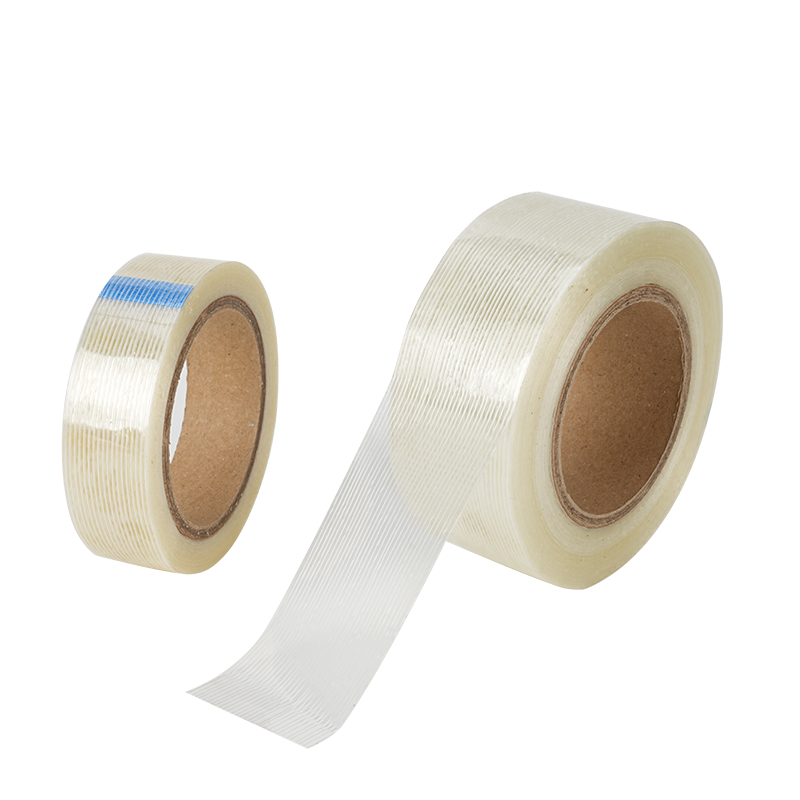
Striped Fiberglass Adhesive Tape for Coil Insulation is a reinforced Electrical Insulation Tape designed for coil wrapping, coil banding, lead retention, interlayer insulation, crossover insulation, and mechanical protection in electrical and electromechanical systems. Its construction typically combines a fiberglass cloth backing with a pressure sensitive adhesive selected for electrical insulation, mechanical strength, thermal stability, and reliable bonding.
Fiberglass adhesive tape is particularly valuable in coil insulation because coil assemblies can experience a combination of electrical stress, mechanical movement, vibration, heat, winding tension, resin exposure, and repeated thermal cycling. A suitable glass cloth tape can provide a durable insulating layer while also helping maintain the physical position of winding materials and lead wires.
Industry technical information confirms that glass cloth pressure sensitive Adhesive Tapes are used for coil wrapping, interlayer insulation, crossover insulation, motor and transformer banding, and electrical wire applications. Different adhesive systems, including silicone, acrylic, rubber, and thermosetting rubber, are available for different thermal and bonding requirements.
Striped construction adds a visual identification function to the basic fiberglass adhesive tape structure. Depending on the manufacturing design, stripes can help distinguish Insulation Materials, identify winding sections, support production management, or provide a recognizable appearance. The stripe pattern itself should not automatically be interpreted as an electrical rating unless the manufacturer specifically defines it as such.
This article provides a comprehensive industry-oriented guide to Striped Fiberglass Adhesive Tape for Coil Insulation, including material construction, coil applications, insulation functions, thermal considerations, mechanical properties, adhesive selection, winding methods, compatibility, quality control, storage, customization, common problems, and technical selection principles.
1. What Is Striped Fiberglass Adhesive Tape for Coil Insulation?
Striped Fiberglass Adhesive Tape for Coil Insulation is a single-sided reinforced adhesive tape manufactured primarily for insulating and securing coil structures.
The basic construction normally consists of:
Fiberglass cloth backing
Fiberglass reinforcement
Adhesive coating
Striped visual pattern
Roll core
Optional release or processing materials
The fiberglass layer provides mechanical reinforcement and dimensional stability. The adhesive layer allows the tape to bond to insulation materials, coil surfaces, wires, and other compatible substrates.
Unlike ordinary packaging tape or general-purpose cloth tape, electrical fiberglass tape is engineered for applications in which mechanical strength and electrical insulation may be required at the same time.
Commercial glass cloth electrical tapes demonstrate this construction clearly. For example, published products use electrical-grade fiberglass cloth with silicone, acrylic, or rubber adhesive systems and list coil insulation, transformer insulation, interlayer insulation, and coil wrapping among their intended applications.
2. Why Fiberglass Is Used for Coil Insulation
Coils are exposed to mechanical and thermal conditions that can place demands on an insulation tape.
During manufacturing and operation, a coil can experience:
Winding tension
Mechanical vibration
Thermal expansion
Thermal contraction
Electromagnetic forces
Abrasion
Resin impregnation
Electrical stress
Handling during assembly
Fiberglass provides a combination of high tensile strength, dimensional stability, abrasion resistance, tear resistance, and temperature resistance.
This is one reason glass cloth tapes are used in motor, transformer, coil, wire, and cable insulation. Industry sources describe glass cloth tapes as offering high tear strength, abrasion resistance, thermal resistance, and mechanical strength for coil and electrical applications.
The fiberglass backing also helps the tape maintain its shape during wrapping. This is important when a tape must be applied under controlled tension around a coil.
3. The Role of Adhesive in Coil Insulation
The adhesive is not simply a bonding layer. In coil insulation, adhesive performance affects the stability of the entire insulation structure.
A suitable adhesive can help:
Keep tape layers in position
Prevent edge lifting
Secure crossover areas
Hold lead wires
Maintain insulation overlap
Stabilize outer wrapping
Reduce movement during vibration
Support manufacturing operations
The adhesive must remain compatible with the expected temperature and electrical environment.
Silicone adhesive systems are often selected for high-temperature glass cloth insulation. Acrylic and rubber systems can be useful where different combinations of adhesion, thermal performance, chemical resistance, and processing behavior are required. Published glass cloth products demonstrate all of these adhesive approaches.
4. The Meaning of the Striped Design
The striped surface is an important visual characteristic of this product category.
A stripe pattern can be used for:
Different tape patterns can identify different production processes.
Workers can distinguish a particular insulation tape from other materials.
Different coil sections may be visually differentiated during manufacturing.
Technicians can quickly recognize taped areas during inspection.
Striped tape can provide a distinctive industrial appearance.
However, stripe color should not be assumed to indicate voltage class, thermal class, insulation class, or safety certification unless that information is specifically provided in the technical documentation.
5. Coil Insulation Fundamentals
A coil consists of electrically conductive wire or conductor material wound into a controlled geometric structure.
The insulation system separates:
Conductor from conductor
Conductor from core
Winding layer from winding layer
Coil from surrounding components
Lead wire from conductive structures
The complete insulation system may include several materials rather than a single tape.
Possible materials include:
Enamel insulation
Electrical paper
Polyester film
Polyimide film
Aramid paper
Fiberglass tape
Insulating sleeves
Resin systems
Varnishes
Mica-based materials
Composite insulation
Fiberglass adhesive tape can serve as one component within this larger insulation system.
6. Coil Wrapping
Coil wrapping is one of the most common applications of glass cloth adhesive tape.
The tape may be wrapped around:
The exterior of a finished coil
Selected winding sections
Lead transition areas
Crossover points
Insulation joints
Coil ends
The purpose may include:
Electrical insulation
Mechanical reinforcement
Protection from abrasion
Holding insulation layers
Securing wire sections
Improving assembly stability
Industry glass cloth tape products specifically identify coil wrapping and banding as major applications.
7. Coil Banding
Coil banding refers to applying tape around a coil or winding structure to provide mechanical support.
Banding can help:
Maintain winding geometry
Reduce movement
Secure insulation
Hold conductors in position
Protect coil surfaces
Stabilize the finished assembly
A high-strength fiberglass backing is useful because banding can place significant tension on the tape.
The tape should be applied at a controlled tension. Excessive tension can deform insulation layers or damage delicate components.
8. Interlayer Insulation
Interlayer insulation separates adjacent winding layers.
This can be important where electrical potential differences exist between winding sections.
Fiberglass adhesive tape may be used to:
Secure interlayer insulation
Reinforce insulation edges
Hold insulation material in place
Cover selected transition areas
Prevent movement during winding
Industry glass cloth tapes are specifically designed for interlayer insulation in motors, transformers, and coils.
9. Crossover Insulation
Crossover areas are locations where conductors or winding paths change direction or cross other winding sections.
These areas can create:
Localized mechanical stress
Abrasion risk
Insulation thickness changes
Electrical field concentration
Glass cloth adhesive tape can provide an additional protective layer around selected crossover regions.
The tape should be applied smoothly without excessive wrinkles or sharp folds.
10. Lead Wire Insulation
Coil lead wires may require additional insulation where they leave the winding.
Fiberglass adhesive tape can help:
Secure lead wires
Protect insulation
Reinforce transitions
Prevent mechanical movement
Reduce abrasion
Published electrical glass cloth tapes are used for lead insulation and lead wire retention.
The tape should not replace the primary insulation of the conductor unless the complete insulation system has been specifically designed and tested for that purpose.
11. Coil End Insulation
Coil ends may be mechanically exposed and require additional protection.
Fiberglass tape can be used around selected coil-end regions to:
Secure winding layers
Protect exposed insulation
Reduce movement
Provide mechanical reinforcement
Improve surface stability
The exact application depends on coil design and insulation class.
12. Outer Coil Insulation
Outer wrapping provides an additional protective layer around the completed winding.
It can protect against:
Abrasion
Handling damage
Contamination
Mechanical movement
Contact with surrounding components
Glass cloth tape is particularly suitable where the outer insulation layer must also provide mechanical reinforcement.
Published heat-resistant glass cloth tapes are used for outer insulation and coil bundling.
13. Coil Insulation in Motors
Electric motors contain windings that can be exposed to:
Heat
Vibration
Electromagnetic forces
Mechanical stress
Thermal cycling
Glass cloth adhesive tape can be used for:
Coil wrapping
Banding
Interlayer insulation
Lead insulation
Coil-end protection
Industry products specifically list motor coil applications and motor banding among their intended uses.
For motor applications, thermal class and compatibility with varnishes and resins are particularly important.
14. Coil Insulation in Transformers
Transformers contain winding systems that can experience continuous electrical and thermal stress.
Fiberglass adhesive tape can be used for:
Coil wrapping
Outer insulation
Interlayer insulation
Lead retention
Mechanical reinforcement
Insulation transitions
Heat-resistant glass cloth tape products are used in transformer insulation applications, including outer and interlaminar insulation.
The selected tape must be compatible with the transformer's complete insulation system.
15. Coil Insulation in Inductors
Inductors also contain wound conductive structures.
Potential tape applications include:
Coil wrapping
Lead fixing
Outer protection
Mechanical reinforcement
Insulation layer retention
The tape should be selected according to the component's operating temperature and electrical requirements.
16. Coil Insulation in Chokes
Chokes may contain tightly wound wire structures that require mechanical stabilization.
Fiberglass adhesive tape can help maintain:
Coil geometry
Insulation positioning
Lead organization
Outer protective layers
The tape can also provide additional resistance to handling and abrasion.
17. Coil Insulation in Relays and Magnetic Components
Small electromagnetic components may also require wire and coil insulation.
Applications can include:
Lead insulation
Coil banding
Wire retention
Mechanical reinforcement
Terminal-area insulation
For small components, thinner fiberglass tape may be preferable to avoid excessive dimensional buildup.
18. Thermal Class
Thermal classification is one of the most important considerations in electrical coil insulation.
Common insulation classes include:
Class A
Class B
Class F
Class H
Higher temperature systems depending on the application
The thermal class represents the temperature capability of an insulation system under specified conditions.
It is important to understand that the temperature rating of a tape does not automatically define the thermal class of the complete electrical equipment.
For example, published glass cloth products are available in Class B, Class F, and Class H constructions, demonstrating that fiberglass tape can be engineered for different temperature ranges.
19. High Temperature Coil Insulation
High-temperature coils may operate in motors, transformers, generators, heating equipment, and power electronics.
At elevated temperatures, adhesive performance becomes critical.
The adhesive should resist:
Softening
Flow
Loss of adhesion
Thermal degradation
Excessive residue
Mechanical failure
Silicone adhesive is widely used in high-temperature glass cloth electrical tapes.
One published glass cloth tape uses silicone adhesive and is specified for Class H insulation applications.
20. Thermal Cycling
A coil may repeatedly heat and cool during normal operation.
This can produce:
Expansion
Contraction
Mechanical stress
Adhesive stress
Insulation movement
A suitable fiberglass tape should maintain sufficient dimensional stability and adhesion throughout the expected thermal cycle.
Fiberglass backing is valuable because it has much better dimensional stability than many common plastic film materials under demanding thermal conditions. Nitto's published glass cloth tape information specifically identifies dimensional stability under heat and humidity as an important feature.
21. Electrical Insulation Performance
For coil applications, electrical insulation performance can be as important as mechanical strength.
Relevant properties may include:
Dielectric strength
Insulation resistance
Electrical stability
Electrolytic corrosion behavior
Flame performance
A published glass cloth electrical tape specification reports a breakdown voltage of 3.5 kV for one specific construction, while other products have different values.
These figures are product-specific and should never be generalized to all fiberglass adhesive tapes.
22. Dielectric Strength
Dielectric strength indicates the ability of an insulating material to withstand electrical voltage before breakdown under specified test conditions.
For coil insulation, dielectric strength can be influenced by:
Tape thickness
Fiberglass structure
Adhesive composition
Moisture
Temperature
Test method
Surface condition
A higher dielectric strength can be beneficial, but insulation design must consider the entire system rather than relying on one tape layer.
23. Insulation Thickness
Tape thickness affects:
Dielectric separation
Coil dimensions
Wrapping efficiency
Mechanical protection
Heat transfer
Winding geometry
Thicker tape may provide greater physical protection but can increase the size of the finished coil.
Published glass cloth electrical tapes demonstrate different total thicknesses, including approximately 0.165 mm, 0.17 mm, and 0.178 mm constructions.
These values illustrate possible industrial constructions rather than universal specifications.
24. Thin Fiberglass Tape
Thin glass cloth tape can be useful where space is limited.
Applications may include:
Small coils
Fine winding structures
Lead transitions
Compact transformers
Miniature electromagnetic components
The tape must still provide adequate mechanical and electrical performance.
25. Thick Fiberglass Tape
Thicker tape may provide:
Greater mechanical protection
Increased insulation thickness
Higher abrasion resistance
Better reinforcement
However, excessive thickness can create dimensional problems.
The appropriate thickness should therefore be based on the coil design rather than simply selecting the thickest available material.
26. Tensile Strength
Tensile strength is particularly important during coil wrapping.
The tape may be placed under tension as it is wound.
High tensile strength helps prevent:
Tape breakage
Stretching
Uneven wrapping
Distortion of the stripe pattern
One published Class H glass cloth tape reports tensile strength of 600 N per 19 mm width.
Another published glass cloth tape specification reports 300 N/cm tensile strength.
These are examples from specific products and test methods, not universal values.
27. Elongation
Elongation describes how much the tape stretches before breaking.
Low elongation can be useful for controlled coil wrapping because the tape maintains predictable dimensions.
However, some flexibility is beneficial when the tape must conform to curved surfaces.
The ideal balance depends on:
Coil diameter
Winding tension
Tape thickness
Application speed
Surface geometry
28. Tear Resistance
Tear resistance is important during:
Wrapping
Cutting
Handling
Installation
Maintenance
Fiberglass reinforcement can prevent a small cut from rapidly propagating through the tape.
This contributes to the mechanical durability of the finished insulation.
29. Abrasion Resistance
Coil insulation may be exposed to friction during:
Winding
Assembly
Installation
Operation
Vibration
Glass cloth provides a strong surface capable of resisting abrasion.
Industry glass cloth tape products specifically highlight abrasion resistance as a major advantage.
30. Mechanical Reinforcement
A coil insulation tape does more than separate electrical materials.
It can also reinforce the physical structure.
Mechanical reinforcement can help:
Stabilize winding layers
Hold insulation
Protect wire transitions
Reduce movement
Improve handling durability
This dual function is one of the major reasons fiberglass tape is used instead of ordinary adhesive film.
31. Adhesive Selection for Coil Insulation
Different adhesive systems provide different performance characteristics.
Often selected for:
High temperatures
Class H applications
Heat cycling
Electrical insulation
Difficult thermal environments
Often selected for:
Strong adhesion
Solvent resistance
Aging stability
Medium-to-high temperature applications
A published acrylic glass cloth tape is designed for interlayer insulation, banding, lead insulation, and general motor, coil, and transformer insulation.
Can provide:
Strong initial tack
Flexible bonding
Good general adhesion
A published thermosetting rubber glass cloth tape is specified for coil wrapping and applications requiring mechanical and thermal resistance.
32. Silicone Adhesive for High Temperature Coils
Silicone adhesive is particularly valuable when a coil experiences elevated operating temperatures.
Its advantages can include:
Thermal stability
Flexible bonding
Good electrical insulation compatibility
Resistance to thermal cycling
Stable adhesion
Published glass cloth silicone tapes are specifically used for coil insulation and transformer insulation.
33. Acrylic Adhesive for Coil Applications
Acrylic adhesive can provide strong adhesion and good environmental resistance.
It may be suitable for:
Interlayer insulation
Coil banding
Lead insulation
Motor insulation
Transformer insulation
One published acrylic glass cloth product has a 155°C thermal class and is specifically designed for motor, coil, and transformer insulation.
34. Rubber Adhesive for Coil Wrapping
Rubber adhesive systems can offer good tack and flexible bonding.
Thermosetting rubber systems may provide improved thermal stability after curing.
A published glass cloth tape using thermosetting rubber is intended for coil wrapping, layer insulation, crossover insulation, and applications requiring mechanical and thermal resistance.
35. Resin Compatibility
Coil assemblies may be impregnated with:
Varnish
Epoxy resin
Polyester resin
Other insulating compounds
The tape adhesive must be compatible with the selected resin system.
Poor compatibility can lead to:
Adhesive softening
Reduced adhesion
Chemical degradation
Residue
Insulation defects
Therefore, resin compatibility testing is important for impregnated coil applications.
36. Varnish Compatibility
Electrical varnish can interact with adhesive materials.
During coil processing, varnish may penetrate or contact the tape.
A suitable tape should maintain its intended properties after exposure to the relevant varnish.
Industry product information identifies solvent, varnish, and resin resistance as an important property of certain glass cloth electrical tapes.
37. Coil Winding Process
A simplified coil insulation process may involve:
Preparing the winding structure.
Selecting the appropriate insulation tape.
Positioning the tape.
Applying controlled winding tension.
Maintaining consistent overlap.
Securing coil ends.
Reinforcing lead transitions.
Inspecting the finished insulation.
Applying varnish or resin where required.
Conducting electrical and mechanical tests.
The exact process depends on the coil design.
38. Tape Tension During Wrapping
Tape tension must be controlled carefully.
Excessive tension can:
Compress insulation
Distort winding geometry
Stretch adhesive
Reduce effective thickness
Damage fragile insulation
Insufficient tension can result in:
Loose wrapping
Wrinkles
Poor overlap
Edge lifting
Inconsistent insulation
Automated winding equipment should therefore maintain stable tension.
39. Overlap During Coil Wrapping
Overlap determines how consistently the underlying surface is covered.
The appropriate overlap depends on:
Tape width
Coil geometry
Required insulation thickness
Electrical design
Mechanical requirements
More overlap increases coverage but also increases material thickness.
The overlap should be defined by the engineering specification.
40. Wrapping Direction
Wrapping direction can affect mechanical stability.
The selected direction should:
Follow the coil geometry
Avoid creating loose edges
Maintain consistent coverage
Support lead transitions
Minimize mechanical stress
For automated processes, wrapping direction and tension should remain consistent.
41. Edge Stability
The tape edge should remain securely attached.
Edge lifting can occur due to:
Poor surface preparation
Incompatible adhesive
Excessive curvature
Thermal cycling
Insufficient pressure
Contamination
Good tape selection and controlled application help prevent edge lifting.
42. Surface Preparation
Before applying fiberglass adhesive tape, the surface should normally be:
Clean
Dry
Free of dust
Free of grease
Free of loose particles
Contamination reduces effective adhesive contact.
For some difficult surfaces, additional surface preparation may be necessary.
43. Application Pressure
Pressure helps the adhesive wet the substrate.
After application:
Press the tape firmly.
Smooth wrinkles.
Remove air pockets.
Ensure full contact.
Inspect the edges.
The specific pressure and dwell time should follow the tape manufacturer's technical recommendations.
44. Air Entrapment
Air pockets can reduce contact area and create discontinuities.
For electrical insulation, uncontrolled voids may be undesirable.
During application, the tape should be pressed smoothly against the coil surface.
45. Wrinkle Control
Wrinkles can cause:
Uneven thickness
Localized stress
Reduced adhesion
Insulation discontinuity
Poor appearance
Consistent winding tension and controlled application speed help minimize wrinkles.
46. Coil Diameter and Tape Conformability
Small coil diameters require greater tape flexibility.
A tape with good conformability can follow curved winding structures more easily.
Industry glass cloth products can combine mechanical strength with high conformability.
However, fiberglass is inherently a reinforced material, so the balance between conformability and mechanical strength must be considered.
47. Coil Geometry
Different coil designs may include:
Round coils
Rectangular coils
Toroidal windings
Pancake coils
Layer-wound coils
Distributed windings
Compact electromagnetic coils
Each geometry can require different wrapping techniques.
48. Toroidal Coil Insulation
Toroidal coils present a continuous curved geometry.
Tape must pass around the core and winding structure while maintaining controlled overlap.
A flexible glass cloth adhesive tape can provide mechanical support while following the curved surface.
49. Transformer Coil Wrapping
Transformer coils may require several insulation layers.
Fiberglass tape can be used for:
Outer wrapping
Layer insulation
Lead insulation
Mechanical banding
Transition reinforcement
Published glass cloth tapes specifically identify transformer insulation among their applications.
50. Motor Coil Wrapping
Motor windings can experience vibration and heat.
Fiberglass tape can be used for:
Banding
Interlayer insulation
Coil-end reinforcement
Lead retention
Mechanical stabilization
The tape should be selected according to the motor's insulation system and thermal class.
51. Generator Coil Insulation
Generators can have demanding electrical and mechanical requirements.
Potential fiberglass tape applications include:
Coil wrapping
Lead insulation
Reinforcement
Mechanical banding
Surface protection
The insulation design must be coordinated with the complete generator winding system.
52. Heating Coil Applications
Heating coils operate at elevated temperatures.
Fiberglass adhesive tape can be used in selected applications for:
Lead retention
Insulation reinforcement
Mechanical stabilization
The adhesive must be appropriate for the actual temperature.
The tape should not be assumed to be suitable simply because the backing is fiberglass.
53. High Temperature Electrical Equipment
High-temperature electrical systems may include:
Motors
Transformers
Generators
Heating equipment
Industrial power supplies
Inverters
Specialized control systems
Glass cloth adhesive tapes can be selected when both mechanical strength and high-temperature insulation are needed.
54. Flame Resistance
Flame performance may be important in electrical applications.
Certain fiberglass adhesive tapes are manufactured with flame-retardant adhesive systems and may carry relevant certifications.
For example, published products include UL-related flame performance and Class H constructions.
Certification must always be confirmed for the exact product.
55. Chemical Resistance
Coil insulation may encounter:
Varnish
Resin
Solvents
Cleaning agents
Oils
Lubricants
Chemical resistance is therefore an important selection factor.
Some glass cloth tape constructions are specifically described as resistant to solvents, varnishes, and resins.
56. Moisture Resistance
Moisture can affect:
Adhesion
Insulation resistance
Electrical breakdown performance
Corrosion
Long-term aging
Fiberglass itself is dimensionally stable, but the entire adhesive system must be evaluated for humidity exposure.
57. Humidity and Thermal Cycling
Coils can experience combined humidity and temperature changes.
A suitable tape should maintain:
Adhesion
Dimensional stability
Electrical insulation
Mechanical integrity
Nitto's published glass cloth tape information emphasizes dimensional stability under heat and humidity compared with certain plastic materials.
58. Mechanical Vibration
Vibration can gradually loosen insulation layers.
Fiberglass tape helps because it has a mechanically reinforced structure.
Applications exposed to vibration may include:
Motors
Generators
Compressors
Industrial machinery
Automotive electrical systems
The adhesive must maintain sufficient cohesion and adhesion under repeated movement.
59. Electromagnetic Forces
High-current coils can experience electromagnetic forces during operation.
These forces can produce small movements between winding elements.
Mechanical reinforcement from fiberglass tape can help stabilize selected insulation structures.
60. Abrasion During Winding
During coil manufacturing, insulation materials may contact:
Winding equipment
Guide components
Adjacent wire
Coil frames
Metal structures
Abrasion-resistant glass cloth tape can help protect the insulation system.
61. Electrical Corrosion Considerations
Some electrical insulation tapes are evaluated for electrolytic corrosion behavior.
This is important because unsuitable materials can contribute to corrosion around conductive components.
A published glass cloth tape specification includes an electrolytic corrosion factor among its electrical properties.
The specific test value should always be taken from the product's technical documentation.
62. Non-Corrosive Adhesive Systems
For electrical applications, adhesive chemistry should not introduce unacceptable corrosive effects.
Certain glass cloth tape products specifically describe their constructions as non-corrosive.
This characteristic can be particularly important around copper and other conductive materials.
63. Coil Insulation and Copper Conductors
Copper winding wire is widely used in electrical coils.
The tape may contact:
Enamel-coated copper wire
Bare copper at selected connection areas
Copper terminals
Copper bus connections
The adhesive should be compatible with the conductor insulation and should not cause unacceptable corrosion.
64. Coil Insulation and Aluminum Conductors
Aluminum conductors may also be used in selected electrical applications.
Aluminum surfaces can develop oxide layers that affect adhesion.
Surface condition should therefore be evaluated before using adhesive tape directly on aluminum components.
65. Insulation System Compatibility
The tape should be considered as part of a complete insulation system.
Potential surrounding materials include:
Enamel
Electrical paper
Polyester
Polyimide
Aramid paper
Mica
Fiberglass
Resin
Varnish
Sleeving
Compatibility testing helps determine whether the tape performs correctly with the complete system.
66. Resin Impregnation
Many electrical coils are impregnated with resin or varnish.
Impregnation can improve:
Mechanical stability
Thermal transfer
Moisture resistance
Electrical insulation
Vibration resistance
However, resin exposure can affect adhesive materials.
Therefore, tape selection should account for the complete impregnation process.
67. Vacuum Pressure Impregnation
Vacuum pressure impregnation can expose coil insulation to:
Vacuum
Pressure
Resin
Elevated temperature
Extended processing time
The tape should be tested under the actual process conditions.
68. Baking and Curing
Some coil manufacturing processes involve heating.
The tape must remain stable during:
Preheating
Baking
Resin curing
Post-curing
A tape that performs well at room temperature may not necessarily be suitable for a long thermal curing cycle.
69. Dimensional Stability During Curing
During thermal processing, excessive shrinkage or movement can create insulation defects.
Fiberglass reinforcement helps maintain dimensional stability.
This is particularly valuable where the tape is used as a structural insulation layer.
70. Coil Insulation Thickness Management
Electrical engineers must balance insulation thickness against available winding space.
Excessive tape thickness can:
Increase coil size
Reduce available winding area
Change thermal characteristics
Affect electrical geometry
Insufficient thickness can reduce insulation protection.
Therefore, the selected tape thickness must be part of the overall coil design.
71. Tape Width Selection
Narrow tape may be appropriate for:
Small coils
Lead wires
Fine winding structures
Local reinforcement
Medium-width tape may be suitable for:
Coil banding
Layer insulation
General wrapping
Wide tape may be appropriate for:
Large coil surfaces
Transformer structures
Broad outer insulation
Custom slitting can help match tape width to production requirements.
72. Roll Length
Long rolls can reduce:
Roll changes
Production interruptions
Packaging waste
Short rolls may be more convenient for:
Maintenance
Prototyping
Small production batches
The appropriate roll length depends on the application.
73. Tape Color
Traditional electrical glass cloth tape is often supplied in white or other solid colors.
A striped version can provide additional visual differentiation.
Possible stripe patterns include:
Longitudinal stripes
Transverse stripes
Repeating bands
Narrow stripes
Wide stripes
Alternating colors
The exact pattern depends on the manufacturing process.
74. Custom Stripe Patterns
Industrial users may request:
Stripe color
Stripe width
Stripe spacing
Number of stripes
Background color
Pattern direction
Customization can support manufacturing identification.
The stripe should remain stable under the expected processing temperature and chemical environment.
75. Printed Fiberglass Tape Versus Striped Tape
A striped tape may be visually different from a printed tape.
A stripe can be integrated into the material or coating structure, while printing may apply ink or a surface marking.
For high-temperature electrical applications, the stability of the marking system should be evaluated.
76. Automatic Winding Applications
Automated winding requires consistent tape dimensions.
Important characteristics include:
Stable width
Uniform thickness
Consistent adhesive coating
Controlled unwind
Smooth roll edges
Stable stripe alignment
Inconsistent tape can cause production interruptions.
77. Unwind Performance
Unwind force affects manufacturing efficiency.
Excessively high unwind force can:
Stretch tape
Interrupt production
Distort winding tension
Excessively low unwind force can make handling difficult.
The appropriate unwind performance depends on the winding equipment.
78. Adhesive Transfer
Adhesive transfer occurs when adhesive remains on the substrate after tape removal.
This may be undesirable in:
Rework
Maintenance
Temporary insulation
Precision coil production
For permanent coil insulation, the more important issue is long-term adhesive stability.
79. Aging Resistance
Electrical equipment may be expected to operate for many years.
Tape aging can involve:
Adhesive oxidation
Thermal degradation
Loss of tack
Hardening
Softening
Mechanical deterioration
A suitable electrical insulation tape should be evaluated according to the expected service life.
80. Long-Term Thermal Aging
Thermal aging can gradually reduce insulation performance.
The complete coil insulation system should therefore be evaluated through appropriate thermal aging tests.
Thermal class is not simply a short-term temperature rating. It relates to the expected behavior of the insulation system under defined conditions.
81. Quality Control of Fiberglass Backing
Backing quality inspection can include:
Fiber density
Weave uniformity
Thickness
Tensile strength
Width
Surface defects
Edge quality
Stripe consistency
Uniform fiberglass construction supports consistent mechanical performance.
82. Adhesive Coating Quality
Adhesive inspection may evaluate:
Coating weight
Uniformity
Tack
Peel adhesion
Shear holding power
Thermal stability
Uneven adhesive coating can create local weak areas.
83. Electrical Testing
For electrical coil insulation, possible tests include:
Dielectric breakdown
Insulation resistance
Corrosion testing
Flame testing
Thermal aging
Electrical endurance
The exact testing program depends on the intended application.
84. Mechanical Testing
Mechanical testing can include:
Tensile strength
Elongation
Tear resistance
Peel adhesion
Shear strength
Abrasion resistance
These tests help verify that the tape can withstand manufacturing and service conditions.
85. Visual Inspection
A finished tape roll should be inspected for:
Uneven stripes
Wrinkles
Foreign particles
Adhesive contamination
Broken edges
Uneven winding
Telescoping
Roll deformation
Visual quality is particularly important for automated processing.
86. Typical Technical Specification Categories
A technical datasheet for Striped Fiberglass Adhesive Tape for Coil Insulation may include:
Backing material
Fiberglass type
Weave structure
Adhesive type
Total thickness
Backing thickness
Tape width
Tape length
Stripe configuration
Tensile strength
Elongation
Peel adhesion
Tack
Dielectric strength
Insulation class
Temperature resistance
Flame rating
Chemical resistance
Corrosion performance
Storage conditions
Shelf life
Published industry products demonstrate that these parameters can vary substantially between constructions.
87. Example Specification Interpretation
A product specification might state:
Glass cloth backing
Silicone adhesive
0.17 mm total thickness
Class H insulation
High tensile strength
High-temperature resistance
This combination indicates a tape designed for demanding electrical insulation applications.
However, a specification must always be interpreted in relation to the complete coil insulation system.
88. Why Tensile Strength Matters More During Winding
During coil wrapping, the tape may be pulled continuously.
If the tape stretches excessively:
Overlap becomes inconsistent
Thickness can decrease
Stripe spacing can change
Insulation coverage can become unpredictable
High tensile fiberglass reinforcement helps maintain controlled dimensions.
89. Why Adhesion Matters After Winding
After winding, the tape must remain in position.
Poor adhesion can cause:
Edge lifting
Loose insulation
Coil movement
Exposed areas
Contamination pathways
Therefore, both winding strength and long-term adhesion matter.
90. Coil Insulation Under Vibration
Motors and rotating electrical equipment may experience continuous vibration.
A reinforced fiberglass tape can help stabilize the winding insulation.
The tape should also be compatible with:
Varnish
Resin
Thermal cycling
Mechanical vibration
91. Coil Insulation Under Humidity
Humidity can reduce electrical insulation performance and affect adhesive interfaces.
A complete insulation system should therefore be evaluated under the expected humidity conditions.
For outdoor or high-humidity equipment, additional environmental protection may be necessary.
92. Coil Insulation Under Chemical Exposure
Industrial coils may be exposed to:
Oil
Solvents
Cleaning fluids
Resin
Varnish
Lubricants
The adhesive should be tested against the specific chemical rather than relying only on general chemical resistance claims.
93. Safety Considerations
Fiberglass tape should not be considered a universal solution for every electrical insulation problem.
It should not be used without validation for:
High-voltage primary insulation
Safety-critical insulation
Unknown temperature conditions
Damaged conductors
Unsupported heavy mechanical structures
The tape must be integrated into a properly designed insulation system.
94. Maintenance and Repair
Fiberglass adhesive tape can be used for selected maintenance applications where the original insulation system permits it.
Before repair:
Inspect the coil.
Identify the damaged area.
Determine the cause.
Confirm the required insulation class.
Select compatible tape.
Clean the surface.
Apply the tape correctly.
Perform appropriate electrical testing.
Tape should not be used to conceal serious insulation damage without engineering evaluation.
95. Environmental Considerations
For modern electrical equipment, material selection may consider:
Halogen content
Flame behavior
Chemical emissions
Manufacturing waste
Packaging
Service life
Some glass cloth electrical tapes are manufactured with non-halogen materials.
Environmental compliance should always be verified for the exact product.
96. Storage of Fiberglass Adhesive Tape
Recommended storage generally includes:
Dry conditions
Moderate temperature
Protection from direct sunlight
Protection from dust
Original packaging
Avoidance of excessive humidity
The exact storage requirements depend on the adhesive formulation.
97. Shelf Life
Adhesive tapes can change with storage time.
Potential changes include:
Reduced tack
Increased tack
Adhesive migration
Hardening
Softening
Reduced peel adhesion
Before production use, old stock should be inspected and tested when necessary.
98. Packaging Requirements
Packaging should protect the tape against:
Moisture
Dust
Heat
Compression
Mechanical damage
Rolls should be stored so that edges are not crushed.
99. Custom Manufacturing
Custom Striped Fiberglass Adhesive Tape for Coil Insulation can potentially be produced with different:
Widths
Lengths
Thicknesses
Adhesive systems
Stripe patterns
Stripe colors
Core sizes
Roll diameters
Packaging formats
Custom converting can also provide:
Precision slit rolls
Die-cut pieces
Pre-cut strips
Special shapes
100. Die-Cut Fiberglass Insulation Components
Some coil manufacturers may benefit from pre-cut insulation pieces.
Advantages include:
Repeatable dimensions
Faster assembly
Reduced manual cutting
Reduced waste
Consistent placement
Die-cut parts can be designed around coil geometry.
101. Automated Insulation Assembly
Automated coil manufacturing requires repeatable tape behavior.
The tape should have:
Consistent width
Stable thickness
Reliable adhesion
Controlled unwind
Clean edges
Consistent stripe alignment
These characteristics reduce machine stoppages.
102. Production Efficiency
A properly selected tape can improve manufacturing efficiency by:
Reducing rework
Simplifying insulation application
Improving wrapping consistency
Reducing material waste
Supporting automation
Longer rolls can also reduce roll-change frequency.
103. Common Coil Insulation Problems
May be caused by excessive winding tension or insufficient tensile strength.
May result from poor surface preparation or unsuitable adhesive.
May result from inconsistent tension or incorrect application speed.
May result from incompatible adhesive chemistry or excessive temperature.
May result from inconsistent overlap or tape stretching.
May result from inadequate thickness, moisture, contamination, or an unsuitable insulation system.
104. How to Reduce Tape Breakage
To reduce breakage:
Control winding tension.
Use appropriate tape width.
Avoid sharp coil edges.
Select adequate tensile strength.
Keep tape rolls free from damage.
Maintain consistent application speed.
105. How to Reduce Edge Lifting
To improve edge stability:
Clean the surface.
Select an appropriate adhesive.
Use adequate pressure.
Avoid excessive curvature.
Avoid contamination.
Confirm thermal compatibility.
106. How to Improve Coil Wrapping Quality
High-quality wrapping generally requires:
Consistent tension
Controlled overlap
Clean surfaces
Correct tape width
Stable winding speed
Correct adhesive selection
Proper cutting
Edge inspection
Automation can further improve consistency.
107. Choosing Tape by Temperature
For lower-temperature applications, a suitable rubber or acrylic adhesive may be sufficient.
For higher-temperature applications, silicone adhesive systems may provide a better solution.
Industry products demonstrate glass cloth constructions for Class B, Class F, and Class H insulation applications.
108. Choosing Tape by Coil Size
Consider:
Thin tape
Narrow width
Good conformability
Controlled adhesive thickness
Consider:
Balanced mechanical strength
Moderate thickness
Suitable thermal class
Consider:
High tensile strength
Higher abrasion resistance
Appropriate width
High thermal stability
109. Choosing Tape by Manufacturing Process
For manual wrapping:
Easy handling
Good tack
Controlled unwind
For automated wrapping:
Stable dimensions
Consistent unwind
Uniform thickness
Accurate width
For resin processing:
Chemical compatibility
Thermal stability
Low adhesive degradation
110. Choosing Tape by Electrical Requirement
Consider:
Required dielectric strength
Insulation thickness
Operating voltage
Thermal class
Environmental conditions
Complete insulation system
The tape should be selected based on engineering requirements rather than simply a general label such as "electrical tape."
111. Choosing Tape by Mechanical Requirement
For high mechanical stress:
Higher tensile strength
Higher tear resistance
Higher abrasion resistance
Strong adhesion
For simple protective wrapping:
Moderate mechanical performance may be sufficient.
112. Choosing Tape by Adhesive Requirement
For high tack:
Consider appropriate rubber or silicone constructions.
For high-temperature stability:
Consider silicone systems.
For strong general-purpose bonding:
Acrylic or thermosetting rubber may be appropriate depending on the application.
Actual performance should be verified through testing.
113. Importance of Technical Data
Product selection should be based on measurable properties.
A useful technical datasheet should provide enough information to compare:
Thickness
Tensile strength
Adhesion
Dielectric strength
Temperature class
Elongation
Adhesive type
Published electrical glass cloth tape datasheets illustrate the importance of reporting these properties for engineering selection.
114. Why One Tape Cannot Fit Every Coil
Coils differ in:
Voltage
Current
Temperature
Size
Geometry
Resin system
Vibration
Insulation class
Manufacturing process
Therefore, there is no single fiberglass adhesive tape that is optimal for every coil.
Material selection should always be application-specific.
115. Comparison With Ordinary Cloth Tape
Ordinary cloth tape may provide:
General bonding
Basic protection
Flexible handling
Fiberglass adhesive tape provides additional:
Tensile strength
Thermal stability
Dimensional stability
Abrasion resistance
Electrical insulation capability
This makes fiberglass tape more appropriate for demanding coil insulation applications.
116. Comparison With Polyester Film Tape
Polyester film tape can provide:
Smooth surfaces
Thin insulation
Good dielectric performance
Fiberglass tape can provide greater mechanical reinforcement and abrasion resistance.
The two materials may also be used together in a complete insulation system.
117. Comparison With Polyimide Tape
Polyimide tape is often selected for very high-temperature electrical insulation and thin-film applications.
Fiberglass tape provides greater mechanical reinforcement and is particularly useful for coil banding and wrapping.
The appropriate material depends on the insulation design.
118. Comparison With Aramid Paper
Aramid paper can provide high thermal performance and electrical insulation.
Fiberglass tape adds adhesive functionality and strong mechanical reinforcement.
Both materials can be complementary in electrical insulation systems.
119. Combination Insulation Systems
A coil may use multiple materials.
For example:
Enamel-coated conductor
Electrical paper
Polyester film
Fiberglass tape
Resin
Each layer performs a different function.
Fiberglass adhesive tape can provide mechanical stability and additional insulation while other materials provide primary dielectric separation.
120. Coil Insulation Design Philosophy
A reliable coil insulation system should balance:
Electrical performance
Thermal performance
Mechanical strength
Chemical compatibility
Manufacturing efficiency
Long-term aging
Cost
Serviceability
Fiberglass adhesive tape is valuable because it can contribute to several of these requirements simultaneously.
121. Striped Tape for Production Identification
In large-scale manufacturing, visual identification can reduce material mix-ups.
For example, different stripe patterns can distinguish:
Different insulation stages
Different coil types
Different production lines
Different material grades
The identification system should be documented internally and should not conflict with established safety markings.
122. Striped Tape for Inspection
A visible stripe can make it easier to inspect whether a coil has been wrapped correctly.
Inspectors may check:
Stripe continuity
Overlap consistency
Missing areas
Wrinkles
Edge lifting
Surface contamination
This makes the visual pattern potentially useful as a manufacturing quality-control aid.
123. Visual Appearance and Product Consistency
A consistent stripe pattern can improve:
Product appearance
Roll identification
Production recognition
Packaging identification
For industrial buyers, stripe consistency may also be part of incoming quality inspection.
124. Quality Assurance for Striped Tape
Quality assurance can cover:
Stripe position
Stripe width
Stripe color
Adhesive coating
Fiberglass weave
Tape thickness
Roll dimensions
Mechanical properties
Electrical properties
These parameters can be included in incoming inspection procedures.
125. Packaging Identification
Roll packaging can include:
Product name
Tape dimensions
Adhesive type
Thermal class
Lot number
Production date
Storage instructions
Traceability is particularly important for Electrical Insulation Materials.
126. Lot Traceability
A reliable lot-control system can help manufacturers trace:
Raw materials
Adhesive batch
Fiberglass batch
Production date
Converting process
Inspection results
This can support quality management for electrical insulation applications.
127. Incoming Inspection
Before using fiberglass tape in production, manufacturers may inspect:
Roll dimensions
Appearance
Stripe consistency
Adhesion
Thickness
Packaging condition
Lot information
Critical applications may require additional electrical testing.
128. Process Validation
Before mass production, the tape should ideally be validated under actual conditions.
Testing may include:
Winding trials
Thermal cycling
Resin compatibility
Electrical breakdown
Vibration
Aging
Humidity exposure
This reduces the risk of unexpected performance differences during production.
129. Application Testing
Application testing should reproduce actual:
Coil geometry
Winding tension
Tape overlap
Temperature
Resin
Varnish
Electrical stress
Operating time
Laboratory data alone may not fully predict production behavior.
130. Reliability Testing
Long-term reliability testing can evaluate:
Adhesion retention
Electrical insulation
Thermal aging
Mechanical durability
Chemical stability
Moisture resistance
The testing period and conditions should reflect the intended application.
131. Thermal Aging Testing
Thermal aging can expose the tape to elevated temperature for extended periods.
The results can help determine whether:
Adhesion remains stable
The backing maintains integrity
The adhesive degrades
Electrical insulation remains acceptable
132. Humidity Aging Testing
Humidity testing can reveal:
Adhesive degradation
Electrical insulation changes
Corrosion behavior
Material swelling or dimensional changes
The exact test conditions should match the target environment.
133. Vibration Testing
For motor and generator coils, vibration testing can evaluate:
Tape movement
Edge lifting
Abrasion
Adhesive fatigue
Insulation stability
134. Chemical Compatibility Testing
Chemical testing can involve actual:
Resin
Varnish
Oil
Solvent
Cleaning agent
The tape should be immersed, coated, or exposed according to the actual production process where appropriate.
135. Electrical Endurance
Electrical endurance testing can evaluate the complete insulation structure under:
Voltage
Temperature
Humidity
Time
This is especially important for high-voltage or safety-critical applications.
136. Manufacturing Defect Prevention
Common defects can be reduced through:
Clean production areas
Controlled adhesive coating
Stable winding tension
Automated inspection
Proper storage
Operator training
Lot traceability
137. Operator Handling
Operators should avoid:
Touching adhesive unnecessarily
Contaminating the tape
Stretching the tape excessively
Folding the tape
Damaging roll edges
Clean handling improves application quality.
138. Tape Cutting
Cutting should produce:
Clean edges
No excessive fraying
Consistent lengths
Fiberglass tape may fray when cut improperly.
Suitable cutting equipment can improve production consistency.
139. Fiberglass Fraying
Because fiberglass is a woven reinforcement, poor cutting or excessive mechanical stress can expose fibers.
Proper tape construction and cutting methods help minimize fraying.
140. Surface Cleanliness
Dust and oil are major causes of poor adhesion.
Clean manufacturing environments are especially important for electrical insulation.
141. Moisture Control During Storage
Adhesive tapes should be protected from uncontrolled humidity.
Excessive moisture can influence adhesive behavior and electrical insulation performance.
142. Temperature-Controlled Storage
Extreme storage temperatures may affect adhesive characteristics.
For long-term storage, the manufacturer's recommended temperature and humidity conditions should be followed.
143. Sustainable Material Management
Efficient use of fiberglass tape can reduce waste.
Possible measures include:
Correct width selection
Automated cutting
Controlled overlap
Optimized roll length
Precision slitting
Die-cutting
144. Reduced Production Waste
Using the correct tape width can reduce:
Edge trimming
Offcuts
Excess overlap
Packaging waste
Custom slit widths can be particularly useful for high-volume production.
145. Application in Energy Equipment
Coil-based electrical components are widely used in:
Power supplies
Transformers
Motors
Generators
Inductors
Reactors
Chokes
Fiberglass adhesive tape can provide insulation and mechanical reinforcement in many of these applications.
146. Application in Industrial Machinery
Industrial motors and transformers may operate continuously.
Coil insulation therefore needs to withstand:
Heat
Vibration
Mechanical stress
Environmental exposure
Glass cloth tape can provide a strong protective layer.
147. Application in Automotive Electrical Systems
Automotive electrical equipment can experience:
Temperature cycling
Vibration
Humidity
Mechanical movement
Chemical exposure
Glass cloth adhesive tape can be useful in selected wire and coil insulation applications when the tape is properly qualified.
148. Application in Household Appliances
Motors, transformers, heating systems, and electromagnetic components in appliances may use coil insulation materials.
Fiberglass adhesive tape can be selected where thermal and mechanical requirements exceed the capability of ordinary tape.
149. Application in Industrial Heating
Heating coils may require high-temperature insulation and lead retention.
The adhesive system should be selected according to actual continuous and peak temperatures.
150. Final Selection Checklist
Before selecting Striped Fiberglass Adhesive Tape for Coil Insulation, verify:
Coil operating temperature.
Required thermal class.
Required dielectric strength.
Coil geometry.
Tape thickness.
Tape width.
Required tensile strength.
Required adhesion.
Resin compatibility.
Varnish compatibility.
Chemical resistance.
Humidity resistance.
Flame requirements.
Mechanical vibration.
Required service life.
Application method.
Winding tension.
Stripe requirements.
Storage conditions.
Required certifications.
151. Frequently Asked Questions
It is a fiberglass-reinforced adhesive tape designed for electrical coil wrapping, banding, insulation, lead retention, and mechanical reinforcement.
Fiberglass provides high tensile strength, dimensional stability, tear resistance, abrasion resistance, and thermal stability.
Yes. Glass cloth adhesive tapes are used for motor coil wrapping, banding, interlayer insulation, and lead insulation.
Yes. Electrical glass cloth tapes are used for transformer insulation, including outer and interlaminar insulation.
Silicone adhesive is commonly used in high-temperature fiberglass electrical tapes. Specific products are available for Class H and other elevated-temperature applications.
Electrical-grade fiberglass adhesive tape can provide electrical insulation, but its actual dielectric performance must be confirmed from the product's technical specification.
Not necessarily. Stripe color is generally a visual identification feature unless specifically defined by the manufacturer or engineering standard.
Yes. Coil banding is a common application of glass cloth Electrical Adhesive Tapes.
Some constructions have resistance to solvents, varnishes, and resins, but compatibility should be verified with the exact resin or varnish used in production.
The correct thickness depends on the required dielectric separation, mechanical protection, coil dimensions, and thermal requirements.
The width should match the coil geometry and required coverage. Narrow tape is often suitable for small areas, while wider tape can improve efficiency for larger coil surfaces.
Yes, provided the tape has suitable dimensional consistency, unwind behavior, tensile strength, and adhesive performance for the equipment.
For demanding coil applications, fiberglass tape generally offers superior mechanical reinforcement and thermal stability compared with ordinary cloth tapes.
Not necessarily. Coil insulation is usually a complete system. The tape should be selected according to the electrical design and applicable standards.
It should generally be stored in a clean, dry environment away from direct sunlight and excessive heat, following the specific manufacturer's storage recommendations.
152. Conclusion
Striped Fiberglass Adhesive Tape for Coil Insulation is a specialized electrical insulation material that combines fiberglass mechanical reinforcement with adhesive bonding. Its primary applications include coil wrapping, coil banding, interlayer insulation, crossover insulation, lead retention, outer insulation, and selected mechanical reinforcement functions.
The fiberglass backing contributes tensile strength, tear resistance, abrasion resistance, dimensional stability, and thermal stability. The adhesive provides the bonding function required to hold insulation layers and coil structures in place. This combination makes glass cloth adhesive tape particularly useful for motors, transformers, inductors, chokes, generators, heating coils, and other wound electrical components.
Industry technical information confirms the broad use of glass cloth adhesive tapes for coil insulation and transformer insulation. Available constructions include silicone, acrylic, rubber, and thermosetting rubber adhesive systems, allowing the material to be adapted to different thermal and mechanical requirements.
For high-temperature coil applications, silicone adhesive glass cloth tapes can provide strong thermal performance. Published Class H products demonstrate that fiberglass tape can maintain electrical and mechanical properties at elevated temperatures, while other constructions are designed for lower thermal classes and different bonding requirements.
The striped design provides an additional visual identification function. It can help manufacturers distinguish insulation materials, identify production stages, organize coil sections, and simplify visual inspection. Nevertheless, stripe color or pattern should not be treated as an electrical or thermal rating unless specifically defined by the product documentation.
Correct selection should consider the complete coil insulation system rather than one property alone. Important factors include operating temperature, thermal class, dielectric strength, tape thickness, tensile strength, adhesion, coil geometry, winding tension, resin compatibility, varnish compatibility, humidity, vibration, chemical exposure, flame requirements, and expected service life.
A properly engineered Striped Fiberglass Adhesive Tape for Coil Insulation can provide a combination of electrical insulation, mechanical reinforcement, abrasion protection, thermal stability, and manufacturing convenience. It can help maintain coil geometry, secure insulation layers, protect lead transitions, stabilize winding structures, and improve the durability of finished electrical components.
For industrial applications, the most reliable approach is to validate the selected tape under actual manufacturing and operating conditions. Laboratory data should be combined with winding trials, thermal aging, electrical testing, chemical compatibility testing, and mechanical evaluation where appropriate.
With the correct fiberglass structure, adhesive system, thickness, width, stripe design, and thermal rating, Striped Fiberglass Adhesive Tape for Coil Insulation can serve as an effective material for modern electrical and electromechanical insulation systems.
This website uses cookies to ensure you get the best experience on our website.



 Phone
Phone