


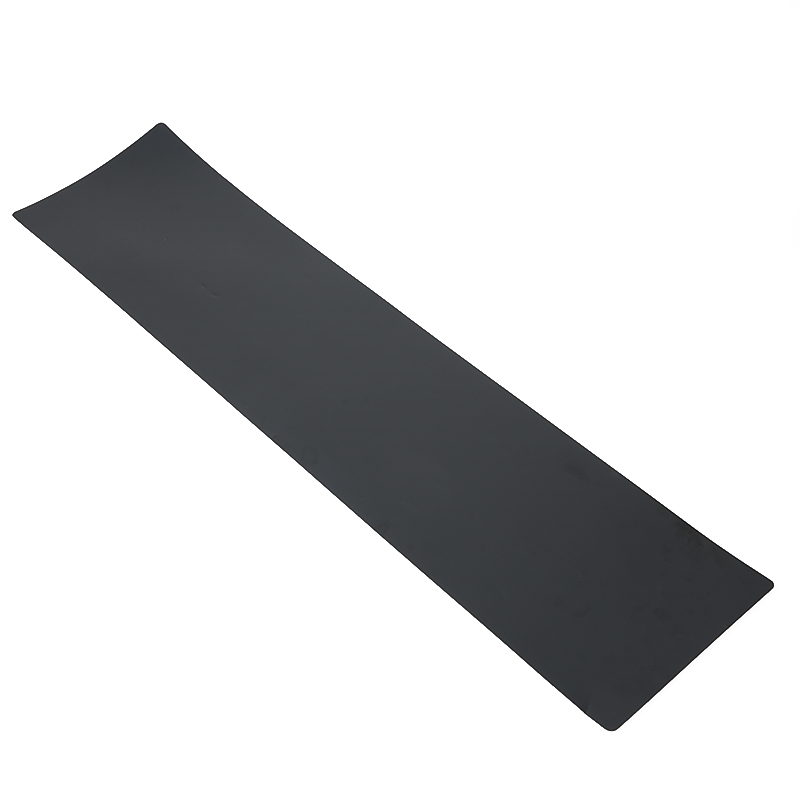
High-Temperature Flame-Retardant Self-Adhesive PC Mylar Sheet is a precision-engineered plastic insulation film designed for electrical insulation, component separation, surface protection, and customized die-cut applications. Available in black and transparent constructions, this type of polycarbonate insulating sheet combines mechanical durability, high dielectric strength, chemical resistance, temperature resistance, and adhesive-backed installation in a compact material format.
The material is particularly suitable for applications where a thin, flexible, and precisely shaped insulating layer is required. Its adhesive backing allows the film to be positioned directly onto a component or assembly surface, helping simplify installation and reduce movement during production. With precision die cutting, the sheet can be converted into custom gaskets, barriers, covers, spacers, electrical isolation pieces, labels, membrane components, protective films, and other engineered plastic parts.
For electronic and electrical equipment, insulation is not simply a matter of preventing direct contact between two conductive components. A properly designed Insulating Film can also provide separation, mechanical protection, surface protection, flame-retardant performance, and controlled positioning. This makes flame-retardant self-adhesive PC film useful across automotive electronics, communications equipment, consumer electronics, industrial controls, power supplies, battery systems, membrane switch assemblies, touch panels, portable devices, and other electronic products.
The product presentation shown in the supplied reference image also emphasizes several practical manufacturing advantages, including selected raw materials, quality assurance, customization according to application requirements, and complete specification options. These characteristics are particularly relevant when PC insulation sheets are converted into precision die-cut components for electronic assembly.
1. What Is a Self-Adhesive PC Insulating Sheet?
A self-adhesive PC insulating sheet is a polycarbonate-based film or thin sheet with an adhesive layer applied to one side.
Polycarbonate is an engineering thermoplastic known for its combination of toughness, impact resistance, dimensional stability, and electrical insulation capability. When manufactured as a thin film, it can provide a useful balance between flexibility and mechanical strength.
The adhesive-backed structure normally consists of several functional layers:
Protective release liner
Pressure-sensitive adhesive
Polycarbonate film
Optional surface treatment
Optional printing or coating
The exact construction depends on the intended application.
The adhesive layer allows the insulation film to remain attached to a designated surface after installation. This can be useful when the insulating component needs to stay in a fixed position during transportation, assembly, vibration, or normal operation.
2. Understanding the Term "PC Mylar Sheet"
The term "PC Mylar Sheet" is frequently used in commercial descriptions of thin electrical insulation films. From a material-science perspective, polycarbonate and PET are different polymers.
"Mylar" is commonly associated with polyester film, particularly PET film, while PC refers to polycarbonate. Therefore, professional buyers should confirm the actual substrate listed in the technical data sheet rather than selecting material solely from a commercial product name.
For applications specifically requiring polycarbonate, the specification should clearly identify the substrate as PC or polycarbonate film.
This distinction is important because PC and PET have different combinations of:
Mechanical strength
Impact resistance
Thermal characteristics
Chemical resistance
Dimensional stability
Formability
Electrical properties
Flame-retardant options
The correct substrate should always be selected according to the application's engineering requirements.
3. Black and Transparent PC Insulation Film
The product can be supplied in both black and transparent versions.
Black PC film provides a consistent dark appearance and is frequently selected for internal electronic components, control panels, battery assemblies, and electrical insulation structures.
Its visual advantages include:
Easy component identification
Professional appearance
Reduced visibility of minor surface contamination
Light-blocking capability
Strong visual contrast against metallic components
Suitable appearance for electronic assemblies
Black film can be especially useful when the insulating component needs to be visually distinguished from copper, aluminum, nickel-plated metal, or PCB surfaces.
Transparent PC film allows users to visually inspect the underlying component.
This can be advantageous when:
Visual inspection is important
Markings must remain visible
The underlying component needs monitoring
The insulation layer should not completely block the surface
Optical identification is required
Transparent construction can therefore be useful for inspection-oriented electrical and electronic assemblies.
4. Flame-Retardant Performance
Flame retardancy is an important consideration in electronic and electrical equipment.
A flame-retardant PC film is formulated to reduce the likelihood of sustained flame propagation when exposed to an ignition source under defined test conditions.
Flame-retardant film may be used in areas near:
Circuit boards
Electrical terminals
Power supplies
Connectors
Battery components
Busbars
Switching components
Control electronics
Communication modules
Some specialized PC film grades can be engineered to meet recognized flame-retardant classifications. The exact rating depends on the resin formulation, additives, thickness, processing method, and testing standard.
Therefore, users should verify the actual flame classification for the selected material and thickness.
A flame-retardant film should not be considered a substitute for complete fire-safety engineering. It is one component of a larger system that can include enclosure design, circuit protection, thermal management, spacing, and material selection.
5. High-Temperature Performance
High-temperature resistance is another major feature of engineered PC Insulation Materials.
Electronic equipment can experience heat generated by:
Electrical current
Power conversion
Motors
Batteries
Transformers
Power semiconductors
LED systems
Charging circuits
Automotive electronics
An insulation film positioned close to these components must maintain sufficient mechanical and electrical performance within the specified temperature range.
High-temperature PC film is therefore designed for applications where ordinary general-purpose plastic films may not provide the required thermal stability.
Important properties include:
Resistance to softening
Resistance to deformation
Dimensional stability
Thermal aging resistance
Insulation stability
Surface stability
Adhesive stability
When the product includes an adhesive backing, both the PC substrate and adhesive system must be evaluated. A high-temperature film does not automatically mean that the adhesive has the same temperature rating.
6. High Dielectric Strength
Electrical insulation is one of the primary functions of PC film.
High dielectric strength helps the film withstand electrical potential differences without electrical breakdown under defined test conditions.
The actual dielectric performance depends on:
Film thickness
Resin grade
Material formulation
Temperature
Humidity
Electrode configuration
Test method
Surface condition
A thicker film may generally provide greater physical insulation distance, but thickness should not be selected solely according to dielectric strength.
Battery and electronic system designers should also consider:
Working voltage
Transient voltage
Clearance
Creepage
Mechanical movement
Environmental contamination
Temperature
Humidity
The film should be incorporated into the complete insulation system rather than treated as an isolated safety component.
7. High-Voltage Insulation Applications
Self-adhesive PC insulation film can be used in selected high-voltage electronic assemblies when its verified electrical properties meet the system requirements.
Potential applications include:
High-voltage terminal barriers
Electrical control modules
Battery pack insulation
Power supply assemblies
Busbar insulation
Converter components
Inverter components
Charging equipment
High-voltage connector protection
Die-cut shapes can be designed to cover specific conductive regions while leaving necessary mounting points, ventilation areas, connectors, or inspection windows exposed.
8. Acid and Alkali Resistance
PC insulation film can offer useful resistance to selected chemical environments.
Depending on the specific grade and exposure conditions, the material may resist certain:
Weak acids
Weak alkalis
Cleaning solutions
Industrial chemicals
Oils
Organic media
Chemical resistance should always be verified against the actual chemical concentration, exposure time, temperature, and mechanical stress.
This is particularly important because polycarbonate can be affected by certain aggressive solvents and chemicals.
For industrial applications, compatibility testing is recommended whenever the film will have prolonged or direct chemical exposure.
9. Organic Solvent Resistance
Electronic manufacturing processes may involve cleaning agents, solvents, flux residues, lubricants, and other chemical substances.
A PC insulation film may be selected for applications where resistance to selected organic media is required.
However, chemical resistance is not universal.
Before using the film around a specific solvent, users should verify:
Chemical concentration
Exposure duration
Exposure temperature
Contact area
Mechanical stress
Adhesive compatibility
The adhesive layer is especially important because an adhesive can have different chemical resistance characteristics from the PC substrate.
10. Oil Resistance
Oil and lubricant exposure can occur in automotive and industrial equipment.
A suitable PC insulating film can provide a physical barrier in selected environments where contact with oil or lubricating materials is possible.
Potential applications include:
Automotive electronic components
Industrial control panels
Motor assemblies
Power equipment
Machinery electronics
Communication equipment
Electrical enclosures
The complete laminate should be tested when oil resistance is critical because the adhesive system may respond differently from the film itself.
11. Scratch Resistance
Surface durability is valuable when insulation film is exposed to handling or assembly operations.
Scratch-resistant PC film can help maintain a cleaner surface during:
Die cutting
Transportation
Component installation
Manual assembly
Automated assembly
Equipment maintenance
A scratch-resistant surface can also improve the appearance of visible electronic components.
Surface hardness and scratch resistance depend on the specific coating or film construction. If high surface durability is required, the exact surface treatment should be confirmed before production.
12. Self-Adhesive Construction
One of the main advantages of this product is its adhesive backing.
A self-adhesive insulation film eliminates the need for separate mechanical fixation in many applications.
The adhesive layer can help:
Hold the film in place
Prevent shifting
Simplify installation
Improve assembly efficiency
Reduce component movement
Support automated assembly
Improve repeatability
The adhesive system can be selected according to the application.
Possible considerations include:
Permanent adhesion
Removable adhesion
High-temperature adhesion
Flame-retardant adhesive
Low-residue adhesive
High-shear adhesive
Repositionable adhesive
The correct adhesive depends on the substrate and operating environment.
13. Adhesive Performance in Electronic Assemblies
Adhesive performance is influenced by several factors.
These include:
Surface energy
Surface cleanliness
Application pressure
Temperature
Humidity
Aging
Mechanical stress
Surface roughness
Chemical exposure
For reliable adhesion, the mounting surface should normally be clean, dry, and free from excessive dust, oil, grease, and contamination.
The adhesive should also be compatible with the surface material.
Common substrates may include:
Metal
Aluminum
Stainless steel
Copper
Painted surfaces
PCB surfaces
Plastic housings
Polycarbonate components
ABS components
14. Die-Cut PC Insulation Components
Die cutting is a major processing method for PC insulation film.
Instead of supplying only large sheets or rolls, manufacturers can convert the material into precise custom shapes.
Typical die-cut components include:
Electrical insulation pads
Protective covers
Terminal barriers
Spacers
Gaskets
Washers
PCB isolation pieces
Membrane switch layers
Button components
Display protection components
Touch-panel layers
Battery insulation pieces
Precision die cutting can reduce material waste and simplify downstream assembly.
15. Custom Thickness Options
PC insulation film can be manufactured in different thickness ranges depending on application requirements.
Thickness selection affects:
Dielectric strength
Flexibility
Mechanical strength
Puncture resistance
Formability
Weight
Available installation space
Die-cutting behavior
Thin film is useful when space is limited.
Medium-thickness film can provide a balance between flexibility and mechanical protection.
Thicker PC sheet may be preferred when greater rigidity or puncture resistance is required.
The optimal thickness should therefore be determined according to the actual design rather than selecting the thickest available material.
16. Custom Width and Length
The film can be supplied in various widths and converted into rolls, sheets, strips, or individual die-cut pieces.
Custom slitting can support:
Narrow insulation strips
Long protective tapes
Component barriers
Wire protection pieces
Assembly-line material
Custom-width adhesive films
Custom dimensions can reduce the need for secondary cutting during production.
For large-volume electronic manufacturing, customized roll widths may also help improve material utilization.
17. Precision Die Cutting for Mass Production
Precision die cutting is especially useful for electronic components manufactured in large quantities.
A die-cut PC insulation component can be produced repeatedly according to the same geometry.
This can provide:
Consistent dimensions
Repeatable positioning
Faster assembly
Reduced manual work
Improved material utilization
Easier quality inspection
For complex shapes, the die design should account for material thickness, adhesive properties, release liner characteristics, corner radius, holes, slots, and tolerance requirements.
18. Custom Hole and Slot Designs
PC insulation components can incorporate holes and slots according to the product design.
Common features include:
Screw holes
Connector openings
Mounting slots
Ventilation openings
Button openings
Display windows
Cable passages
Positioning holes
The supplied reference image demonstrates customized black die-cut insulation pieces with multiple openings and geometric profiles.
Such structures can be used to provide insulation while maintaining access to required functional components.
19. Membrane Switch Applications
One of the major application areas for thin PC film is membrane switch technology.
Membrane switches commonly include several functional layers.
PC film can be used in selected layers to provide:
Electrical separation
Graphic support
Spacer structures
Mechanical protection
Surface protection
Flexible switching functions
Applications include:
Industrial control panels
Home appliances
Medical equipment
Office equipment
Consumer electronics
Industrial machinery
Instrumentation
The film's flexibility and dimensional consistency make it suitable for precision printed and die-cut membrane structures.
20. Push-Button Applications
PC film can be incorporated into push-button and control-interface structures.
The film can serve as:
Insulation
Surface protection
Mechanical separation
Graphic carrier
Spacer
Die-cut support
Customized openings can be created to accommodate buttons, indicators, switches, LEDs, and other interface components.
21. Touch Panel Applications
Thin PC films can be used in selected touch-panel structures where flexibility, optical characteristics, and mechanical protection are required.
Transparent PC film can allow visual access to underlying components.
Potential uses include:
Touch interfaces
Control displays
Portable electronics
Industrial control panels
Smart equipment
Communication devices
For optical applications, the selected grade must meet the required transparency, haze, surface quality, and coating specifications.
22. Nameplate and Identification Applications
PC film can also support electronic identification and nameplate structures.
It can be used for:
Equipment labels
Control-panel graphics
Product identification
Instruction panels
Decorative overlays
Function markings
Black and transparent films offer different visual effects depending on printing and surface treatment.
Where printing is required, the compatibility between the ink, surface treatment, adhesive, and operating environment should be verified.
23. Portable Device Applications
Portable electronic products often require thin, lightweight insulation components.
PC adhesive-backed film can be used for selected parts of:
Smartphones
Tablets
Handheld terminals
Portable measuring instruments
Wearable electronics
Small communication devices
Consumer electronic equipment
Its thin profile can help conserve internal space while providing localized electrical separation.
The adhesive backing can also simplify installation during compact electronic assembly.
24. Automotive Electronics
Automotive electronic systems require materials that can tolerate mechanical vibration, temperature changes, and demanding installation conditions.
PC insulation film can be considered for selected automotive electronic components such as:
Control modules
Switch assemblies
Instrument panels
Electronic interfaces
Sensor housings
Communication modules
Battery-related electronic assemblies
Automotive applications require careful verification of temperature cycling, vibration, chemical resistance, flame performance, aging, and electrical reliability.
25. Communication Equipment
Communication equipment often contains densely arranged electronic components.
Insulation films can be used to separate:
Circuit boards
Metal shields
Connectors
Housings
Conductive components
Internal Brackets
Transparent PC film may be useful where inspection is required, while black film can provide visual separation and light blocking.
26. Electronic Equipment Insulation
Electronic equipment frequently contains multiple layers of metal, plastic, PCB, wiring, and conductive components.
A Custom PC Insulation sheet can provide localized separation without requiring a large rigid plastic housing.
This makes it suitable for:
Control boards
Power supplies
Industrial controllers
Communication modules
Electrical instruments
Consumer electronics
Commercial equipment
27. Battery and Energy Storage Applications
Although the material can be used in many electronic applications, adhesive-backed PC insulation film can also support selected battery-system structures.
Potential applications include:
Battery module insulation
BMS component protection
Terminal insulation
Busbar separation
PCB insulation
Wire-routing protection
Metal housing isolation
Battery enclosure components
The film can be converted into custom shapes to fit around battery cells and electronic components.
Battery applications require particular attention to temperature, voltage, flame retardancy, chemical compatibility, mechanical movement, and long-term aging.
28. Protection Between Metal and Electronic Components
A frequent application of self-adhesive PC film is creating separation between a conductive metal component and an electronic component.
For example, a die-cut film layer may be installed between:
PCB and metal housing
Busbar and bracket
Terminal and enclosure
Connector and support
Circuit board and mounting structure
The adhesive keeps the insulating component in the required position.
29. Mechanical Separation
In addition to electrical insulation, PC film can function as a physical separator.
It can reduce direct contact between components and help protect surfaces from:
Scratching
Abrasion
Localized impact
Friction
Contamination
This makes the material useful in compact electronic products where multiple components are installed in close proximity.
30. Moisture Protection
PC film can contribute to localized moisture protection when used as part of a properly designed assembly.
It may help cover sensitive surfaces and reduce direct exposure to environmental moisture.
However, an insulation film is not equivalent to a waterproof enclosure.
Complete moisture protection may require:
Adhesive seals
Enclosures
Protective coatings
Controlled ventilation
Water-resistant connectors
The PC film should be regarded as one part of the overall environmental protection system.
31. Fire Safety and Electrical Design
Flame-retardant PC film is useful when material fire behavior is part of the product safety strategy.
However, flame retardancy must be evaluated together with:
Electrical spacing
Heat generation
Current loading
Short-circuit protection
Enclosure design
Thermal management
Adjacent material flammability
A material classification such as UL94 V-0 or VTM-0, when verified for the actual grade and thickness, describes a specific material test performance and should not be interpreted as a complete product-level fire-safety certification.
32. Quality Assurance
The supplied image highlights quality assurance and the use of selected high-quality raw materials.
For PC insulation film, quality control may cover:
Consistent thickness is important for predictable electrical and mechanical performance.
The film should be inspected for:
Scratches
Pinholes
Bubbles
Wrinkles
Foreign particles
Surface defects
Custom components should maintain dimensional consistency.
The adhesive should be applied evenly to minimize bonding variation.
A stable release liner helps protect the adhesive layer during storage and processing.
Finished rolls and die-cut parts should be packaged to reduce contamination, moisture exposure, and physical damage.
33. Selected Raw Materials
The reference image emphasizes "Selected high-quality raw materials" as part of product quality assurance.
For engineered PC insulation materials, raw material selection can influence:
Mechanical performance
Thermal stability
Electrical insulation
Surface appearance
Flame behavior
Chemical resistance
Processing consistency
A controlled raw material supply chain can contribute to consistent production performance.
For engineering applications, buyers should request material documentation and technical data rather than evaluating quality only from visual appearance.
34. Customization According to Application Requirements
The reference image also emphasizes customization.
Customization can include:
Film thickness
Film color
Transparency
Surface finish
Adhesive type
Adhesive thickness
Die-cut geometry
Hole position
Slot design
Roll width
Sheet dimensions
Printing
Lamination
Protective coating
Customized PC film is particularly useful when a standard rectangular sheet cannot efficiently fit the final component.
35. Complete Specification Options
A broad specification range allows the material to serve different applications.
Customers may require different combinations of:
Thickness
Width
Adhesive strength
Temperature resistance
Flame-retardant performance
Dielectric strength
Surface finish
Transparency
Mechanical strength
The final specification should be established from the actual application environment.
36. Advantages of Adhesive-Backed PC Film
Self-adhesive PC insulation film can offer several practical advantages.
The adhesive layer allows the film to be attached directly to the intended surface.
Adhesive fixation helps prevent movement after installation.
Thin film can provide insulation without taking up significant internal space.
Die cutting allows complex geometries to be produced.
PC film adds relatively little weight compared with thick rigid insulation components.
The film can create a physical barrier between conductive surfaces.
The tough substrate can provide additional protection against handling and abrasion.
Black and transparent options allow designers to choose the appearance and visibility required.
37. Installation of Self-Adhesive PC Film
Proper installation can significantly influence adhesive performance.
Before application:
Clean the mounting surface.
Remove excessive oil, dust, and contamination.
Ensure the surface is dry.
Confirm the film orientation.
Remove the release liner carefully.
Position the film accurately.
Apply appropriate pressure.
Avoid wrinkles and trapped air.
Allow the adhesive to develop its intended bond according to its specification.
The exact application process depends on the adhesive construction.
38. Surface Preparation
Surface preparation is particularly important for adhesive-backed insulation.
Poor surface preparation can result in:
Edge lifting
Reduced adhesion
Film movement
Contamination
Premature peeling
Metal surfaces should normally be free from oil and loose particles.
Plastic surfaces should be evaluated for surface energy and compatibility.
Painted surfaces should be checked for coating adhesion before applying adhesive-backed insulation.
39. Storage Requirements
PC film should generally be stored in a clean, dry environment.
Recommended practices include:
Keep rolls in original packaging.
Avoid direct sunlight.
Avoid excessive heat.
Protect from dust.
Prevent crushing of film edges.
Keep adhesive surfaces protected.
Avoid unnecessary handling of the adhesive.
Follow the specific storage recommendations provided with the product.
For adhesive-backed products, prolonged exposure to unsuitable temperature or humidity can affect adhesive performance.
40. Processing Considerations
When converting PC film into die-cut components, manufacturers should consider:
Film thickness
Film hardness
Adhesive type
Liner thickness
Cutting pressure
Tool geometry
Corner radius
Hole diameter
Part tolerance
Waste removal
Automatic feeding requirements
Proper process design helps maintain clean edges and consistent dimensions.
41. Fine-Detail Die Cutting
Some electronic components require small holes, narrow tabs, sharp corners, or complex internal openings.
PC film can be processed into such geometries when the material thickness and tooling are suitable.
Fine-detail die cutting can support:
Compact electronic devices
Membrane switches
Touch panels
PCB insulation
Battery components
Connector barriers
Control-panel components
Tooling should be designed according to the film and adhesive construction.
42. Lamination Options
PC film may be laminated with other functional materials when a single-layer construction is insufficient.
Potential laminated structures can include:
PC plus adhesive
PC plus protective coating
PC plus printed layer
PC plus metal foil
PC plus additional insulation film
Lamination can provide multiple functions within one engineered component.
For example, a laminated film may combine mechanical support, electrical insulation, surface protection, and adhesive fixation.
43. Transparent Film for Inspection
Transparent PC insulation film can be advantageous when operators need to see the component underneath the insulation.
This can simplify:
Visual inspection
Assembly verification
Component identification
Maintenance
Position checking
For optical applications, however, transparency alone is not sufficient. Optical clarity, haze, surface quality, and coating requirements should also be specified.
44. Black Film for Internal Protection
Black PC film is frequently suitable for internal electronic assemblies where visibility of the underlying components is not required.
It can create a clean and consistent visual appearance.
Black film may also be useful when light blocking or visual contrast is desirable.
The color should not be used as an indicator of flame rating or dielectric performance. Those characteristics must be confirmed independently.
45. PC Film for Control Panels
Control panels contain switches, indicators, buttons, displays, and electronic circuits.
Die-cut PC film can provide:
Electrical isolation
Surface protection
Spacer functions
Button openings
Display openings
Graphic support
This makes it useful for industrial machinery, electrical cabinets, appliances, instrumentation, and commercial equipment.
46. PC Film for Electronic Housings
Electronic housings frequently combine plastic and metal components.
An insulating film can be installed between these components to reduce the possibility of unwanted electrical contact.
Potential areas include:
Housing covers
Internal brackets
Mounting points
PCB supports
Connector zones
Battery compartments
The adhesive-backed structure simplifies placement during assembly.
47. PC Insulation in Compact Electronics
As electronic devices become smaller, internal components are placed closer together.
This increases the importance of thin insulation materials.
A precision-cut PC film can provide localized insulation without requiring a large molded component.
This is particularly useful for:
Handheld devices
Portable instruments
Smart devices
Compact control modules
Communication equipment
Consumer electronics
48. Electrical Insulation and Component Reliability
Proper insulation can contribute to component reliability by reducing unintended contact between conductive surfaces.
An effective insulation design can help control:
Electrical clearance
Contact risk
Mechanical rubbing
Surface abrasion
Contamination exposure
The insulating film should remain correctly positioned throughout the product's intended service life.
49. Choosing the Right PC Film
When selecting a high-temperature flame-retardant self-adhesive PC sheet, consider:
Substrate:
Confirm whether the material is PC, PET, or a composite construction.
Thickness:
Select according to electrical, mechanical, and space requirements.
Adhesive:
Verify temperature, chemical, shear, and peel performance.
Flame Retardancy:
Confirm the actual classification at the required thickness.
Dielectric Strength:
Verify performance under the relevant test conditions.
Surface:
Choose glossy, matte, semi-matte, or treated surfaces according to the application.
Color:
Select black or transparent according to inspection and appearance requirements.
Processing:
Confirm suitability for die cutting, punching, slitting, printing, and lamination.
50. General Specification Reference
The following categories can be used when creating a product specification for High-Temperature Flame-Retardant Self-Adhesive PC Mylar Sheet:
Material: Polycarbonate film
Construction: Single-sided adhesive-backed film
Color: Black or transparent
Surface: Matte, semi-matte, glossy, or customized
Thickness: Optional according to application
Adhesive: Application-specific pressure-sensitive adhesive
Electrical function: Insulation and separation
Thermal function: High-temperature resistance according to grade
Fire performance: Flame-retardant grades available
Chemical performance: Resistance to selected chemical media
Mechanical performance: High toughness and impact resistance
Processing: Die cutting, punching, slitting and laminating
Shape: Roll, sheet, strip, or customized die-cut part
Application: Automotive, communication, electronics, control panels, portable devices, batteries and industrial equipment
Actual specifications should always be confirmed against the technical data sheet of the selected grade.
51. Product Development Workflow
A typical customized PC insulation project can follow a structured process.
Determine the electrical, mechanical, thermal, chemical, and dimensional requirements.
Choose the appropriate PC grade, thickness, surface, and adhesive.
Define the exact dimensions, holes, slots, tabs, and tolerances.
Produce initial samples for assembly testing.
Evaluate insulation, adhesion, temperature, flame behavior, and mechanical characteristics as required.
Adjust die cutting, adhesive construction, or dimensions when necessary.
Move to stable manufacturing after the design and material have been validated.
This process can improve consistency and reduce problems during mass production.
52. Common Quality Inspection Items
For finished adhesive-backed PC die-cut components, quality inspection may include:
Appearance
Film thickness
Part dimensions
Hole dimensions
Adhesive coverage
Adhesive contamination
Edge quality
Release liner condition
Surface scratches
Wrinkles
Die-cut completeness
Electrical insulation performance
Flame-retardant documentation
Adhesion performance
Inspection requirements should be established according to the application.
53. Why Custom Die-Cut Film Is Valuable
Standard sheets often require manual cutting during final assembly.
Custom die-cut parts can arrive ready for installation.
This can help:
Reduce labor
Improve assembly speed
Increase dimensional consistency
Reduce cutting waste
Simplify production
Improve component positioning
For high-volume electronic manufacturing, these benefits can contribute to better process control.
54. Sustainable and Material-Efficient Processing
Precision die cutting can help improve material utilization by arranging multiple parts efficiently across a roll or sheet.
Nesting optimization can reduce unused material.
Efficient processing can be particularly valuable for large quantities of small insulation components.
However, environmental performance should be evaluated based on the complete material system, including:
Polymer
Adhesive
Release liner
Packaging
Production waste
Recycling options
55. Frequently Asked Questions
It is a polycarbonate insulating film with an adhesive layer designed to provide electrical separation, mechanical protection, and easier installation.
Yes. Properly specified PC film can be used for various electrical insulation and component separation applications.
The primary difference is visual appearance and optical behavior. Electrical and thermal performance depend on the actual material formulation and grade.
Yes. Transparent film can be useful when inspection or visibility of the underlying component is required.
Yes. PC film is commonly available for converting into customized die-cut shapes, subject to the selected thickness and construction.
Yes, provided that the adhesive system is compatible with the metal surface and the required environmental conditions.
Selected grades can be used for automotive electronic applications when their temperature, flame, electrical, mechanical, chemical, and aging requirements are verified.
Selected PC insulation grades can be used for battery-related insulation and separation applications, subject to validation under the actual battery operating environment.
No. The substrate and adhesive have separate performance characteristics and should be specified independently.
No. Flame-retardant performance depends on the specific material formulation and thickness.
No. PC and PET are different polymers. Commercial terminology can sometimes use "Mylar" broadly, so the actual substrate should be confirmed from the product TDS.
56. Conclusion
High-Temperature Flame-Retardant Self-Adhesive PC Mylar Sheet in black and transparent constructions is a versatile insulation and protection material for modern electronic and electrical assemblies.
Its combination of electrical insulation, high dielectric strength, high-temperature capability, flame-retardant options, chemical resistance, scratch resistance, mechanical toughness, adhesive fixation, and precision die-cut processing makes it suitable for a broad range of engineered applications.
The material can be converted into customized insulation pads, barriers, covers, spacers, membrane components, control-panel layers, PCB separators, terminal protection pieces, and other precision plastic parts.
Black PC film can provide visual contrast, light blocking, and a consistent appearance, while transparent PC film can support visual inspection and component visibility.
The self-adhesive structure simplifies installation by helping the insulation component remain securely positioned during assembly and operation. When combined with precision die cutting, it becomes possible to manufacture application-specific parts with holes, slots, tabs, openings, and complex geometries.
The supplied product reference image highlights three important manufacturing concepts: quality-assured raw materials, customization based on application requirements, and complete specification options. These characteristics are particularly valuable for electronic components that require precise dimensions and repeatable insulation performance.
For automotive electronics, communication equipment, portable devices, membrane switches, touch panels, nameplates, push-buttons, PCB assemblies, battery components, and industrial electronic equipment, PC insulation film can provide a compact way to introduce electrical separation and mechanical protection.
At the engineering stage, however, product selection should always be based on verified technical data. Temperature rating, dielectric strength, flame classification, adhesive performance, chemical resistance, thickness tolerance, dimensional stability, and mechanical properties should be evaluated against the actual application.
The most reliable approach is to specify the complete material construction—including the PC substrate, adhesive system, thickness, surface treatment, and die-cut geometry—rather than selecting a film based on a single performance label
This website uses cookies to ensure you get the best experience on our website.



 Phone
Phone