

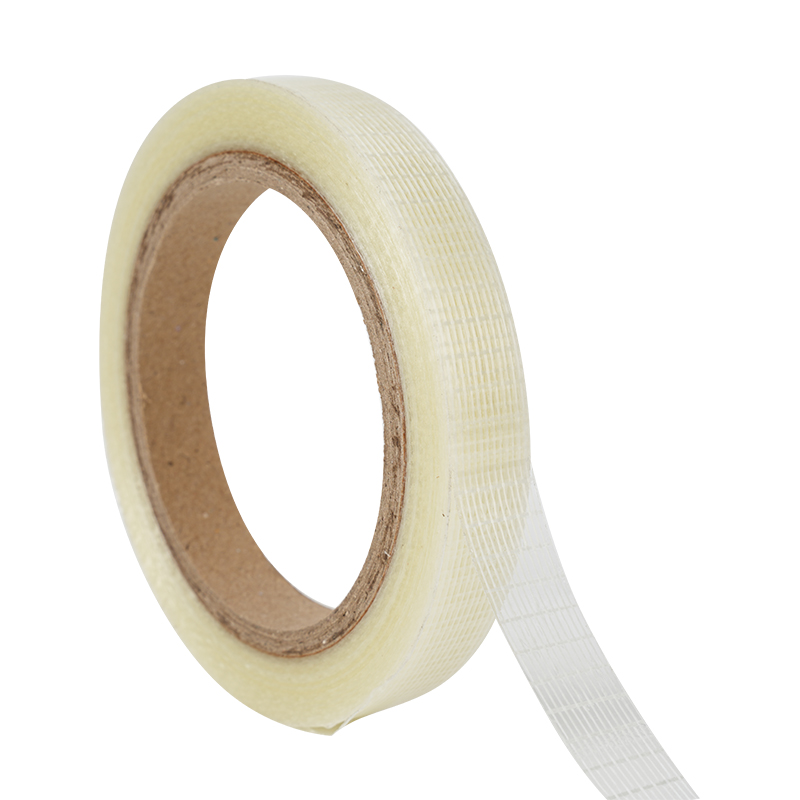
Fiberglass Mesh Tape for Battery Module Insulation is a reinforced Electrical Insulation Tape designed for applications where mechanical strength, dimensional stability, abrasion resistance, and electrical insulation are required at the same time. Fiberglass reinforcement can significantly improve the mechanical performance of a tape compared with unsupported film or paper constructions, while glass-based reinforcement can also contribute to thermal stability and resistance to tearing. Electrical-grade fiberglass tapes are widely used in demanding insulation applications involving coils, transformers, motors, wires, and other electromechanical assemblies.
In battery manufacturing, Insulation Materials have to perform in a compact and increasingly demanding environment. A battery module contains cells, busbars, terminals, sensing wires, connectors, structural components, cooling components, and protective materials. These components may be exposed to electrical potential differences, vibration, thermal cycling, assembly pressure, abrasion, and chemical or environmental stresses.
A Fiberglass Mesh Tape can serve as a reinforcing and insulating layer in selected battery-module applications. Depending on its construction, the tape may consist of a woven or mesh fiberglass substrate, a pressure-sensitive adhesive, and optional coating or surface treatment. The fiberglass structure provides reinforcement, while the adhesive allows the tape to remain positioned on a component during assembly and operation.
It is important to distinguish between fiberglass mesh tape, fiberglass cloth electrical tape, and glass filament reinforced tape. These constructions can have different fiber arrangements, adhesives, thicknesses, dielectric properties, temperature ratings, and mechanical performance. For example, electrical-grade fiberglass cloth tapes are available with silicone or other pressure-sensitive adhesives and are used for electrical insulation and mechanical protection.
The exact suitability of any Fiberglass Mesh Tape for a battery module should therefore be determined from its technical data, the battery architecture, voltage, temperature, environmental exposure, adhesive compatibility, and required insulation system.
This guide provides an industry-focused overview of Fiberglass Mesh Tape for Battery Module Insulation, including its structure, materials, properties, battery applications, advantages, design considerations, manufacturing methods, testing, storage, customization, and selection criteria.
Fiberglass Mesh Tape is a tape product reinforced with fiberglass filaments arranged in a mesh, woven, or fabric-like structure.
The basic construction can include:
Fiberglass mesh backing
Fiberglass woven cloth
Fiberglass filament reinforcement
Pressure-sensitive adhesive
Protective liner where required
Optional coating
Optional flame-retardant treatment
The fiberglass reinforcement is the primary structural element.
Unlike a conventional polymer film tape, a fiberglass-reinforced construction can provide improved resistance to:
Tearing
Abrasion
Mechanical stress
Edge splitting
Dimensional deformation
Glass reinforcement is commonly used in electrical tapes because it can improve tensile strength and mechanical resistance while maintaining electrical insulation characteristics.
For battery applications, these characteristics can be useful when the tape must remain intact around terminals, busbars, wire bundles, protective components, or module structures.
Fiberglass Mesh Tape for Battery Module Insulation refers to fiberglass-reinforced Adhesive Tape selected or engineered for insulating, reinforcing, securing, or protecting components within or around battery modules.
The tape may be used to provide one or more functions:
Electrical insulation
Mechanical reinforcement
Component fixation
Abrasion protection
Edge protection
Wire management
Surface separation
Layer reinforcement
Temporary assembly support
Protection from mechanical damage
Not every fiberglass tape performs all these functions equally.
A tape designed for general industrial bundling should not automatically be considered suitable for high-voltage battery insulation. Battery applications require careful evaluation of dielectric strength, temperature resistance, adhesive stability, flame performance, chemical compatibility, and long-term aging.
Fiberglass reinforcement provides a structural framework within the tape.
The glass fibers can improve the tape's resistance to mechanical forces.
This is especially useful when the tape is subjected to:
Pulling
Wrapping
Bending
Abrasion
Compression
Edge stress
Repeated movement
Glass-reinforced electrical tapes are specifically described as providing additional mechanical strength and resistance to abrasion, tears, and elevated temperatures.
For battery modules, these properties can complement the electrical insulation function.
A typical fiberglass mesh insulation tape can contain several layers.
The reinforcement forms the structural framework.
The adhesive allows the tape to attach to:
Polymer surfaces
Metal components
Insulation films
Wires
Battery module structures
Some tapes use coatings or treatments to improve:
Adhesion
Moisture resistance
Handling
Electrical properties
Chemical resistance
Some adhesive tape constructions use a removable liner to protect the adhesive before application.
The actual construction varies significantly by product.
Fiberglass mesh usually refers to a grid-like structure in which glass fibers cross each other.
Fiberglass cloth is typically a woven textile structure.
The difference can affect:
Flexibility
Tensile strength
Tear resistance
Conformability
Thickness
Surface texture
Adhesive coverage
Electrical-grade fiberglass cloth tapes are commonly available for coil and transformer insulation. One published electrical tape example uses electrical-grade fiberglass cloth with pressure-sensitive adhesive and specifies mechanical and electrical properties for insulation applications.
For battery module applications, the best construction depends on the required mechanical and electrical performance.
Glass filament tape generally uses glass filaments as reinforcement within a backing material such as polyester film or paper.
Fiberglass mesh tape emphasizes a mesh or woven fiberglass structure.
Both can provide:
High tensile strength
Reinforcement
Tear resistance
Electrical insulation
However, their flexibility and electrical characteristics may differ.
A glass filament reinforced polyester tape, for example, can combine fiberglass reinforcement with a polyester backing and acrylic adhesive while providing high tensile strength and dielectric performance.
Battery modules contain electrically active components.
Potentially conductive parts include:
Cell terminals
Busbars
Connectors
Welded tabs
Power terminals
Sensing conductors
Conductive housings
Electrical insulation helps prevent:
Short circuits
Unwanted electrical contact
Arc paths
Current leakage
Damage caused by abrasion
In high-voltage battery systems, insulation is especially important.
Battery insulation tapes may also contribute to cable management and protection of electrical components. Electrical insulation tape solutions for EV battery systems are designed to address high dielectric strength and combined thermal, mechanical, and chemical environments.
Battery insulation should be viewed as a system rather than a single tape.
A battery module may use:
Cell insulation film
Busbar insulation
Terminal insulation
Fiberglass tape
Polyimide tape
PET film
Molded insulation
Protective covers
Foam components
Fiberglass Mesh Tape may be used as one part of this multilayer insulation architecture.
The primary functions can be divided into electrical and mechanical categories.
Insulation
Separation
Dielectric protection
Prevention of accidental contact
Reinforcement
Abrasion resistance
Edge protection
Component fixation
Wire bundling
Structural support
The ability to combine mechanical and electrical functions is one reason fiberglass-based tapes are used in electrical equipment.
Electrical insulation performance depends on:
Backing material
Fiberglass structure
Adhesive formulation
Tape thickness
Moisture
Temperature
Applied voltage
Surface contamination
Important electrical parameters can include:
Dielectric breakdown voltage
Dielectric strength
Insulation resistance
Surface resistivity
Volume resistivity
Arc resistance
Comparative tracking characteristics
A fiberglass tape should be evaluated using the relevant electrical test method for the intended battery application.
Dielectric strength describes the ability of an insulating material to resist electrical breakdown under an applied electric field.
A higher dielectric strength can provide a greater insulation margin when the material is used correctly.
However, dielectric performance is not determined by thickness alone.
It can also depend on:
Material composition
Fiberglass distribution
Adhesive
Temperature
Moisture
Test conditions
Manufacturing quality
Published electrical fiberglass tapes demonstrate that glass cloth and adhesive constructions can achieve substantial dielectric performance, but actual values vary by product design.
Insulation resistance indicates how effectively the tape resists unwanted electrical current through the insulation.
A high insulation resistance is generally desirable for electrical isolation.
Battery module applications can require stable insulation resistance over:
Temperature changes
Humidity
Long-term operation
Mechanical stress
Testing should be performed under representative environmental conditions.
Tape thickness is an important design parameter.
A thicker tape can provide:
More physical separation
Increased mechanical protection
Greater material coverage
However, thicker tape may also:
Increase module size
Reduce packaging efficiency
Make tight bends difficult
Increase material consumption
Therefore, the ideal thickness is not necessarily the maximum available thickness.
Electrical fiberglass tapes exist across a range of thicknesses.
Published examples include:
Around 0.125 mm backing thickness
Around 0.178 mm total thickness
Around 0.191 mm total thickness
Around 0.254 mm constructions
For example, an electrical glass cloth tape specification lists 0.125 mm backing thickness and 0.177 mm total thickness, while another glass cloth product lists 0.178 mm total thickness.
These values are examples rather than universal specifications.
Battery modules experience temperature changes during:
Charging
Discharging
Fast charging
High-power operation
Ambient temperature changes
Thermal management cycles
Fiberglass reinforcement can improve thermal stability compared with some unsupported polymer constructions.
Some electrical fiberglass tapes are designed for high-temperature applications. Published examples include electrical glass cloth tapes rated for 150°C or 200°C depending on construction and adhesive system.
For a battery application, the actual temperature rating should always come from the selected product's technical data.
The adhesive is often the temperature-limiting part of an adhesive tape.
A fiberglass backing may remain mechanically stable at high temperature while the adhesive may:
Soften
Flow
Lose adhesion
Become brittle
Change chemically
Therefore, battery insulation tape selection must consider both:
Backing temperature resistance + Adhesive temperature resistance
Silicone adhesive is frequently used for high-temperature electrical insulation.
Potential advantages include:
High temperature capability
Good conformability
Stable adhesion
Electrical insulation
Resistance to environmental exposure
An electrical-grade fiberglass cloth tape with silicone adhesive is documented for coil and transformer insulation and provides mechanical and electrical performance.
Silicone adhesive may be considered when the battery assembly has demanding thermal requirements.
Acrylic adhesives can provide:
Good adhesion
Aging resistance
Stable bonding
Broad substrate compatibility
Glass filament electrical tapes with acrylic adhesive are used for electrical insulation and reinforcement applications.
The exact acrylic formulation should be evaluated for:
Battery materials
Temperature
Humidity
Chemical exposure
Long-term aging
Thermosetting rubber adhesives can provide strong bonding and electrical insulation.
Certain electrical glass cloth tapes use rubber thermosetting adhesive and are designed for high mechanical strength and temperature resistance.
However, rubber adhesive performance varies widely, so the formulation must be evaluated for battery compatibility.
A battery module may contain:
Aluminum
Copper
Steel
PET
PC
Polyamide
Polypropylene
Epoxy
Silicone
Painted surfaces
The adhesive should be compatible with the actual substrate.
Important factors include:
Surface energy
Cleanliness
Roughness
Temperature
Pressure
Application speed
Aluminum is widely used in battery terminals, busbars, housings, and structural components.
Aluminum surfaces may contain oxide layers.
The adhesive must be designed for stable bonding to the actual aluminum surface.
Surface preparation can include:
Cleaning
Degreasing
Drying
Controlled surface treatment
The correct preparation depends on the adhesive formulation.
Copper is commonly used in:
Busbars
Conductive connectors
Terminals
Electrical paths
Copper surfaces may also contain oxidation or contamination.
A clean copper surface generally provides more predictable adhesive performance than a contaminated surface.
Fiberglass tape can also be applied over polymer insulation materials.
Examples include:
PET
Polycarbonate
Polyimide
Nylon
Electrical films
Adhesive compatibility should be verified because different polymer surfaces have different surface energies.
Fiberglass mesh can improve tensile strength and tear resistance.
This is especially useful where tape is wrapped around:
Battery wiring
Busbars
Terminals
Protective insulation
Module components
Glass reinforcement is specifically recognized for improving tensile strength compared with some unreinforced tape constructions.
Battery modules may experience mechanical movement during:
Assembly
Transportation
Vehicle vibration
Thermal expansion
Service
Abrasion can damage thin insulation films.
Fiberglass reinforcement provides a tougher protective layer.
Electrical fiberglass cloth tapes are commonly described as abrasion resistant.
A thin polymer film can tear when subjected to:
Sharp edges
Pulling
Repeated bending
Fast handling
Fiberglass reinforcement can make the tape more resistant to tearing.
This can improve handling during battery assembly.
Edge damage is particularly important when tape is cut or wrapped around narrow components.
Some electrical glass cloth tapes are specifically designed to resist edge tearing.
This characteristic can be useful when fiberglass tape is applied around battery terminals or busbar edges.
Despite its reinforcement, fiberglass tape can be designed to conform around:
Curved surfaces
Wires
Corners
Terminal shapes
Module structures
Conformability depends on:
Mesh pattern
Fiber density
Backing thickness
Adhesive flexibility
An electrical fiberglass cloth tape, for example, may combine mechanical strength with conformability.
Dimensional stability is important when insulation needs to remain in position over long periods.
A stable fiberglass structure can help reduce:
Shrinkage
Stretching
Deformation
This can be valuable in battery modules where space is tightly controlled.
EV battery modules can experience continuous vibration.
The tape should resist:
Peeling
Edge lifting
Abrasion
Mechanical fatigue
Fiberglass reinforcement helps maintain the mechanical integrity of the tape.
However, long-term vibration performance must be validated on the actual battery structure.
Thermal cycling can create repeated expansion and contraction.
The tape must tolerate differences between:
Fiberglass
Adhesive
Metal substrate
Polymer substrate
A mismatch in thermal expansion can cause:
Wrinkling
Peeling
Cracking
Adhesive stress
Therefore, thermal cycling testing is important.
Battery modules can be exposed to:
Humidity
Condensation
Water ingress
Cooling fluids
Environmental moisture
Moisture can influence adhesive performance and electrical insulation.
The complete tape system should therefore be evaluated for moisture resistance.
Battery systems may contain or be exposed to:
Electrolyte residues
Cleaning agents
Coolants
Oils
Greases
Solvents
The adhesive and fiberglass structure should be evaluated for compatibility.
Chemical resistance is formulation dependent.
Battery safety is an important consideration.
Some electrical tapes are designed with flame-retardant characteristics.
For example, published electrical glass cloth tape specifications include flame-retardant performance and relevant UL recognition.
However, flame performance must be evaluated based on the complete material and applicable battery safety requirements.
Some electrical fiberglass tapes use non-halogen materials.
This can be desirable in applications where:
Low-corrosive combustion products are preferred
Environmental requirements apply
Material restrictions apply
One fiberglass cloth electrical tape specification describes a non-halogenated construction.
Busbars are among the most relevant battery-module components for insulation tape.
A busbar may require insulation to:
Prevent accidental contact
Protect against abrasion
Separate adjacent conductors
Protect nearby components
Improve assembly safety
Fiberglass tape can be applied around selected busbar sections where its mechanical and electrical properties are appropriate.
Metal busbars can have edges that may damage adjacent insulation.
Fiberglass tape can provide a protective barrier between:
Busbar edges
Wires
Polymer housings
Other conductive components
Its tear resistance can be advantageous compared with some unsupported films.
Battery terminals are electrically active areas.
Fiberglass insulation tape may be used around suitable portions of terminals to:
Prevent accidental contact
Protect insulation
Secure adjacent materials
Reduce mechanical abrasion
The exposed electrical contact area must remain accessible where electrical connection is required.
Battery cells may be arranged closely together.
Insulation can help prevent:
Cell-to-cell contact
Contact with conductive structures
Mechanical abrasion
Fiberglass tape may serve as an auxiliary insulation or reinforcement material depending on the battery architecture.
It should not automatically replace dedicated cell insulation films where the battery design requires a specific primary insulation material.
Battery modules can include metal frames and structural plates.
Fiberglass tape can provide an insulating interface between selected conductive structures.
Possible functions include:
Surface separation
Edge protection
Anti-abrasion protection
Temporary positioning
Electrical isolation
Battery modules often contain sensing wires and low-voltage harnesses.
Fiberglass tape can be used to organize or protect wiring when its adhesive and temperature characteristics are appropriate.
Potential functions include:
Bundling
Anchoring
Abrasion protection
Routing assistance
Temperature and voltage sensing wires can run near conductive components.
Fiberglass tape can provide additional mechanical protection.
However, it should not interfere with:
Sensor operation
Connector access
Thermal sensing
Electrical clearance
Connectors can contain multiple conductive terminals.
Tape can provide additional protection around connector areas where appropriate.
However, the connector manufacturer's requirements should take priority.
Tape should not obstruct:
Locking mechanisms
Ventilation
Mating surfaces
Service access
Battery manufacturing may involve:
Laser welding
Ultrasonic welding
Resistance welding
After welding, selected areas may require insulation or mechanical protection.
Fiberglass tape can be useful where:
The surface is clean
The temperature is within the adhesive rating
The tape does not interfere with inspection
The insulation system permits its use
After a weld is completed, the connection can contain:
Exposed metal
Sharp edges
Heat-affected areas
Surface irregularities
A suitable insulation tape can cover selected areas and protect adjacent components.
Fiberglass adhesive tape may also be used temporarily during battery module assembly.
Possible uses include:
Holding insulation film
Securing wire routing
Positioning components
Holding protective layers
The tape should be selected for clean removal or permanent bonding depending on the manufacturing process.
There is a major difference between temporary and permanent tape applications.
The tape primarily helps during assembly.
Important properties include:
Easy application
Controlled adhesion
Clean handling
Removal characteristics
The tape remains in the module throughout its expected service life.
Important properties include:
Long-term adhesion
Thermal stability
Electrical insulation
Chemical resistance
Vibration resistance
Good surface preparation is essential.
A typical preparation process can include:
Remove dust
Remove oil
Remove loose particles
Dry the surface
Inspect the surface
Apply the tape
Apply sufficient pressure
The exact cleaning method should be compatible with the substrate and adhesive.
Pressure-sensitive adhesives generally require adequate pressure to achieve good contact.
Application pressure can improve:
Wetting
Adhesion
Contact area
Initial bond
However, excessive pressure can deform fragile components.
Adhesive Tapes generally have recommended application temperature ranges.
Applying tape at extremely low temperature can reduce:
Tack
Wetting
Initial adhesion
High application temperatures may also influence adhesive behavior.
Therefore, application should follow the tape supplier's technical recommendations.
Fiberglass tape can be applied using:
Straight wrapping
Spiral wrapping
Half-lap wrapping
Full-lap wrapping
Edge wrapping
The method depends on the component shape and required insulation thickness.
Half-lap wrapping means each new layer overlaps approximately half of the previous layer.
This can produce:
More uniform coverage
Increased insulation thickness
Better mechanical protection
The exact overlap should be defined according to the application.
Multiple layers can be used where additional mechanical or electrical protection is required.
However, adding layers also increases:
Thickness
Weight
Assembly time
The final design should be validated for clearance and thermal behavior.
PET film is widely used for electrical insulation.
Fiberglass tape can complement PET film by providing:
Reinforcement
Edge protection
Local fixation
Abrasion resistance
A common conceptual structure can be:
PET insulation film + fiberglass reinforcing tape
The two materials can perform different functions.
Polyimide tape is known for high-temperature electrical insulation.
Fiberglass tape can complement polyimide film where greater mechanical reinforcement is required.
Possible combination:
Polyimide electrical insulation + fiberglass mechanical reinforcement
The adhesive systems should be compatible.
Polycarbonate sheets can provide rigid electrical isolation.
Fiberglass tape can be used as a local reinforcement or attachment material.
This combination can provide:
Rigid insulation
Flexible reinforcement
Local edge protection
Electrical insulation paper can provide dielectric separation.
Fiberglass tape can reinforce selected areas.
The combination may be useful where the insulation structure needs both:
Dielectric separation
Mechanical strength
Foam materials can provide:
Cushioning
Vibration absorption
Sealing
Spacing
Fiberglass tape can be used selectively to reinforce foam edges or secure insulation layers.
A good battery insulation tape should balance:
Electrical insulation + mechanical strength + thermal stability + adhesion + flexibility
Improving one property may affect another.
For example:
More reinforcement can reduce flexibility.
More adhesive can increase thickness.
Higher temperature resistance can affect tack.
Greater thickness can affect module packaging.
When evaluating Fiberglass Mesh Tape, the following properties are commonly considered:
| Property | Typical Evaluation |
|---|---|
| Backing | Fiberglass mesh or fiberglass cloth |
| Adhesive | Acrylic, silicone, rubber or other system |
| Thickness | Application dependent |
| Width | Application dependent |
| Length | Roll dependent |
| Color | White, clear or customized |
| Tensile Strength | Required mechanical load |
| Elongation | Low to moderate depending on construction |
| Adhesion | Substrate dependent |
| Dielectric Strength | Application dependent |
| Insulation Resistance | Application dependent |
| Temperature Rating | Adhesive and backing dependent |
| Flame Performance | Product dependent |
| Chemical Resistance | Formulation dependent |
| Abrasion Resistance | Generally enhanced by fiberglass |
| Tear Resistance | Generally enhanced by fiberglass |
| Conformability | Mesh and adhesive dependent |
These are general specification categories, not universal values.
| Requirement | Design Consideration |
|---|---|
| Battery Voltage | Determines insulation requirements |
| Maximum Temperature | Determines adhesive and backing selection |
| Continuous Temperature | Determines long-term thermal stability |
| Peak Temperature | Determines short-term thermal tolerance |
| Mechanical Stress | Determines fiberglass reinforcement level |
| Vibration | Determines adhesion and tear resistance |
| Humidity | Determines moisture resistance |
| Chemical Exposure | Determines adhesive compatibility |
| Substrate | Determines adhesion requirements |
| Installation Method | Determines tape format |
| Required Thickness | Determines insulation and packaging |
| Clearance | Determines tape dimensions |
| Service Life | Determines aging requirements |
Selection should begin with the application rather than the tape itself.
First determine:
What is being insulated?
What voltage is present?
What temperature occurs?
What mechanical stress exists?
What substrate is involved?
Is the tape permanent?
Is vibration present?
Is moisture present?
Are chemicals present?
Then select the tape construction.
Higher battery voltage generally requires more carefully engineered insulation.
The insulation system may need to consider:
Dielectric strength
Creepage
Clearance
Surface contamination
Environmental conditions
Tape should not be considered a substitute for the overall battery insulation design.
Determine:
Normal operating temperature
Maximum continuous temperature
Short-term peak temperature
Thermal cycling range
The adhesive should be rated for the actual temperature exposure.
A tape with a high-temperature fiberglass backing may still fail if the adhesive cannot maintain adhesion.
For automotive batteries, vibration is a major consideration.
The tape should be tested for:
Adhesive retention
Edge lifting
Abrasion
Mechanical fatigue
Testing on the final battery assembly is more meaningful than relying solely on isolated material testing.
If the tape may contact:
Coolant
Oil
Solvent
Electrolyte
Cleaning chemicals
compatibility testing should be conducted.
The adhesive is often more chemically sensitive than the fiberglass backing.
Humidity testing can evaluate:
Adhesive retention
Insulation resistance
Dielectric strength
Surface condition
The tape should maintain acceptable performance after environmental conditioning.
Thermal aging can be used to assess long-term performance.
Testing may involve:
Exposing the tape to elevated temperature
Maintaining exposure for a specified period
Cooling to room temperature
Measuring adhesion
Measuring electrical properties
Inspecting the tape
The test conditions should reflect the expected application.
Thermal shock involves rapid temperature changes.
This can reveal:
Adhesive cracking
Delamination
Interface stress
Shrinkage
Mechanical instability
Battery modules can experience thermal transitions during operation, transportation, and environmental changes.
A battery module can be subjected to vibration testing to simulate vehicle operation.
The tape should remain:
Attached
Intact
Electrically insulating
after the specified vibration exposure.
Peel adhesion measures how much force is required to remove the tape from a substrate.
The test can be performed on:
Steel
Aluminum
Copper
PET
Polycarbonate
Other battery materials
Results should be interpreted according to the actual application.
Tensile strength measures the force required to break the tape.
Fiberglass reinforcement can substantially improve tensile strength.
This is particularly important when the tape is used for:
Wrapping
Banding
Reinforcement
Component holding
Fiberglass tapes often have relatively low elongation compared with highly elastic polymer tapes.
Low elongation can provide:
Dimensional stability
Firm reinforcement
Controlled wrapping
However, too little flexibility may make the tape difficult to apply to complex shapes.
Tear resistance evaluates how easily the tape propagates a tear after an initial cut.
Fiberglass reinforcement can help limit tear propagation.
This is valuable around:
Sharp corners
Cut edges
Battery terminals
Busbars
Abrasion testing evaluates resistance to repeated mechanical contact.
This can be important in battery modules because:
Metal components can move
Wires can rub
Vibration can occur
Assembly can create friction
Fiberglass reinforcement can provide a tougher surface than some unsupported films.
A voltage is increased across the insulation until electrical breakdown occurs.
This helps evaluate the electrical insulation capability.
The test method and sample configuration should be standardized.
Insulation resistance can be measured after:
Initial conditioning
Humidity exposure
Thermal aging
Thermal cycling
Vibration
This helps determine whether electrical isolation remains stable.
Where required, the tape can be evaluated for flame performance.
Possible considerations include:
Flame retardancy
Self-extinguishing behavior
Combustion characteristics
Smoke
Material classification
Applicable requirements depend on the battery system and market.
Adhesive aging can result in:
Loss of tack
Hardening
Softening
Residue
Peeling
Chemical degradation
Long-term battery applications should therefore evaluate adhesive aging under representative conditions.
In enclosed battery systems, material outgassing may be relevant.
Certain adhesives or polymers can release volatile compounds at elevated temperature.
Potential concerns include:
Contamination
Odor
Deposit formation
Material compatibility
Where required, low-outgassing materials should be considered.
The adhesive should not cause corrosion of conductive battery components.
Corrosion concerns can arise from:
Ionic contamination
Residual chemicals
Moisture
Adhesive additives
Electrical insulation tapes intended for demanding applications may be designed with non-corrosive adhesive systems. Published electrical fiberglass tape examples specifically identify non-corrosive adhesive behavior.
Battery manufacturing often requires controlled cleanliness.
Tape should not introduce excessive:
Dust
Fibers
Adhesive residue
Particles
The tape converting and packaging process can therefore be important.
Fiberglass is mechanically strong, but cutting and handling can generate particles.
Manufacturing processes should control:
Edge quality
Cutting dust
Loose fibers
Contamination
This is especially important in automated battery production.
Fiberglass tape can be converted into custom shapes using die cutting.
Possible shapes include:
Squares
Rectangles
Rings
Tabs
Strips
Custom profiles
Die-cut fiberglass tape can improve assembly efficiency.
Large master rolls can be slit into narrower widths.
Typical applications include:
Wire wrapping
Terminal insulation
Busbar protection
Local reinforcement
Slitting quality influences:
Edge condition
Width tolerance
Fiber integrity
Battery components vary significantly in size.
Custom widths can reduce:
Material waste
Overlapping
Assembly time
Common considerations include:
Terminal width
Busbar width
Wire bundle diameter
Insulation clearance
Pre-cut tape sections can improve production efficiency.
Instead of manually cutting tape during assembly, operators or automated equipment can use pre-cut pieces.
Benefits may include:
Consistent dimensions
Faster assembly
Reduced waste
Better process control
Different battery substrates may require different adhesives.
Possible adhesive families include:
Acrylic
Silicone
Rubber
Modified systems
The selection depends on:
Temperature
Surface
Required bond
Aging
Chemical exposure
Fiberglass reinforcement can vary in:
Fiber diameter
Mesh density
Weave
Filament arrangement
Surface treatment
These variables influence:
Tensile strength
Flexibility
Tear resistance
Thickness
Higher reinforcement density can improve mechanical properties.
However, excessive fiberglass density may reduce:
Flexibility
Conformability
Adhesive penetration
The appropriate density depends on the intended application.
Open mesh structures can provide:
Better flexibility
Lower weight
Greater conformability
Dense structures can provide:
Higher reinforcement
Better dimensional stability
Greater mechanical strength
The ideal structure depends on the application.
Woven fiberglass consists of crossing warp and weft yarns.
Potential advantages include:
Balanced strength
Good tear resistance
Dimensional stability
Controlled mechanical performance
This construction is common in electrical glass cloth tapes.
Filament reinforcement uses continuous glass filaments.
Potential benefits include:
High tensile strength
Good dimensional stability
Reinforcement
Resistance to stretching
Glass filament reinforced tapes are used in demanding electrical and electromechanical applications.
Glass fibers can receive surface treatments to improve compatibility with:
Polymer coatings
Adhesives
Resins
Surface treatment can affect:
Adhesion
Mechanical strength
Moisture resistance
Processing stability
Uniform adhesive coating is important.
Uneven coating may result in:
Weak adhesion
Exposed areas
Uneven thickness
Variable electrical properties
High-quality tape production therefore controls coating weight and distribution.
A high-quality tape roll should have:
Uniform winding
Clean edges
Stable tension
No telescoping
No wrinkles
No excessive adhesive transfer
Roll quality directly affects automated application.
Battery production increasingly uses automated processes.
Tape may be applied using:
Robotic systems
Automated wrapping machines
Tape dispensing equipment
Die-cut placement systems
The tape should be compatible with the selected application process.
Automation may require:
Consistent width
Stable peel force
Controlled tack
Low liner variation
Clean cutting
Accurate roll winding
Inconsistent tape properties can increase machine downtime.
A properly selected fiberglass tape can improve manufacturing efficiency by combining several functions.
One tape may provide:
Insulation
Reinforcement
Component fixation
Abrasion protection
This can reduce the number of separate materials required.
Cost should not be evaluated only by price per roll.
A more useful calculation considers:
Material cost + application labor + waste + failure risk + replacement cost
A higher-performance tape may have a higher unit price but lower total assembly cost.
Because fiberglass provides mechanical reinforcement, a thinner reinforced tape may sometimes replace a thicker non-reinforced material.
This can potentially reduce:
Material thickness
Weight
Package volume
However, this must be confirmed through engineering validation.
Battery packs have limited internal volume.
Every insulation layer consumes some space.
A thin fiberglass-reinforced tape can provide mechanical protection without requiring a thick rigid component.
This can support compact module design.
Fiberglass reinforcement can provide high mechanical strength without requiring a large amount of material.
A lightweight tape can contribute to overall battery weight reduction.
However, the total weight impact is usually modest compared with the battery cells themselves.
Proper insulation can reduce the likelihood of:
Short circuits
Accidental contact
Abrasion-induced electrical faults
Conductor-to-frame contact
Fiberglass reinforcement adds mechanical durability to the insulation system.
Battery module reliability depends on many interconnected components.
A durable insulation tape can help protect electrical connections against:
Abrasion
Mechanical movement
Thermal cycling
Environmental exposure
However, it is only one component of the complete reliability system.
Metal structures can become dangerous if they contact energized conductors.
Fiberglass tape can act as a local insulating barrier.
Potential applications include:
Busbar-to-frame separation
Terminal protection
Wire-to-metal separation
Edge protection
Battery housings may be made from:
Aluminum
Steel
Composite materials
Where conductive housing surfaces are near energized components, insulation may be necessary.
Fiberglass tape can provide local protection.
Insulation tape does not replace grounding.
A battery module's grounding architecture should be designed separately.
The tape's purpose is to provide insulation and mechanical protection where required.
For low-voltage battery systems, tape selection may focus more heavily on:
Mechanical protection
Abrasion
Adhesion
Temperature
For high-voltage systems, additional attention is needed for:
Dielectric strength
Insulation resistance
Creepage
Clearance
Flame performance
Long-term electrical stability
EV battery modules represent one of the most demanding environments.
They combine:
High voltage
High current
Thermal cycling
Vibration
Compact packaging
Long service life
Fiberglass tape can provide additional mechanical and electrical protection where compatible with the battery architecture.
Stationary energy storage may have different requirements from EV batteries.
The system may prioritize:
Long operating life
High current
Thermal management
Environmental resistance
Maintenance accessibility
Fiberglass insulation tape can be used in selected areas of the electrical architecture.
Power battery packs can contain multiple modules and numerous electrical connections.
Tape can be used to protect:
Busbars
Wires
Terminals
Module interfaces
Insulation edges
The tape must be compatible with the entire pack environment.
Cylindrical battery cells may be arranged in dense arrays.
Fiberglass tape can be useful for:
Wire management
Local insulation
Edge protection
Module reinforcement
However, direct contact with cell surfaces should be evaluated carefully.
Prismatic cells have larger flat surfaces and rigid cases.
Potential tape uses include:
Busbar insulation
Terminal protection
Module assembly
Structural insulation
The larger surfaces may allow easier tape application.
Pouch cells use flexible outer packaging.
Because pouch cells can be sensitive to mechanical damage, tape selection must be carefully controlled.
A fiberglass tape should not create:
Excessive pressure
Sharp edges
Abrasion
Unwanted heat concentration
Battery modules may use:
Liquid cooling plates
Cooling channels
Heat sinks
Thermal interface materials
Tape should not obstruct intended cooling paths.
Its adhesive should also be compatible with the thermal environment.
Fiberglass itself is not primarily selected for high thermal conductivity.
If the application requires electrical insulation combined with thermal transfer, a specialized thermally conductive electrically insulating material may be more appropriate.
Some fiberglass-supported thermally conductive materials are designed specifically to provide electrical isolation while supporting heat transfer.
This distinction is important:
Electrical insulation tape is not automatically a thermal interface material.
The tape can indirectly support thermal reliability by:
Protecting insulation
Preventing short circuits
Stabilizing components
But it should not be assumed to improve heat dissipation unless its technical data specifically supports that function.
Contaminants can affect electrical insulation.
Potential contaminants include:
Dust
Metal particles
Moisture
Oil
Electrolyte
Adhesive residue
Battery manufacturing should maintain appropriate cleanliness.
Battery electrolyte compatibility is particularly important.
The tape should not be placed where it may be directly exposed to electrolyte unless the material has been specifically tested.
Possible effects include:
Adhesive degradation
Swelling
Loss of adhesion
Electrical contamination
Liquid-cooled battery systems may expose materials to coolant.
The adhesive should be evaluated against the specific coolant formulation.
Compatibility should include:
Immersion
Elevated temperature
Long-term exposure
Some electrical systems use oil-filled components, although this is less typical of conventional EV battery modules.
Certain glass filament electrical tapes are specifically designed for transformer oil environments.
Such properties should not automatically be transferred to battery coolant or electrolyte applications.
Adhesive tapes have a limited shelf life.
Storage conditions can influence:
Tack
Adhesion
Liner removal
Adhesive stability
A published electrical glass cloth tape specification, for example, provides a defined shelf life under controlled storage conditions.
The exact shelf life should come from the selected product's technical documentation.
Recommended storage commonly emphasizes:
Controlled temperature
Moderate humidity
Clean environment
Protection from direct sunlight
Original packaging
Tape should remain protected until use.
During handling:
Avoid touching the adhesive unnecessarily
Prevent dust contamination
Avoid excessive stretching
Protect roll edges
Use clean cutting tools
Poor handling can reduce final adhesion.
Packaging should protect the tape from:
Moisture
Dust
Compression
Deformation
Contamination
For precision battery applications, packaging may include:
Individual bags
Protective film
Trays
Moisture barriers
Cleanroom-compatible packaging
Quality control can include:
Check fiberglass and adhesive materials.
Verify adhesive uniformity.
Measure backing and total thickness.
Verify slit width.
Measure dielectric and insulation performance.
Measure tensile and adhesion properties.
Important dimensions include:
Tape width
Tape thickness
Roll length
Core diameter
Edge condition
For die-cut parts:
Length
Width
Hole size
Shape
Tolerance
Visual defects may include:
Wrinkles
Bubbles
Contamination
Uneven coating
Loose fibers
Edge damage
Telescoping
Consistent visual quality helps improve production reliability.
Electrical testing can include:
Dielectric breakdown
Insulation resistance
Surface resistivity
Arc resistance
Testing should be conducted using standardized methods.
Mechanical testing can include:
Tensile strength
Elongation
Peel adhesion
Shear adhesion
Tear resistance
The selected tests should reflect the intended use.
Possible environmental tests include:
Heat aging
Humidity aging
Thermal cycling
Chemical exposure
Vibration
Salt exposure where applicable
Battery-specific validation should simulate real conditions whenever possible.
If fiberglass insulation tape fails, engineers should determine the root cause.
Possible causes include:
Wrong adhesive
Excessive temperature
Poor surface preparation
Chemical exposure
Insufficient pressure
Excessive vibration
Incorrect tape thickness
Incorrect application method
Peeling can occur when:
Surface is dirty
Adhesive is incompatible
Temperature is too high
Application pressure is insufficient
Surface energy is too low
Corrective action should address the actual cause.
Residue can occur when:
Adhesive softens
Temperature exceeds the recommended range
Chemical exposure occurs
Aging changes adhesive properties
A suitable adhesive formulation should be selected for permanent battery use.
Cracking can occur due to:
Excessive bending
Thermal cycling
Mechanical stress
Adhesive aging
Incorrect application
The tape's flexibility should match the substrate movement.
Insulation breakdown may result from:
Excessive voltage
Insufficient thickness
Mechanical damage
Moisture
Contamination
Poor manufacturing
This is a critical failure mode in high-voltage battery applications.
Fiberglass can be damaged by:
Excessive bending
Sharp edges
Cutting
Abrasion
Proper application technique helps maintain reinforcement integrity.
Delamination can occur between:
Fiberglass and adhesive
Backing and coating
Tape and substrate
It may be caused by:
Moisture
Thermal cycling
Poor adhesion
Chemical exposure
Manufacturing defects
Fiberglass tape should be considered part of a complete battery insulation system.
Important safety parameters include:
Voltage
Temperature
Clearance
Creepage
Flame behavior
Chemical exposure
Mechanical durability
No single tape property can guarantee battery safety.
Depending on the target market, battery insulation materials may need to comply with relevant:
Electrical insulation standards
Flame standards
Automotive requirements
Environmental regulations
Material restrictions
UL recognition, flame classifications, and other certifications are product specific.
For example, published fiberglass electrical tapes may carry UL recognition or thermal class classifications, but these should be verified for the exact product and application.
Electrical Insulation Materials may be assigned thermal classes.
Examples in commercial electrical tape specifications include:
Class B
Class F
Class H
Class N
These classifications should not be assumed solely from the presence of fiberglass.
The adhesive and complete tape construction determine the actual rating.
UL recognition can indicate that a specific material has been evaluated under applicable UL requirements.
However, certification applies to the specific product and conditions.
A generic statement such as "fiberglass tape is UL rated" is not sufficient.
The exact product documentation should be checked.
Some fiberglass tapes are flame retardant.
This can be useful in battery insulation applications where flame performance is part of the system requirements.
The complete battery pack still requires its own fire and thermal safety design.
Depending on the market, materials may need to address requirements related to:
Restricted substances
Heavy metals
Halogens
Recycling
Chemical content
Specific compliance should be verified against current regulations and the selected material.
A simplified manufacturing process can include:
Fiberglass yarn preparation
Mesh or cloth formation
Surface treatment
Adhesive formulation
Adhesive coating
Drying or curing
Slitting
Rewinding
Inspection
Packaging
Actual manufacturing processes vary.
Glass fibers are formed into yarn or filament structures.
Important characteristics include:
Fiber diameter
Filament count
Yarn structure
Tensile strength
Surface treatment
These parameters affect final tape performance.
Fiberglass mesh can be formed by arranging yarns in a grid structure.
The mesh pattern influences:
Strength
Flexibility
Open area
Adhesive penetration
Thickness
The adhesive is applied to the fiberglass backing.
Coating methods can include:
Knife coating
Roll coating
Transfer coating
Other precision coating technologies
Coating weight must be controlled.
Some adhesive systems require drying or curing.
Controlled curing helps establish:
Adhesive strength
Thermal stability
Surface properties
Improper curing can result in:
Poor adhesion
Residue
Unstable performance
Master rolls are converted into smaller widths.
Important factors include:
Edge quality
Tension
Roll alignment
Width tolerance
Poor slitting can damage fiberglass fibers.
For battery manufacturing, pre-cut shapes can be supplied.
Potential advantages include:
Automated placement
Consistent geometry
Reduced waste
Faster assembly
Battery supply chains increasingly require traceability.
Relevant information may include:
Raw material batch
Adhesive batch
Production date
Roll number
Inspection results
Conversion batch
Traceability supports quality management.
A professional fiberglass battery insulation tape specification may include:
Product description
Construction
Thickness
Adhesive type
Color
Width
Length
Electrical properties
Mechanical properties
Temperature rating
Certifications
Storage requirements
A technical data sheet should provide measurable values.
For example:
| Category | Example Information |
|---|---|
| Backing | Fiberglass mesh |
| Adhesive | Acrylic or silicone |
| Total Thickness | Application specific |
| Width | Customizable |
| Color | White or custom |
| Tensile Strength | Product specific |
| Adhesion | Substrate dependent |
| Dielectric Strength | Product specific |
| Temperature Rating | Product specific |
| Flame Performance | Product specific |
| Chemical Resistance | Product specific |
Actual values should always be obtained from the product specification.
| Parameter | Reference Requirement |
|---|---|
| Product Type | Fiberglass Mesh Tape |
| Main Function | Electrical insulation and reinforcement |
| Backing | Fiberglass mesh |
| Adhesive | Pressure-sensitive adhesive |
| Application | Battery module insulation |
| Surface | Clean and uniform |
| Thickness | Customized |
| Width | Customized |
| Length | Customized |
| Color | Customized |
| Operating Temperature | Application dependent |
| Dielectric Strength | Application dependent |
| Adhesion | Application dependent |
| Tensile Strength | Application dependent |
| Flame Rating | If required |
| RoHS Compliance | If required |
| Packaging | Roll or die-cut format |
The major advantages can include:
Fiberglass reinforcement increases tensile strength.
The mesh structure helps resist tearing.
The reinforced surface can withstand mechanical contact.
Suitable constructions can provide dielectric insulation.
Fiberglass can remain dimensionally stable under elevated temperature.
Mesh construction can provide controlled conformability.
The tape can provide reinforcement without adding large structural mass.
Fiberglass tape is not universally suitable.
Potential limitations include:
Lower flexibility than soft polymer film
Possible fiber shedding during cutting
Adhesive temperature limitations
Moisture sensitivity depending on adhesive
Potential surface roughness
Not necessarily suitable for direct electrolyte exposure
Requires application-specific electrical validation
Battery insulation systems vary significantly.
A tape suitable for:
Transformer insulation
may not necessarily be suitable for:
EV battery modules.
The battery environment can include different:
Temperatures
Voltages
Chemicals
Mechanical stresses
Packaging constraints
Therefore, the final selection should be application specific.
Before selecting a tape, confirm:
Correct voltage rating
Correct temperature rating
Suitable dielectric strength
Suitable insulation resistance
Suitable adhesive
Suitable substrate compatibility
Suitable chemical resistance
Suitable humidity resistance
Suitable vibration resistance
Suitable thickness
Suitable width
Suitable flame performance
Suitable application process
The tape should be evaluated together with:
Cell chemistry
Cell format
Busbar material
Terminal structure
Cooling system
Enclosure
Electrical voltage
Operating temperature
Mechanical vibration
A tape specification should never be considered independently from the battery system.
The same adhesive can behave differently on:
Aluminum
Copper
Steel
PET
Polycarbonate
Polyimide
Therefore, adhesive testing should use the actual substrate.
Initial adhesion does not guarantee long-term adhesion.
A tape may perform well immediately after installation but deteriorate after:
Heat aging
Humidity exposure
Vibration
Chemical exposure
Long-term testing is therefore important.
Individual tests are useful, but combined environmental testing is more realistic.
For example:
Heat + humidity + vibration
can be more demanding than any one condition alone.
Battery module qualification should therefore reflect the actual service environment.
Fiberglass tape should be easy to process.
Consider:
Roll width
Roll length
Peel characteristics
Cutting
Placement
Wrapping
Automation
A technically excellent tape may still be unsuitable if it causes production difficulties.
Tape application should require minimal additional operations.
Pre-cut parts can reduce:
Cutting
Measuring
Handling
This can improve production consistency.
For manual battery assembly, tape should have:
Easy unwind
Controlled tack
Good conformability
Clean cutting
Easy handling
For automated assembly, tape should provide:
Stable roll tension
Consistent width
Consistent adhesive
Low variation
Accurate die-cut dimensions
Material efficiency can support sustainability.
Potential approaches include:
Lightweight construction
Reduced material waste
Optimized roll width
Die-cut nesting
Longer service life
Recycling considerations depend on the adhesive, fiberglass, backing, and battery recycling process.
Future products may focus on:
Higher dielectric strength
Higher temperature resistance
Lower thickness
Better flame resistance
Improved chemical resistance
Lower outgassing
Better automated processing
Improved adhesive stability
Cleaner manufacturing
Custom die-cut shapes
Future reinforcement structures may use:
Higher-strength glass fibers
Optimized mesh patterns
Hybrid reinforcement
Ultra-thin fiberglass fabrics
The objective is to increase strength while reducing thickness.
Battery insulation tapes may increasingly use adhesives engineered for:
High temperature
Low outgassing
Low ionic contamination
High dielectric stability
Long-term aging
Chemical resistance
Battery pack space is limited.
Ultra-thin reinforced tape could provide:
Mechanical reinforcement
Electrical insulation
Low packaging thickness
without requiring a thick conventional insulation structure.
Future battery insulation materials may place greater emphasis on:
Flame resistance
Self-extinguishing properties
Low smoke
Thermal stability
The final requirements depend on battery safety standards.
Future insulation tapes may incorporate sensing capabilities.
Potential concepts include:
Temperature indication
Electrical fault detection
Embedded conductive sensing layers
Integrated monitoring features
These technologies remain application dependent.
High-voltage battery systems require carefully engineered insulation.
Fiberglass tape may provide:
Mechanical reinforcement
Local dielectric protection
Edge protection
Component fixation
However, high-voltage insulation design must consider the entire electrical system.
A tape can also influence service operations.
A removable or replaceable tape system may facilitate:
Inspection
Component replacement
Rework
Maintenance
Permanent adhesive systems may provide better long-term stability but can make service more difficult.
During battery repair, fiberglass tape may be used for:
Replacing damaged insulation
Securing insulation layers
Protecting repaired wiring
Restoring local mechanical protection
Repair materials should match the original insulation requirements.
A good battery manufacturing tape should allow controlled rework where necessary.
Possible requirements include:
Clean removal
Minimal adhesive residue
Repositioning capability
Controlled initial tack
Warehouse management should monitor:
Manufacturing date
Expiration date
Batch number
Storage temperature
Humidity
First-in-first-out inventory can help maintain material freshness.
When sourcing Fiberglass Mesh Tape for Battery Module Insulation, useful documentation includes:
Technical data sheet
Safety data sheet where applicable
Compliance declaration
Test reports
Material composition
Batch information
Quality certificate
Battery manufacturers may perform incoming inspection of:
Width
Thickness
Adhesion
Appearance
Roll quality
Electrical properties
Sampling plans should be determined according to the quality system.
Important production variables include:
Coating weight
Curing temperature
Slitting tension
Roll tension
Adhesive formulation
Fiberglass density
Stable process parameters help maintain consistent tape performance.
Fiberglass Mesh Tape can potentially be used for:
Battery module insulation
Busbar protection
Terminal insulation
Wire harness reinforcement
Cable anchoring
Edge protection
Cell module assembly
Electrical component separation
Insulation film reinforcement
High-temperature electrical protection
| Material | Main Strength | Typical Advantage | Main Consideration |
|---|---|---|---|
| Fiberglass Mesh Tape | Mechanical reinforcement | Strong and tear resistant | Less flexible than soft films |
| PET Film | Electrical insulation | Thin and economical | Lower mechanical reinforcement |
| Polyimide Tape | High-temperature insulation | Excellent thermal capability | Higher cost |
| Electrical Paper | Dielectric insulation | Established electrical material | Moisture and mechanical considerations |
| Polycarbonate Sheet | Rigid insulation | Structural protection | Higher thickness |
| Foam Tape | Cushioning | Vibration and sealing | Limited electrical performance depending on type |
| Fiberglass Cloth Tape | Mechanical and electrical protection | Strong and thermally stable | Construction dependent |
PET tape is typically thin and flexible.
Fiberglass tape provides greater mechanical reinforcement.
PET may be preferable for:
Thin insulation
Large surface coverage
Flexible films
Fiberglass may be preferable where:
Abrasion resistance
Tensile strength
Reinforcement
are more important.
Polyimide tape is often selected for demanding temperature environments.
Fiberglass tape provides stronger mechanical reinforcement.
In some designs, both can be used together.
The selection depends on the dominant requirement.
Electrical paper can provide excellent dielectric insulation.
Fiberglass tape provides additional mechanical reinforcement.
A combined system may use electrical paper for primary insulation and fiberglass tape for reinforcement.
PVC electrical tape is flexible and economical.
However, fiberglass electrical tape generally offers stronger mechanical performance and greater resistance to tearing and abrasion.
For demanding battery applications, fiberglass may provide a more robust mechanical insulation layer.
General cloth tape is not necessarily designed for electrical insulation.
Fiberglass electrical tape is specifically engineered for electrical and mechanical performance.
The distinction is important.
The main difference is structural.
Mesh tape may have a more open grid structure.
Fiberglass cloth is typically a denser woven structure.
The choice depends on:
Strength
Flexibility
Thickness
Adhesive coverage
Surface requirements
Common English product names include:
Fiberglass Mesh Tape
Fiberglass Insulation Tape
Fiberglass Electrical Tape
Fiberglass Reinforced Tape
Glass Fiber Insulation Tape
Fiberglass Cloth Tape
Fiberglass Adhesive Tape
Fiberglass Electrical Insulation Tape
Fiberglass Reinforced Adhesive Tape
Battery Module Fiberglass Tape
The exact product name should accurately reflect the actual construction.
Fiberglass Mesh Tape for Battery Module Insulation is a reinforced adhesive tape designed for electrical insulation, mechanical protection, and component reinforcement in battery modules and power battery assemblies. Its fiberglass structure provides high tensile strength, tear resistance, dimensional stability, and abrasion resistance, while the adhesive layer supports secure attachment to compatible battery substrates. Depending on the formulation, Fiberglass Mesh Tape can be used around busbars, terminals, wiring, insulation films, and selected battery module structures where electrical and mechanical protection are required.
Fiberglass Mesh Tape for Battery Module Insulation is an important reinforced insulation material for modern battery manufacturing. Combining fiberglass reinforcement with a pressure-sensitive adhesive system, the tape can provide electrical isolation, mechanical reinforcement, abrasion protection, and component fixation. Battery manufacturers can select different fiberglass structures, adhesive systems, thicknesses, widths, and temperature ratings according to module voltage, operating temperature, substrate compatibility, and assembly requirements.
The principal benefits include:
Strong fiberglass reinforcement
Excellent tensile strength
Good tear resistance
Abrasion protection
Electrical insulation
Thermal stability
Dimensional stability
Controlled flexibility
Reliable component fixation
Customizable thickness
Customizable width
Roll or die-cut formats
Typical application areas include:
EV battery modules
Power battery packs
Energy storage batteries
Battery busbars
Battery terminals
Battery wiring
Electrical connectors
Module insulation
Insulation film reinforcement
Cable anchoring
The ideal Fiberglass Mesh Tape should be selected according to:
Electrical: voltage, dielectric strength, insulation resistance
Thermal: operating temperature, peak temperature, thermal cycling
Mechanical: tensile strength, tear resistance, abrasion resistance
Adhesive: tack, peel strength, aging, substrate compatibility
Environmental: humidity, chemicals, coolant, vibration
Manufacturing: width, length, roll format, die-cut shape, automation compatibility
Fiberglass Mesh Tape for Battery Module Insulation combines fiberglass reinforcement with adhesive technology to provide a multifunctional material for modern electrical and battery assemblies.
Its greatest value lies in combining several properties within a thin and flexible product:
Electrical insulation
Mechanical reinforcement
Abrasion resistance
Tear resistance
Dimensional stability
Thermal stability
Component fixation
Fiberglass-reinforced electrical tapes are already established in demanding electrical applications because the glass reinforcement can improve tensile strength, mechanical durability, and thermal performance. Electrical glass cloth constructions are also used for coil and transformer insulation and can provide strong mechanical and electrical properties.
For battery modules, the material can be particularly useful around busbars, terminals, wires, insulation films, and selected structural areas where mechanical protection and electrical isolation are required.
However, battery insulation should always be treated as a complete system. The tape must be evaluated according to the actual voltage, temperature, substrate, vibration, humidity, chemical environment, and expected service life. A fiberglass backing alone does not establish suitability for a high-voltage battery application.
The most effective Fiberglass Mesh Tape for Battery Module Insulation is therefore one that balances electrical insulation, mechanical reinforcement, thermal stability, adhesive performance, environmental resistance, dimensional requirements, and manufacturing efficiency.
As electric vehicles, energy storage systems, high-power battery packs, and fast-charging technologies continue to develop, demand for thin, strong, reliable, and application-specific electrical insulation materials is expected to increase. Fiberglass-reinforced tape can remain an important component within these evolving battery insulation systems, particularly where mechanical durability and electrical protection must be achieved within limited assembly space.




 Phone
Phone