

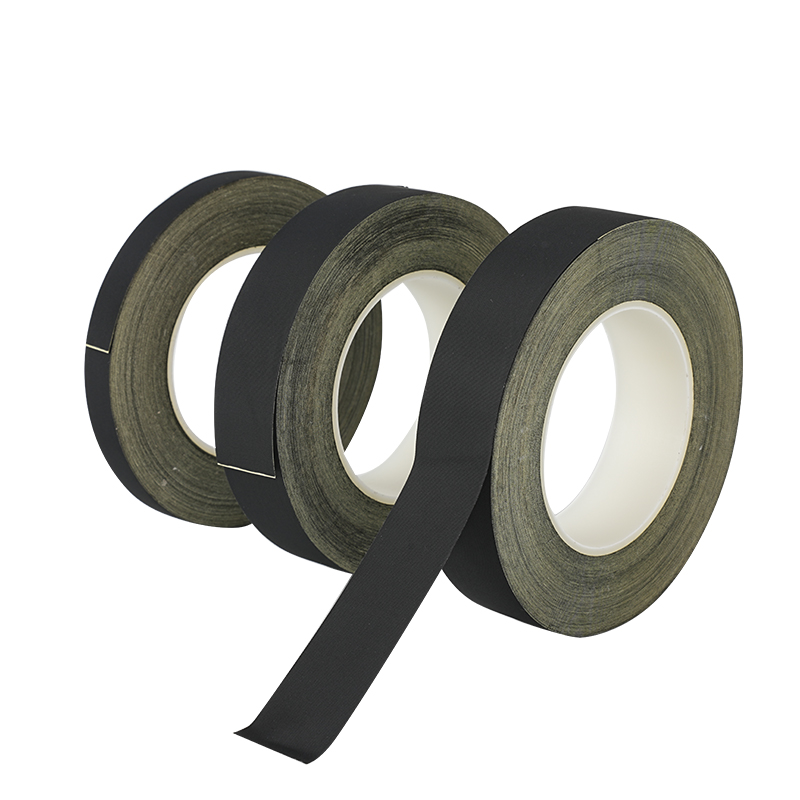
Acetate Tape for Wire Harness Protection is a flexible textile-based adhesive material developed for organizing, wrapping, separating, and protecting wires and cable assemblies. Its woven acetate fabric backing provides a different combination of flexibility, handling characteristics, surface feel, and mechanical support compared with conventional plastic-film electrical tapes.
In modern electrical and electronic assemblies, wire harnesses are becoming increasingly compact and complex. Automotive electronics, electric bicycles, electric scooters, industrial equipment, battery systems, energy-storage equipment, robotics, appliances, and consumer electronics may contain multiple wires, signal cables, sensors, connectors, and power conductors in a relatively limited installation space. A suitable harness-wrapping material can help maintain routing discipline, reduce unwanted cable movement, and provide an additional layer of protection around selected wiring sections.
Acetate cloth tape is particularly interesting for applications where the tape must conform to irregular shapes without becoming excessively rigid. The textile backing can follow bends, junctions, transitions, and curved cable bundles while maintaining a relatively neat appearance. Depending on the adhesive construction, it can also provide reliable attachment to selected cable jackets, plastics, metals, and electronic components.
For battery and new-energy manufacturing, acetate tape can serve as an auxiliary material rather than a replacement for dedicated structural or safety components. It may be incorporated into wire management, sensor-wire fixation, BMS cable organization, connector-area protection, local insulation, and selected assembly processes. The exact application must always be validated against the electrical, thermal, chemical, mechanical, and fire-safety requirements of the finished product.
This article provides an expanded technical and application-oriented overview of acetate cloth tape for wire harness protection, with emphasis on material construction, manufacturing considerations, harness engineering, battery assembly, electronic equipment, converting, quality control, storage, selection, and practical application.
1. Understanding Acetate Cloth Tape
Acetate cloth tape is an Adhesive Tape constructed from a woven acetate fabric substrate coated with an adhesive system.
The three fundamental components are:
Acetate fabric backing
Adhesive coating
Release and winding structure used during converting and packaging
The backing provides the mechanical body of the tape, while the adhesive creates contact with the application surface.
Unlike a simple plastic film, woven acetate fabric has a textile architecture. This allows the tape to behave differently when bent, wrapped, torn, folded, or applied around cable bundles.
The final properties depend on the interaction between the fabric, adhesive, coating weight, thickness, manufacturing process, and storage environment.
Therefore, acetate tape should be evaluated as a complete composite material rather than as acetate fabric alone.
2. Why Wire Harness Protection Requires Specialized Tape
A wire harness is more than a group of electrical conductors.
It is an engineered assembly that must remain organized throughout manufacturing, installation, operation, maintenance, and transportation.
A harness can experience:
Repeated bending
Vibration
Temperature changes
Contact with housings
Contact with Brackets
Pulling forces
Abrasion
Assembly handling
Connector movement
Chemical exposure
Moisture
Local heat
If wires are allowed to move freely, they can interfere with surrounding components or experience unnecessary mechanical stress.
Harness wrapping materials can therefore provide organizational and protective functions.
Acetate cloth tape is useful in this context because it can combine flexible wrapping with adhesive fixation.
3. Harness Organization
One important function of acetate tape is cable organization.
Multiple wires can be gathered into a controlled bundle, reducing loose wiring inside an assembly.
A more organized harness can provide several practical advantages:
Easier routing
Improved visual inspection
Reduced cable tangling
Easier assembly
Better identification
More predictable cable positioning
Reduced movement between selected wires
The tape should be applied according to the intended harness design rather than simply wrapping every wire together.
Signal cables, power cables, sensor cables, and high-current conductors may require different routing strategies.
4. Branch Management
Complex wire harnesses frequently include branches.
For example, one main harness may divide into:
Motor wiring
Sensor wiring
Display wiring
Battery wiring
Control wiring
Lighting wiring
Communication wiring
Acetate cloth tape can be used around selected branch areas to maintain organization.
A flexible textile backing is helpful because branch points are rarely perfectly straight.
However, tape should not be wrapped so tightly that it restricts necessary cable movement or places excessive pressure on individual conductors.
5. Harness Routing and Installation
A well-organized harness is easier to install.
During production, workers may need to position wiring through:
Narrow channels
Housing openings
Cable guides
Brackets
Battery compartments
Controller enclosures
Instrument panels
Motor compartments
Acetate tape can help maintain the desired bundle shape before and during installation.
This can reduce handling complexity and help prevent wires from spreading into areas where they could interfere with other components.
6. Mechanical Protection
Acetate tape is not normally considered a replacement for heavy-duty protective conduit, but it can provide an additional protective layer around selected wiring.
The textile backing can help separate the wire bundle from nearby surfaces.
This is useful where wires could otherwise contact:
Plastic edges
Metal brackets
Housing surfaces
Other cable bundles
Component corners
The level of mechanical protection depends on the specific tape construction.
For severe abrasion, high-impact environments, or direct contact with sharp edges, additional protective systems may be required.
7. Vibration Management
Vibration is a significant consideration in electric mobility and industrial equipment.
Electric bicycles, scooters, motorcycles, vehicles, robotics, motors, pumps, and industrial machinery may generate continuous or intermittent vibration.
A well-organized harness can reduce uncontrolled movement.
Acetate tape can help hold selected wire groups together and reduce relative movement between individual wires.
However, tape should not be treated as a complete vibration-isolation system.
A reliable harness design may also require:
Clips
Brackets
Strain relief
Protective sleeves
Cable ties
Routing channels
Connector locks
8. Noise Reduction in Harness Assemblies
Loose wires can sometimes create mechanical noise when they contact housings or neighboring components.
Organizing the harness can reduce unwanted movement.
Fabric-based wrapping materials can provide a soft interface between bundled cables and surrounding structures.
This characteristic can be useful in:
Vehicle electronics
Electric scooters
E-bikes
Appliance wiring
Industrial equipment
Electronic enclosures
Noise reduction is application-dependent and should be validated under actual operating conditions.
9. Protection During Manufacturing
Wire harnesses can be exposed to repeated handling during assembly.
Operators may move, bend, pull, route, and reposition cable groups before the final product is completed.
Temporary or permanent wrapping can help maintain harness organization throughout the manufacturing process.
A suitable tape can also reduce the possibility of accidental cable separation during transportation between production stations.
10. Protection During Transportation
Finished wire assemblies may be shipped separately before final installation.
During transportation, harnesses can move inside cartons or containers.
A wrapped harness is generally easier to control than a loose collection of wires.
Acetate cloth tape can help maintain the bundle shape and reduce tangling.
Packaging design should still provide sufficient protection because tape alone is not intended to replace transportation packaging.
11. Electrical Separation
An important application of electrical tape is providing additional separation between conductive components.
Acetate insulation tape can be used around selected wires and electrical components when its dielectric properties meet the application requirements.
Potential uses include:
Wire-to-wire separation
Wire-to-housing separation
Connector-area insulation
Sensor wire management
PCB-adjacent wiring
Local insulation barriers
The required insulation thickness must be calculated according to the actual voltage and safety requirements.
12. Clearance and Creepage Considerations
Tape does not automatically create an adequate electrical safety distance.
Engineers must distinguish between:
Clearance: the shortest distance through air between conductive parts.
Creepage: the shortest distance along an insulating surface.
A tape layer can contribute to insulation in an appropriately designed system, but the complete electrical design must still satisfy applicable requirements.
This is particularly important in battery systems and high-voltage equipment.
13. Harness Protection Around Connectors
Connectors are common stress points in wire harnesses.
The transition between the connector body and cable bundle can experience bending and movement.
Acetate tape can be used around suitable portions of the harness near the connector to improve organization.
Care must be taken not to:
Block locking mechanisms
Cover required labels
Prevent connector inspection
Interfere with service access
Place excessive pressure on terminals
The connector manufacturer’s installation requirements should always take priority.
14. Sensor Cable Management
Modern electronic systems contain many sensors.
Examples include:
Temperature sensors
Position sensors
Speed sensors
Pressure sensors
Current sensors
Voltage sensors
Motion sensors
Sensor wires are often relatively small and can become difficult to manage inside compact assemblies.
Acetate tape can help secure sensor wiring along an intended route.
This can reduce unwanted cable movement and simplify assembly.
15. BMS Wire Organization
Battery Management Systems use multiple electrical connections for monitoring and control.
Depending on the architecture, wiring can include:
Cell-voltage sensing
Temperature monitoring
Communication
Balancing
Current measurement
Auxiliary power
These wires need controlled routing.
Acetate tape can be used as an auxiliary wire-management material when compatible with the battery environment.
It can help keep low-voltage monitoring wires organized and separated from areas where mechanical interference may occur.
16. Battery PACK Harness Applications
Battery PACKs frequently contain a mixture of power and signal wiring.
The harness may need to pass around:
Cell holders
Battery modules
Busbars
BMS boards
Cooling structures
Enclosures
Brackets
Acetate cloth tape can be used in selected areas to hold wire groups in position.
The final design should ensure that wiring does not contact sharp conductive edges or become trapped between mechanical components.
17. Electric Bicycle Applications
Electric bicycles typically combine a battery, motor, controller, display, sensors, lighting, and charging system.
Their wiring may be routed through confined spaces.
Acetate tape can be used for selected harness-wrapping applications.
Potential locations include:
Battery compartment wiring
Controller wiring
Display cables
Sensor harnesses
Lighting cables
Auxiliary wiring
The tape grade should be selected according to the local temperature, moisture, vibration, and electrical requirements.
18. Electric Scooter Applications
Electric scooters have compact electrical architectures.
The battery, controller, motor, display, throttle, brake sensors, and lighting systems may be connected through multiple harnesses.
Flexible acetate tape can help organize wiring where space is limited.
A neat harness can also simplify maintenance because individual cable routes become easier to identify.
19. Industrial Control Equipment
Industrial control systems often contain numerous wires and signal cables.
Acetate tape can assist with cable grouping and routing in selected applications.
Potential uses include:
Control panels
Machine wiring
Sensor harnesses
Motor control systems
Instrumentation
Automation equipment
The tape should be selected based on the environmental conditions of the machinery.
20. Robotics
Robotic systems place special demands on wiring.
Moving cables can experience repeated flexing.
Acetate tape may help organize portions of a harness, but repeated-motion applications require careful evaluation.
Engineers should consider:
Bend radius
Flex-cycle requirements
Cable carrier compatibility
Connector strain relief
Adhesive fatigue
Temperature
Abrasion
A tape that performs well on a stationary harness may not be appropriate for continuous robotic motion.
21. Automotive Electronics
Automotive environments can combine temperature, vibration, moisture, oil, and mechanical stress.
Acetate tape can be considered for selected harness-management applications when the material is appropriately qualified.
The exact automotive environment must be considered because engine compartments and passenger compartments have very different requirements.
22. Consumer Electronics
Compact electronic products require precise internal cable organization.
Examples include:
Displays
Small control boards
Household electronics
Communication devices
Portable equipment
Narrow acetate tape can be used where a flexible textile-based adhesive material is suitable.
Die-cut pieces can also be prepared for repeated assembly positions.
23. Appliance Wiring
Household appliances may contain motors, sensors, switches, control boards, heating components, and internal wiring.
Acetate tape can help organize selected cable groups.
Where elevated temperatures are expected, the tape must be selected according to the actual temperature profile.
24. Motor and Electrical Equipment
Motors and electrical equipment can contain wiring exposed to vibration and heat.
Tape may be used to organize external or auxiliary wire groups.
For internal motor insulation, however, the insulation system must be designed according to the motor's electrical class and temperature requirements.
General-purpose acetate tape should not automatically be treated as motor-winding insulation.
25. Transformer and Coil-Related Applications
Fabric-based electrical tapes may also be used in selected transformer and coil assembly processes.
Potential functions include:
Holding wires temporarily
Separating layers
Securing leads
Organizing winding-related components
The tape's dielectric strength and thermal classification must be appropriate for the specific electrical design.
26. Material Selection Based on Temperature
Temperature is one of the first criteria when selecting acetate tape.
A product used inside an electronics enclosure may experience a very different temperature from one positioned near a motor or power converter.
Engineers should establish:
Minimum operating temperature
Normal operating temperature
Maximum continuous temperature
Short-term peak temperature
Number of thermal cycles
The tape should then be selected according to verified test data.
27. Thermal Cycling
Electrical equipment rarely operates at one constant temperature.
It may repeatedly move between:
Cold start
Normal operation
High-load operation
Cooling
Storage
Repeated thermal cycling can stress the adhesive interface.
A suitable tape should be evaluated for:
Adhesion retention
Edge stability
Substrate integrity
Delamination
Residue
Shrinkage
28. Humidity Resistance
Humidity can affect adhesive behavior and electronic assemblies.
High humidity may contribute to:
Reduced adhesion
Material aging
Surface contamination
Corrosion risks in nearby conductive components
For humid environments, testing should be performed on the actual substrate and adhesive combination.
29. Moisture and Condensation
Condensation can occur when equipment moves between different temperatures.
Battery packs, outdoor electronics, and transportation equipment may experience these conditions.
Tape selection should consider whether moisture can penetrate the wrapped area and whether the adhesive remains stable under repeated humidity exposure.
30. Chemical Exposure
Industrial equipment can expose tapes to oils, cleaning agents, lubricants, fuels, or other chemicals.
Chemical compatibility depends heavily on the adhesive formulation.
A proper evaluation should expose samples to the actual chemicals used in the application.
After exposure, engineers can evaluate:
Adhesion
Softening
Swelling
Discoloration
Residue
Delamination
Fabric deterioration
31. Flame-Retardant Acetate Tape
Flame-retardant acetate tape is designed for applications where material flammability needs to be controlled.
A flame-retardant construction can reduce flame propagation under specified laboratory conditions.
Certain constructions may be designed to meet UL94 V-0 requirements.
The rating must always be associated with the exact material construction and tested thickness.
Flame-retardant tape is not a substitute for overall fire-safety engineering.
32. Halogen-Free Construction
Some electronic and new-energy products require material systems with restricted halogen content.
Halogen-free acetate tape options can be considered where such requirements apply.
The actual chemical composition should be confirmed through supplier declarations or laboratory testing.
33. Low-Lint Requirements
Clean assembly environments can place strict requirements on textile materials.
A low-lint acetate fabric can reduce loose fiber generation.
This is particularly valuable near:
Optical components
PCB assemblies
Sensors
Battery electronics
Precision connectors
Manufacturing cleanliness depends not only on the fabric but also on cutting, slitting, packaging, and handling processes.
34. Anti-Static Considerations
Electronics manufacturing may require control of electrostatic discharge.
Some acetate tape constructions can be designed with anti-static properties.
However, anti-static behavior should be confirmed using measurable electrical characteristics.
The term "anti-static" should not be interpreted as equivalent to a complete ESD-control program.
35. Surface Preparation
Proper surface preparation can improve tape performance.
Before application, the surface should normally be:
Clean
Dry
Free from oil
Free from dust
Free from loose particles
Certain materials may require specialized surface treatment.
The cleaning method should not damage the substrate or leave a contaminating film.
36. Application Pressure
Pressure can improve contact between adhesive and substrate.
After applying acetate tape, appropriate pressure can help eliminate air pockets and increase contact area.
For manual production, a roller or controlled pressing operation can improve consistency.
37. Wrapping Tension
Wrapping tension must be controlled.
Too little tension may result in:
Loose wrapping
Poor bundle formation
Edge lifting
Too much tension may result in:
Substrate distortion
Adhesive displacement
Excessive compression
Stress concentration
A consistent wrapping technique is preferable for repeatable production.
38. Overlap Ratio
The required overlap depends on the harness design.
A small overlap can reduce material consumption.
A larger overlap can increase coverage and provide more continuous protection.
There is no universal overlap percentage for every harness.
The correct value should be established through engineering testing.
39. Spiral Wrapping
Spiral wrapping is a common approach for cable harnesses.
The tape is applied at an angle around the cable bundle.
Advantages can include:
Flexible coverage
Controlled material use
Continuous wrapping
Good adaptability to bends
The wrapping angle and overlap should be standardized during production.
40. Longitudinal Wrapping
For some flat or straight harness sections, longitudinal application may be more appropriate.
This can provide broad-area coverage without requiring a spiral wrap.
Die-cut strips may be useful for such applications.
41. Hand Application
Manual application remains common for prototypes and small-batch production.
Hand application provides flexibility but can produce variations in:
Tension
Overlap
Position
Length
Adhesive pressure
Standard work instructions can improve consistency.
42. Automated Tape Application
High-volume production may use automated dispensing systems.
Automation benefits from consistent:
Roll width
Core size
Winding quality
Adhesive tack
Thickness
Edge quality
Custom tape rolls can be developed for automated processes.
43. Custom Slitting
Master rolls can be slit into application-specific widths.
Narrow widths may be suitable for small harnesses.
Medium widths may be useful for general cable bundles.
Wide widths can be converted into larger insulation components.
Accurate slitting can improve production efficiency.
44. Die-Cut Components
Acetate fabric tape can be converted into pre-cut shapes.
This may include:
Strips
Tabs
Patches
Rings
Rectangles
Custom covers
Connector protection pieces
Pre-cut components can reduce manual cutting and improve repeatability.
45. Precision Punching
Punching can create holes and openings.
Possible uses include:
Mounting holes
Cable passages
Connector openings
Fastener clearance
Positioning features
The punching process should be matched to the fabric thickness and required dimensional tolerance.
46. Custom Printing
Printed acetate tape can provide visual identification.
Possible markings include:
Part numbers
Assembly codes
Batch identifiers
Direction indicators
Manufacturing information
Printing should remain legible after application and handling.
47. Roll Configuration
Roll design influences manufacturing efficiency.
Important variables include:
Roll width
Roll length
Core diameter
Winding tension
Outer diameter
Splice requirements
Automated equipment may require specific roll dimensions.
48. Technical Specification Considerations
When purchasing acetate tape for wire harness protection, engineers should evaluate more than basic thickness.
Important parameters can include:
Substrate type
Total thickness
Adhesive type
Peel adhesion
Tensile strength
Elongation
Dielectric strength
Temperature resistance
Flame classification
Surface resistivity
Chemical resistance
Aging performance
Residue behavior
Width tolerance
Roll length
Slitting tolerance
The appropriate specification depends on the final application.
49. Thickness Selection
Thin tape can reduce the overall size of a wrapped harness.
This can be useful in compact electronic products.
Thicker tape may provide greater physical separation and handling strength.
The optimum thickness should balance:
Electrical requirements
Mechanical requirements
Available space
Flexibility
Processing requirements
50. Adhesive Selection
Acrylic and rubber-based adhesive systems behave differently.
Acrylic adhesives may provide strong aging and temperature characteristics depending on formulation.
Rubber-based systems can offer high initial tack and conformability.
Neither is universally better.
Selection should be based on actual:
Surface
Temperature
Removal requirements
Chemical exposure
Service life
Mechanical load
51. Peel Adhesion
Peel adhesion measures the force required to remove the tape from a specified surface.
A higher peel value does not automatically mean a better product.
For permanent assembly, strong adhesion may be desirable.
For rework applications, controlled adhesion may be more appropriate.
52. Tensile Strength
Tensile strength represents the force required to break the tape under a specified test method.
It can provide information about handling and mechanical integrity.
A tape with higher tensile strength may be easier to process in automated equipment.
However, tensile strength should not be confused with electrical insulation performance.
53. Elongation
Elongation indicates how much the tape stretches before failure under a specified test method.
A suitable elongation level can help the tape conform to curved surfaces.
Excessive stretching during installation should still be avoided.
54. Dielectric Strength
Dielectric strength is generally expressed as the voltage required to electrically break down a material under defined test conditions.
For electrical applications, dielectric strength must be evaluated together with:
Thickness
Temperature
Humidity
Aging
Test method
Surface condition
A laboratory dielectric result cannot automatically be translated into a real-world operating voltage without engineering analysis.
55. Long-Term Reliability
A wire harness tape may remain in service for years.
Therefore, initial adhesion alone is insufficient.
Long-term reliability testing may include:
Heat aging
Humidity aging
Thermal cycling
Vibration
Chemical exposure
UV exposure where applicable
Peel retention
Dielectric aging
56. Rework Requirements
Some electronic assemblies need service access.
If tape must be removed during maintenance, low-residue performance can be valuable.
The tape should allow controlled removal without damaging:
Cable jackets
PCB surfaces
Connector housings
Coatings
Labels
Removal force should be evaluated after the expected service period rather than only immediately after application.
57. Battery Easy-Peel Structures
Acetate fabric can be converted into adhesive components used in controlled battery removal systems.
Such products can be designed around a balance between:
Holding force
Peel behavior
Flexibility
Controlled removal
Surface compatibility
The final battery retention system must be engineered as a complete structure.
58. Local Insulation in Battery Modules
Battery modules contain numerous conductive surfaces.
Tape can provide local separation around selected areas.
Potential applications include:
Sensor wiring
Connector wires
Auxiliary conductors
PCB-adjacent areas
Cable transitions
The tape must not obstruct cooling, service access, or pressure-relief structures.
59. BMS Protection Applications
Acetate tape may be used around selected BMS components as an auxiliary insulation and protection layer.
Possible areas include:
Wire exits
Connector wiring
Small transformers
Inductors
Soldered wire areas
Cable transitions
The tape should not interfere with heat dissipation or component inspection.
60. Energy Storage Systems
Energy-storage systems can contain large numbers of electrical connections.
Harnesses may connect:
Battery modules
BMS systems
Sensors
Controllers
Communication devices
Cooling equipment
Acetate tape may help organize selected low-voltage wiring.
Large-scale energy storage systems require careful fire, insulation, thermal, and mechanical engineering.
61. New-Energy Manufacturing
New-energy products increasingly use lightweight insulation and assembly materials.
Applications can include:
Battery packs
Battery modules
E-bike batteries
Scooter batteries
Electric motorcycles
Controllers
Charging equipment
Energy-storage units
Electronic control systems
Acetate tape is one auxiliary material among many.
62. Compatibility With Plastic Housings
Different plastics provide different adhesive surfaces.
Common engineering plastics include:
ABS
PC
PP
PE
PA
Adhesion should be tested on the actual grade because additives, surface texture, mold release agents, and plasticizers can change bonding behavior.
63. Compatibility With Metal Surfaces
Metal surfaces can provide strong adhesive contact when properly prepared.
Potential surfaces include:
Aluminum
Stainless steel
Nickel-plated metal
Copper
Painted metal
Oxidation, oil, and contamination can significantly influence adhesion.
64. Compatibility With Cable Jackets
Cable jackets can be made from different materials.
Examples include:
PVC
PE
XLPE
TPU
Silicone
Other engineered polymers
Adhesive compatibility should be confirmed before production.
Some cable materials contain plasticizers that can interact with adhesives over time.
65. Packaging and Storage
Acetate tape should be stored according to the product's technical requirements.
General practices include:
Keep rolls in original packaging.
Avoid direct sunlight.
Protect from excessive humidity.
Avoid extreme heat.
Prevent dust contamination.
Avoid crushing the rolls.
Use materials within the recommended shelf life.
Storage conditions can influence adhesive performance.
66. Incoming Quality Inspection
Manufacturers using acetate tape in production can establish incoming inspection procedures.
Inspection may include:
Roll appearance
Width
Thickness
Core dimensions
Winding quality
Surface cleanliness
Adhesive condition
Label information
For critical applications, laboratory verification may also be performed.
67. Production Quality Control
During converting, quality control should monitor:
Slitting accuracy
Edge condition
Roll tension
Die-cut dimensions
Punch-hole position
Adhesive contamination
Splices
Packaging
Consistent converting is particularly important for automated assembly.
68. Traceability
Industrial tape used in battery and electronics production may require batch traceability.
Traceability information can include:
Material batch
Production date
Roll number
Adhesive batch
Converting batch
This can simplify quality investigations.
69. Common Causes of Tape Failure
Tape performance can decline because of:
Incorrect material selection
Contaminated surfaces
Excessive temperature
Incompatible plastics
Chemical exposure
Excessive tension
Insufficient application pressure
Long-term aging
Excessive vibration
Incorrect storage
Understanding the failure mechanism is important before changing the tape.
70. Preventing Premature Edge Lift
Edge lift can occur when the tape experiences excessive stress.
Improvement strategies may include:
Better surface cleaning
Correct tape width
Appropriate application pressure
Reduced wrapping tension
Better adhesive selection
Improved curvature control
The solution depends on the actual failure mechanism.
71. Preventing Adhesive Migration
Adhesive migration can occur when the adhesive softens or flows under certain conditions.
Potential causes include:
High temperature
Excessive pressure
Long-term aging
Chemical interaction
Selecting an adhesive specifically engineered for the application can reduce the risk.
72. Preventing Delamination
Delamination means separation between the adhesive and backing or failure within the tape structure.
It can result from:
Excessive thermal stress
Chemical exposure
Poor coating
Aging
Mechanical loading
Quality control should evaluate both initial and aged samples.
73. Environmental Testing
For demanding applications, environmental testing can simulate actual service conditions.
Testing may include:
High-temperature exposure
Low-temperature exposure
Humidity
Thermal cycling
Vibration
Chemical exposure
The test profile should reflect the real product environment.
74. Flame-Safety Evaluation
Where fire performance is important, the complete tape construction should be evaluated.
Important information includes:
Flame classification
Test thickness
Backing composition
Adhesive composition
Certification scope
A flame-retardant backing alone does not necessarily mean the entire tape assembly meets a specified classification.
75. Environmental Compliance Documentation
International electronics manufacturers may request environmental documents.
Typical documentation can include:
RoHS declaration
REACH declaration
Halogen statement
Material composition declaration
Third-party laboratory report
Applicable UL documentation
Documentation should correspond to the exact product grade.
76. OEM and ODM Development
Customized acetate tape can be developed for specific production processes.
Customization can involve:
Width
Thickness
Roll length
Adhesive
Color
Printing
Die-cut shape
Punching
Packaging
Core dimensions
OEM and ODM development can be particularly useful when a standard roll does not match an assembly machine or harness geometry.
77. Cost Considerations
Material cost is only one part of the total cost.
A tape that is slightly more expensive may reduce:
Assembly time
Material waste
Rework
Tape replacement
Cutting operations
Production errors
Therefore, tape selection should consider total process cost rather than purchase price alone.
78. Material Utilization
Efficient tape usage can reduce manufacturing waste.
Factors include:
Correct width
Controlled overlap
Appropriate roll length
Die-cut nesting
Automated dispensing
Standardized wrapping methods
Production engineers can optimize tape consumption through process studies.
79. Sustainability Considerations
Material sustainability can involve several factors.
These include:
Material composition
Product service life
Packaging
Manufacturing waste
Converting efficiency
Rework
End-of-life considerations
A longer-lasting tape can reduce replacement requirements in certain applications.
However, environmental claims should be supported by appropriate documentation.
80. Selecting Acetate Tape for Different Applications
A practical selection process can begin with five questions.
First: What is the operating environment?
Second: What electrical insulation level is required?
Third: What surface must the tape adhere to?
Fourth: What mechanical stress will it experience?
Fifth: Does the final product require flame, environmental, or certification documentation?
The answers can narrow down the appropriate tape construction.
81. General Application Matrix
| Application Area | Main Function | Important Considerations |
|---|---|---|
| Wire Harness | Bundling and organization | Flexibility, adhesion, abrasion |
| BMS Wiring | Cable fixation | Electrical insulation, temperature |
| Sensor Wiring | Routing and fixation | Low weight, conformability |
| E-Bike | Harness management | Vibration, moisture, temperature |
| Scooter | Compact cable organization | Space, vibration, routing |
| Electronics | Local insulation | Dielectric performance, cleanliness |
| Battery PACK | Auxiliary insulation | Thermal, electrical, chemical compatibility |
| Energy Storage | Cable organization | Long-term aging, safety |
| Industrial Control | Harness grouping | Temperature, chemicals, vibration |
| Die-Cut Components | Custom insulation | Dimensional accuracy, converting |
82. Acetate Tape as a Flexible Assembly Material
The major value of acetate cloth tape is not one isolated technical property.
Its practical value comes from the combination of:
Textile flexibility
Adhesive fixation
Electrical insulation
Conformability
Processing adaptability
Optional flame retardancy
Custom converting
This combination allows one material platform to serve many assembly requirements.
83. Limitations of Acetate Tape
No adhesive tape is suitable for every application.
Potential limitations include:
Not every grade is flame retardant
Not every grade supports high temperatures
Adhesion varies by surface
Chemical resistance varies by adhesive
Continuous high-voltage insulation requires engineering validation
Severe abrasion may require additional protection
Continuous dynamic flexing may exceed adhesive capability
Understanding these limitations helps prevent incorrect material substitution.
84. Engineering Validation
Before mass production, manufacturers can evaluate representative samples.
Useful tests may include:
Adhesion test
Temperature aging
Thermal cycling
Humidity exposure
Vibration
Chemical compatibility
Dielectric testing
Flame testing
Removal testing
Visual inspection
Testing should replicate the actual application wherever possible.
85. Prototype Evaluation
During prototype development, acetate tape can be tested on the final cable and housing materials.
Engineers should record:
Application method
Surface preparation
Wrapping tension
Overlap
Initial adhesion
Removal behavior
Temperature exposure
Environmental exposure
This information helps determine whether the selected tape is suitable for production.
86. Production Standardization
Once a tape has been validated, manufacturers can establish standard procedures.
A work instruction can define:
Tape model
Tape width
Application position
Wrapping direction
Overlap
Number of turns
End-point location
Inspection method
Standardization reduces operator-to-operator variation.
87. Inspection After Application
A completed harness should be inspected for:
Loose edges
Wrinkles
Excessive overlap
Exposed wire
Incorrect routing
Adhesive contamination
Connector interference
Visual inspection can identify many application problems before final assembly.
88. Professional Material Documentation
A professional acetate tape product page or technical package should ideally provide information about:
Construction
Thickness
Adhesive
Temperature rating
Electrical properties
Flame classification
Width
Roll length
Storage
Compliance
Customization
Clear technical information makes material selection easier.
89. Why Technical Data Must Be Verified
Values such as temperature resistance, dielectric strength, tensile strength, and flame rating can vary significantly between constructions.
Therefore, generic numbers should be treated as reference information only.
For production use, engineers should obtain the current TDS and applicable test reports for the exact grade.
This is especially important in battery and high-reliability electronic applications.
90. Conclusion
Acetate Tape for Wire Harness Protection is a versatile textile-backed adhesive material designed for applications where flexible wrapping, cable organization, electrical separation, and controlled adhesion are important.
Its woven acetate construction allows it to conform to curved harnesses and irregular cable groups while maintaining a relatively compact profile. Depending on the selected adhesive and material grade, acetate cloth tape can also support applications requiring thermal resistance, flame-retardant performance, low-lint handling, chemical resistance, die-cutting, custom slitting, and controlled removal.
In wire harness manufacturing, the material can help organize cable groups, manage branches, reduce unwanted cable movement, and provide an additional protective layer around selected wiring. In electronic assemblies, it can support localized insulation and component organization. In battery PACKs and new-energy equipment, it can be considered for BMS wiring, sensor cables, connector-area wiring, auxiliary insulation, and other selected assembly applications.
The material is also highly adaptable to manufacturing processes. Narrow rolls can be produced for compact wiring, wider materials can be converted into insulation sheets, and die-cut or punched components can be developed for repeated assembly operations. OEM and ODM customization can further adapt width, thickness, adhesive construction, color, printing, roll configuration, and geometry.
A key point for professional use is that acetate tape should be selected according to the actual application rather than simply by product name. Temperature, electrical voltage, substrate compatibility, chemical exposure, mechanical stress, vibration, fire requirements, environmental regulations, and expected service life all influence the correct material choice.
For battery and electronic applications, the tape should be regarded as an auxiliary insulation and assembly material unless the specific product has been independently qualified for a more demanding function. It should not replace dedicated battery safety structures, cell insulation systems, high-voltage insulation barriers, protective conduits, mechanical fasteners, or fire-protection systems where those components are required.
With appropriate material selection, controlled application, reliable converting, and product-specific validation, acetate cloth tape can become a useful component of modern wire harness, electronics, battery, and new-energy manufacturing processes.
This website uses cookies to ensure you get the best experience on our website.



 Phone
Phone