

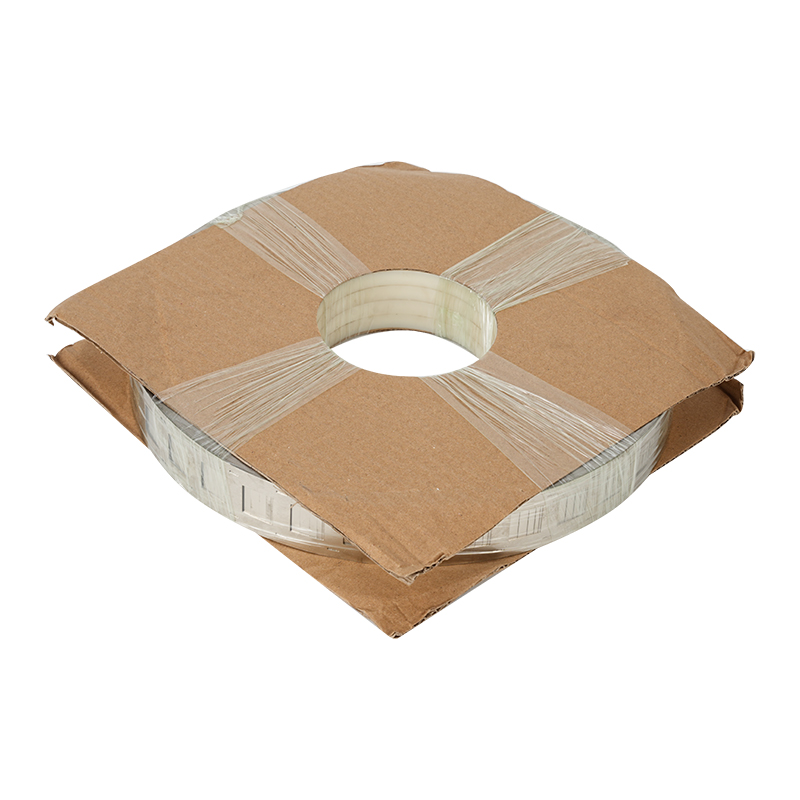
The 33410 Custom Wide and Thick Nickel Plated Steel Strip for Connecting Plates is a specialized conductive metal strip concept designed for applications that require a wider and thicker connection path than conventional battery Nickel Strips. It is particularly relevant to battery connecting plates, cell interconnection systems, power terminals, electrical contacts, conductive bridges, stamped battery components, and customized energy-storage assemblies.
Nickel plated steel combines a steel substrate with a nickel surface layer. This material structure provides a practical balance between mechanical strength, formability, corrosion resistance, surface durability, and electrical connection performance. Nickel plated steel is commonly used for battery connection components because it can be processed into strips, tabs, stamped connectors, and custom-shaped conductive parts. Industry products are available in both standard coil forms and custom-cut or stamped configurations.
The expression 33410 can be used as a product or model designation for a particular wide and thick nickel plated steel connecting-strip configuration. Because a model number by itself does not establish a universal material grade, thickness, width, plating thickness, current rating, or mechanical specification, those parameters should be confirmed against the actual engineering drawing or technical datasheet before production.
Unlike narrow nickel strips intended for relatively compact cell connections, a wide and thick nickel plated steel strip can be designed to provide a larger mechanical connection area, more robust stamped geometry, greater structural rigidity, and a larger conductive cross-section. This makes the concept useful when a battery connecting plate must combine electrical conduction with mechanical support.
This article presents an industry-oriented overview of custom wide and thick nickel plated steel strips for connecting plates. It focuses on material structure, manufacturing, dimensions, electrical considerations, mechanical properties, welding, stamping, battery applications, quality control, customization, storage, procurement, and engineering design.
1. Understanding the 33410 Product Concept
A product identified as 33410 Custom Wide and Thick Nickel Plated Steel Strip for Connecting Plates should be understood primarily as a customized conductive metal component rather than as a universal standard specification.
The product concept consists of three basic elements:
Steel substrate + nickel plating + customized strip geometry
The steel core provides mechanical support and structural strength. The nickel coating provides a conductive and corrosion-resistant surface that can be incorporated into battery connection systems and other electrical contact structures.
The wide and thick configuration is particularly important when the application requires a larger conductive area or greater mechanical stability than a conventional thin strip.
Possible applications include:
Battery connecting plates
Cylindrical cell interconnections
Prismatic battery modules
Energy-storage battery packs
Battery terminal connectors
Busbar auxiliary components
Electrical contact strips
Stamped conductive plates
Power-electronics interconnections
Custom battery tabs
BMS-related conductive components
Industrial battery assemblies
Nickel plated steel is commercially available in different thicknesses and widths. For example, published battery-component specifications include nickel plated steel gauges around 0.127 mm to 0.5 mm, with wider custom sizes also available.
For a genuinely wide and thick connecting plate, however, the final dimensions should be established according to the required current path, mechanical structure, welding process, cell configuration, and available manufacturing equipment.
2. What Is Nickel Plated Steel?
Nickel plated steel is a composite metallic material consisting of a steel base and a nickel coating.
The basic construction can be represented as:
Nickel layer / Steel substrate / Nickel layer
when both sides are plated.
The steel substrate supplies the majority of the structural strength. The nickel coating protects the steel surface and provides a suitable metallic interface for many connection applications.
Nickel plated steel is frequently selected when the designer needs a combination of:
Mechanical strength
Formability
Corrosion resistance
Surface durability
Weldability
Controlled cost
Custom stamping capability
Published battery-connection specifications show nickel plating on both sides of steel substrates, with examples around 2 μm per side, although plating thickness can vary according to application and supplier specification.
The plating should not be treated as a decorative finish. In a battery connecting component, the nickel layer can influence surface corrosion behavior, welding characteristics, solderability where applicable, and long-term contact integrity.
3. Why Use Nickel Plated Steel for Connecting Plates?
A connecting plate often needs to satisfy several requirements simultaneously.
It must conduct electricity, but it may also need to:
Maintain dimensional stability
Resist vibration
Survive stamping
Hold its shape
Support welding
Resist corrosion
Integrate with insulation
Fit within a compact enclosure
Maintain repeatable manufacturing tolerances
Pure nickel can provide excellent corrosion resistance and lower electrical resistance than nickel plated steel, but nickel plated steel can offer an economical alternative when the application does not require the electrical performance of a solid nickel conductor. Industry material suppliers specifically describe nickel plated steel as an economical alternative to pure nickel for many battery connections.
This makes nickel plated steel particularly attractive for customized connecting plates where mechanical geometry is as important as electrical conduction.
4. Wide and Thick Strip Design
The terms wide and thick should always be interpreted relative to the application.
A strip is not automatically suitable for high current simply because it is physically large.
The effective electrical performance depends on:
Material resistivity
Cross-sectional area
Strip length
Current
Temperature
Number of parallel paths
Weld resistance
Contact resistance
Cooling conditions
Increasing width increases the available conductive cross-sectional area.
Increasing thickness also increases cross-sectional area.
However, increasing thickness can affect forming and welding requirements.
A thick nickel plated steel strip may require greater forming force, different stamping tooling, modified welding parameters, or specialized cutting equipment.
Therefore, wide and thick designs should be engineered as a complete system.
5. Connecting Plate Versus Conventional Nickel Strip
A conventional battery nickel strip is often relatively narrow and thin.
It may be supplied in a roll and cut to the required length during battery assembly.
A connecting plate can be more complex.
It may include:
Multiple connection points
Stamped holes
Slots
Bends
Bridges
Reinforced sections
Terminal areas
Fuse sections
Mounting features
Integrated tabs
The 33410 concept is therefore more suitable for applications where a simple straight strip is insufficient.
A customized wide and thick strip can serve as the raw material for a finished connecting plate or can itself function as a conductive plate after cutting and forming.
6. Battery Pack Applications
Wide and thick nickel plated steel connecting components can be used in various battery configurations.
Potential applications include:
18650
21700
26650
32700
Other cylindrical formats
Published nickel plated steel battery materials are available for several cylindrical cell formats, including 18650, 21700, 26650, and 32650 configurations.
Wide conductive plates can be used where the battery architecture requires larger connection surfaces.
Connecting components may be used for:
Cell groups
Module connections
Internal bus structures
Auxiliary conductive links
High-power applications may require more substantial current paths and mechanically stable interconnections.
7. Electrical Function
The connecting plate forms part of the electrical path between cells or battery modules.
When current passes through the strip, electrical resistance causes voltage loss and heat generation.
Therefore, the design must consider the complete electrical path rather than only the strip material.
The total connection resistance can include:
Strip resistance
Weld resistance
Contact resistance
Terminal resistance
Connector resistance
Busbar resistance
A wide strip can help increase conductive cross-sectional area, but a long narrow section within the same stamped component can still become a significant resistance point.
This is especially important when a connecting plate contains necks, slots, cutouts, or fuse sections.
8. Electrical Resistivity
Nickel plated steel does not have the same electrical resistivity as pure nickel or copper.
The steel substrate contributes substantially to the overall electrical resistance of the strip.
For this reason, a nickel plated steel connecting plate should not be selected simply because its surface contains nickel.
When high-current performance is critical, the designer should compare:
Pure nickel
Nickel plated steel
Nickel plated copper
Copper
Copper alloy
Composite conductors
The appropriate choice depends on the current, geometry, welding requirements, cost, and thermal environment.
Industry battery-connector specifications distinguish pure nickel and nickel plated steel because their electrical properties are different.
9. Mechanical Strength
One of the major benefits of the steel substrate is mechanical strength.
A connecting plate may need to withstand:
Vibration
Shock
Assembly force
Thermal expansion
Repeated handling
Stamping
Bending
Transportation
The steel substrate provides a stronger mechanical foundation than a very thin soft metallic strip.
This can be particularly valuable when the connecting plate is also used as a structural element.
10. Formability
Although wide and thick steel strips are mechanically stronger, the material must still be selected according to forming requirements.
Possible manufacturing operations include:
Slitting
Cutting
Punching
Stamping
Bending
Embossing
Piercing
Progressive stamping
Laser cutting
The forming process should account for:
Material thickness
Yield strength
Tensile strength
Elongation
Tool radius
Bend angle
Grain direction
Plating behavior
Published nickel plated steel battery material specifications demonstrate that elongation and mechanical properties are important parameters for battery connection sheet applications.
11. Surface Nickel Layer
The nickel coating performs several important functions.
It can:
Protect the steel substrate
Improve corrosion resistance
Provide a stable metallic surface
Support welding
Improve surface durability
Reduce direct exposure of steel to the environment
Nickel plated steel battery materials are commonly supplied with plating on both sides. One published specification identifies approximately 2 μm nickel plating on both sides, while other products offer selectable plating thicknesses.
The exact nickel coating should be specified in the engineering document.
12. Nickel Plating Thickness
Nickel plating thickness can affect the final performance of the connecting plate.
A coating that is too thin may provide inadequate surface protection.
A coating that is unnecessarily thick can increase material cost and may alter processing behavior.
Published battery strip specifications show examples ranging from approximately 1 μm to several micrometers, with some manufacturers offering customized plating thicknesses.
For procurement, the following should be specified:
Nominal plating thickness
Minimum local thickness
Average plating thickness
One-side or two-side plating
Plating method
Surface finish
Adhesion requirement
13. Nickel Plating Uniformity
Uniform plating is especially important for wide strips.
A narrow strip may be easier to plate uniformly than a wide sheet with large surface areas.
The manufacturer should control:
Bath chemistry
Current distribution
Strip speed
Cleaning
Activation
Plating temperature
Rinsing
Drying
Nonuniform plating may lead to:
Different surface appearance
Variable corrosion resistance
Inconsistent welding
Local substrate exposure
Processing problems
For connecting plates, surface consistency should therefore be treated as a functional quality characteristic.
14. Corrosion Resistance
Nickel is commonly selected as a protective surface because of its corrosion resistance.
A nickel plated steel strip can resist corrosion better than uncoated steel under many ordinary conditions.
However, the performance depends on:
Plating integrity
Coating thickness
Surface defects
Cut edges
Environmental exposure
Humidity
Chemicals
Temperature
Nickel plated steel battery contacts are widely described as providing corrosion resistance and long-term contact integrity.
For severe environments, additional environmental testing should be performed.
15. Edge Protection
When nickel plated steel is cut, punched, or stamped, the edge exposes the underlying steel substrate.
This is an important difference between the broad surface and the finished edge.
Possible issues include:
Edge corrosion
Burrs
Sharp corners
Insulation damage
Stress concentration
For this reason, precision cutting and appropriate deburring can be important for finished connecting plates.
In some applications, the edge geometry may also be intentionally designed to improve electrical clearance.
16. Welding Performance
Nickel plated steel can be used in resistance welding and related battery connection processes.
However, welding parameters must be developed for the actual material construction.
The process depends on:
Steel substrate
Nickel coating
Thickness
Electrode material
Electrode pressure
Welding current
Pulse duration
Surface condition
Cell terminal material
Battery-connection materials are commonly designed for spot welding, and nickel plated steel is described in commercial specifications as suitable for spot-welded battery connections.
17. Welding Thick Connecting Plates
A thick connecting plate requires particular attention to welding energy.
Compared with thin strip, a thicker conductor may require:
Higher welding energy
Different pulse configuration
Different electrode geometry
Greater mechanical pressure
Controlled heat input
However, increasing welding energy without validation can increase the risk of:
Excessive heating
Surface damage
Cell damage
Electrode sticking
Coating damage
The correct welding window should therefore be established experimentally.
18. Wide Strip Welding
Wide connecting plates may have multiple welding locations.
For example, a plate can be designed with several connection zones distributed along its length.
This allows the designer to:
Spread current
Reduce localized current concentration
Improve mechanical retention
Connect multiple cells
Integrate several conductive paths
The welding layout should be designed together with the cell geometry.
19. Stamping Applications
Stamping is one of the most useful manufacturing processes for custom connecting plates.
A wide nickel plated steel coil can be processed into repeated shapes using dedicated tooling.
Possible features include:
Holes
Slots
Tabs
Bridges
Narrow fuse sections
Embossed areas
Bent terminals
Positioning features
Custom stamping can significantly reduce manual assembly when large quantities are produced.
Industry battery connector suppliers describe custom stamped and etched tags as methods for producing repeatable specialized battery connections.
20. Progressive Die Manufacturing
For high-volume applications, progressive stamping can combine multiple operations in a continuous process.
A progressive die may perform:
Feeding
Piercing
Cutting
Forming
Bending
Final separation
This approach can produce high volumes of identical connecting plates.
The initial tooling investment can be higher, but the per-piece manufacturing cost may become attractive at sufficient production volume.
21. Laser Cutting for Prototypes
Laser cutting is useful for prototype and low-volume custom connecting plates.
Advantages include:
No traditional stamping die
Fast design changes
Flexible geometry
Low tooling requirement
Suitable for prototypes
For production volumes, stamping may become more economical.
A common development approach is:
CAD design → laser prototype → welding validation → engineering approval → stamping production
22. Dimensional Customization
A major advantage of the 33410 custom wide and thick nickel plated steel strip concept is dimensional flexibility.
Possible custom parameters include:
Thickness
Width
Length
Hole diameter
Hole spacing
Bend angle
Tab width
Slot length
Corner radius
Overall shape
Commercial nickel plated steel battery materials are available in a range of thicknesses and widths, with customized sizes available for specific applications.
23. Thickness Selection
Thickness should be selected based on several factors.
Higher current may require a larger conductive cross-section.
A structural plate may need greater rigidity.
The welding system must be able to create reliable joints through the selected thickness.
Thicker materials require greater forming force and larger bend radii.
Increasing thickness increases material mass.
Therefore, the ideal thickness is a balance rather than simply the maximum available thickness.
24. Width Selection
Wide connecting plates are useful when the design requires:
Large current paths
Multiple cell connections
Larger welding areas
Integrated mounting points
Structural reinforcement
However, excessive width can cause:
Increased weight
Reduced packing efficiency
More difficult insulation
Larger material cost
Interference with adjacent components
The width should therefore be optimized around the complete battery module.
25. Custom Shapes
The connecting plate does not need to remain rectangular.
Possible shapes include:
H-shaped
U-shaped
L-shaped
Z-shaped
T-shaped
Forked
Stepped
Ring-shaped
Multi-branch
Multi-terminal
Custom geometry can allow a single component to replace several smaller conductive parts.
26. Integrated Connection Plate Design
An integrated connecting plate can reduce the number of individual components.
Instead of using:
Cell → small tab → wire → connector
a custom plate may provide:
Cell → connecting plate → terminal
This can reduce assembly steps.
It can also improve:
Position consistency
Mechanical stability
Production efficiency
Electrical-path repeatability
Custom battery tabs are increasingly used for specialized shapes and load requirements.
27. Applications in 18650 Battery Packs
For 18650 cells, a wide and thick connecting plate can be useful when the pack requires a more substantial interconnection than a standard narrow nickel strip.
Potential uses include:
Parallel-group connection
Series-group transition
Main current path
Reinforced battery connection
Custom busbar transition
BMS power connection
Battery terminal connection
The final design should account for cell spacing and the location of positive and negative terminals.
28. Applications in 21700 Battery Packs
21700 cells have a larger physical format than 18650 cells.
This can create opportunities for wider connecting components.
The same principles apply:
Current path optimization
Weld positioning
Mechanical stability
Insulation
Thermal management
Commercial nickel plated steel battery connection materials are also marketed for 21700 and other cylindrical formats.
29. Applications in Energy Storage
Energy-storage systems may contain numerous cells connected into modules.
Connecting plates can help establish:
Parallel groups
Series groups
Module-level connections
Auxiliary power paths
BMS interfaces
For stationary storage, the design may prioritize long-term connection stability, thermal behavior, corrosion resistance, and maintainability.
30. Applications in Power Battery Systems
Power battery systems generally place greater demands on:
Current capacity
Mechanical strength
Vibration resistance
Thermal management
Connection reliability
A wide and thick connecting plate can be considered when a standard thin strip is insufficient.
However, the material should be evaluated against alternative copper and aluminum busbar technologies when current requirements become very high.
31. Battery Module Interconnection
Within a battery module, the connecting plate can act as an intermediate conductor between cells and larger bus structures.
This can create a transition:
Cell terminal → nickel plated steel connection → module busbar
The transition should minimize unnecessary resistance and avoid excessive heat concentration.
32. BMS Integration
Battery management systems require voltage and temperature information from individual cell groups.
Custom connecting plates can incorporate additional tabs for:
Voltage sensing
Balance leads
BMS connections
Auxiliary signal paths
This can reduce the need for loose wires.
However, power-current paths and low-current sensing paths should be designed separately to avoid inappropriate current through sensing conductors.
33. Mechanical Stability
A battery connecting plate can experience repeated movement during:
Vehicle operation
Portable equipment use
Transportation
Thermal expansion
Assembly
The steel substrate helps provide mechanical rigidity.
However, excessive rigidity can also transfer stress to weld points.
The ideal design therefore balances:
strength + flexibility + weld integrity
34. Vibration Resistance
Battery packs used in mobility applications can experience vibration over long operating periods.
A custom connecting plate should be designed to minimize:
Excessive cantilever length
Sharp stress concentrations
Weld-edge stress
Uncontrolled movement
Rounded corners and carefully designed bends can reduce stress concentrations.
35. Thermal Expansion
Steel and nickel have different thermal expansion behavior.
A plated steel strip therefore behaves as a layered material during temperature cycling.
Repeated heating and cooling can create stresses within:
Steel substrate
Nickel coating
Weld interface
Formed sections
Material compatibility and coating adhesion should therefore be considered for applications involving large temperature swings.
36. Temperature Considerations
The allowable operating temperature of a connecting plate depends on:
Steel substrate
Nickel coating
Battery cell
Welding structure
Insulation
Adhesives
Housing
Environmental conditions
A connecting plate should never be assigned an operating temperature based solely on the melting point of nickel.
The entire battery system has a lower practical temperature limit.
37. Insulation Design
A wide conductive plate occupies more surface area than a narrow strip.
This makes insulation especially important.
Potential Insulation Materials include:
PET film
Polyimide film
Fish paper
PVC
Polycarbonate
Flame-retardant polymer sheets
The insulation system should maintain:
Electrical clearance
Mechanical protection
Temperature resistance
Long-term adhesion where adhesive materials are used
38. Clearance and Creepage
A wide connecting plate can reduce the available space between conductive components.
Designers should consider:
Clearance distance
Creepage distance
Cell-to-cell spacing
Housing clearance
Insulation thickness
These requirements should be established according to the voltage and applicable safety standards of the finished battery system.
39. Burr Control
Burrs can be particularly problematic in battery assemblies.
A sharp burr can:
Damage insulation
Cut protective film
Create a short-circuit path
Interfere with cell positioning
Cause handling injuries
Precision stamping and deburring should therefore be considered part of connecting-plate quality control.
40. Flatness
Wide and thick strips should maintain appropriate flatness.
Excessive curvature may cause:
Poor cell contact
Uneven welding pressure
Assembly interference
Increased mechanical stress
Poor alignment
Flatness should be specified when the connecting plate is required to sit directly against a battery module surface.
41. Dimensional Tolerance
Dimensional tolerances depend on the manufacturing process.
Published nickel plated steel battery strip specifications provide examples of tight thickness and width tolerances, while custom battery-tab suppliers also offer tighter tolerances for precision stamping and laser-cut components.
For a custom 33410 design, tolerances should be defined for:
Overall length
Overall width
Thickness
Hole diameter
Hole position
Bend angle
Forming height
Slot width
42. Material Grade
The steel substrate should be clearly specified.
Possible low-carbon cold-rolled steel grades can include equivalents such as:
SPCC
DC01
Similar cold-rolled grades
One published battery connection strip specification identifies SPCC, DC01, and SAE equivalents for a nickel plated steel product.
The exact grade should be confirmed according to the required forming and mechanical properties.
43. Surface Finish
Possible surface finishes include:
Bright nickel
Matte nickel
Controlled plating
Degreased surface
Anti-oxidation treatment
Surface appearance should be consistent with the application.
A decorative appearance is not necessarily an indication of better electrical or mechanical performance.
44. Cleaning Requirements
Before welding or assembly, the connecting plate surface should be free from:
Oil
Dust
Grease
Fingerprints
Foreign particles
Excessive oxidation
Contamination can interfere with welding and electrical contact.
For automated production, the incoming material should have controlled surface cleanliness.
45. Weldability Testing
Before mass production, the actual connecting plate should undergo weld validation.
Typical evaluation may include:
Welding-current sweep
Pulse-duration optimization
Electrode-pressure optimization
Weld-strength testing
Cross-section inspection
Electrical resistance testing
Thermal observation
This is especially important for thick materials because welding energy requirements can differ substantially from thin battery strip.
46. Peel and Pull Testing
Mechanical weld tests can help determine whether the connection is adequately formed.
Depending on the joint geometry, tests may include:
Peel testing
Pull testing
Shear testing
Tensile testing
The acceptance criteria should be defined according to the battery application.
47. Electrical Resistance Testing
Low-resistance measurement can identify:
Poor welds
Contaminated surfaces
High-resistance joints
Inconsistent connection paths
Four-wire resistance measurement can be useful when the expected resistance is very low.
The measurement method should be standardized across production.
48. Cross-Section Analysis
Destructive cross-section analysis can provide information about the welding interface.
It may reveal:
Weld nugget formation
Penetration
Coating behavior
Interface defects
Excessive heat damage
This type of inspection is particularly useful during initial process development.
49. Plating Adhesion
The nickel coating should remain attached to the steel substrate during:
Slitting
Stamping
Bending
Welding
Thermal cycling
Poor adhesion can cause:
Flaking
Peeling
Local steel exposure
Surface contamination
Plating adhesion should therefore be included in quality validation for custom components.
50. Quality Control of Wide Strips
Wide material requires consistent control across the entire coil width.
Potential variation includes:
Plating thickness
Thickness
Flatness
Surface condition
Mechanical properties
Inspection should sample different positions across the strip width where appropriate.
51. Coil Supply
Wide nickel plated steel strips can be supplied in coil form.
Coil supply is advantageous for:
Continuous stamping
High-volume production
Automated feeding
Reduced manual cutting
Consistent material handling
The coil should be wound with sufficient control to prevent telescoping, edge damage, or deformation.
52. Cut-to-Length Supply
For smaller production runs, material can be supplied as cut lengths.
Advantages include:
Easier manual assembly
Reduced production equipment
Simple inventory management
Direct use in prototypes
The cut length should be controlled according to the connecting-plate design.
53. Pre-Stamped Supply
For mass production, pre-stamped components can reduce assembly time.
The supplier may provide:
Finished plates
Stamped tabs
Multi-cell connectors
Custom Brackets
BMS connection tabs
This approach can simplify battery-pack assembly.
54. Prototype Development
A custom 33410 connecting plate should ideally begin with prototype samples.
The development process can include:
Battery architecture definition
CAD drawing
Material selection
Prototype cutting
Welding validation
Electrical testing
Thermal testing
Mechanical testing
Insulation validation
Production tooling
This reduces the risk of investing in production tooling before the geometry is validated.
55. CAD Drawing Requirements
A professional drawing should specify:
Material
Thickness
Width
Length
Plating
Tolerances
Holes
Slots
Bend dimensions
Surface treatment
Weld areas
The drawing should clearly distinguish critical dimensions from general dimensions.
56. Manufacturing Process
A typical nickel plated steel connecting-plate production route may include:
Steel preparation → cleaning → nickel plating → rolling or leveling → slitting → cutting or stamping → forming → inspection → packaging
The exact sequence depends on whether the nickel plating is performed before or after certain forming operations.
The manufacturing route should be selected to preserve coating integrity and dimensional accuracy.
57. Slitting
Slitting converts a wider coil into narrower strips.
Important parameters include:
Slitter blade condition
Blade clearance
Strip tension
Width tolerance
Edge burr
Coil alignment
For wide and thick material, slitting force is higher than for thin strip.
58. Stamping
Stamping provides high-speed production of complex shapes.
The tooling should account for:
Material thickness
Steel hardness
Nickel coating
Punch clearance
Die clearance
Burr direction
Forming radius
Tool wear can influence dimensional consistency.
59. Bending
A wide and thick strip may require controlled bending.
Important factors include:
Bend radius
Springback
Material hardness
Grain direction
Coating adhesion
Springback should be included in tooling design.
60. Custom Connection Plate Geometry
A custom connecting plate can be engineered around the exact battery layout.
For example, the plate may contain:
Multiple cell connection zones
A central current path
Side mounting tabs
BMS sampling terminals
Insulation cutouts
Fuse sections
This can create a highly integrated battery interconnection structure.
61. Cost Considerations
The cost of a custom nickel plated steel strip depends on:
Steel grade
Nickel content
Plating thickness
Strip thickness
Strip width
Coil weight
Processing
Tooling
Stamping complexity
Tolerances
Packaging
Order quantity
A wider and thicker strip consumes more metal, while custom stamping adds tooling and processing costs.
For high-volume production, however, a customized connecting plate can reduce assembly labor and component count.
62. Material Utilization
Wide plates may generate more scrap if the stamping layout is inefficient.
Nesting design can improve material utilization.
Engineers should optimize:
Part spacing
Strip direction
Hole layout
Scrap bridges
Progressive die layout
Better material utilization can reduce total manufacturing cost.
63. Packaging
Finished nickel plated steel connecting plates should be protected against:
Moisture
Dust
Scratches
Bending
Surface contamination
Packaging options may include:
Protective bags
Paper separators
Plastic trays
Coil packaging
Anti-corrosion packaging
Custom cartons
The packaging method should correspond to the surface requirements.
64. Storage
Recommended storage conditions generally include:
Dry environment
Controlled humidity
Clean surroundings
Protection from corrosive chemicals
Avoidance of mechanical deformation
Long-term storage should follow the material supplier's recommendations.
65. Environmental Considerations
Nickel plated steel can be used in applications where long-term surface durability is required.
Environmental factors to evaluate include:
Humidity
Temperature
Salt exposure
Chemical exposure
Condensation
Dust
Battery packs intended for outdoor or mobile applications should undergo environmental validation.
66. RoHS and REACH Considerations
For products entering international electronics and battery supply chains, material compliance can be important.
Depending on the target market and application, purchasers may request:
RoHS declarations
REACH declarations
Material composition
Nickel-plating information
Restricted-substance documentation
The exact compliance requirements should be confirmed according to the destination market and final product.
67. Advantages of Custom Wide and Thick Nickel Plated Steel Strip
The main potential advantages include:
The strip can be manufactured according to a specific battery architecture.
The steel substrate provides structural support.
Nickel plating protects exposed steel surfaces under appropriate conditions.
The material can be slit, cut, stamped, punched, and formed.
Wide designs can provide larger electrical and mechanical connection regions.
Stamped plates can provide consistent dimensions in mass production.
Nickel plated steel can offer an economical alternative to solid nickel in suitable applications.
68. Limitations
The material also has limitations.
For very high-current applications, copper may provide superior electrical performance.
Nickel plated steel and pure nickel should not be substituted without validation.
Surface performance depends on plating quality.
Cutting can expose the steel substrate.
Thick material may require higher welding energy.
Steel is heavier than some alternative conductive materials.
69. Comparison With Pure Nickel
Pure nickel provides:
Higher nickel content
Excellent corrosion resistance
Lower electrical resistance than nickel plated steel
Good battery welding characteristics
Nickel plated steel provides:
Steel mechanical strength
Nickel surface protection
Lower material cost in many applications
Good forming capability
Suitable battery connection performance
Industry specifications identify pure nickel and nickel plated steel as separate battery connector material options.
70. Comparison With Copper
Copper provides much higher electrical conductivity than steel-based conductors.
However, copper can present different welding and corrosion-interface challenges.
Nickel plated steel may be preferred when:
Moderate current is sufficient
Mechanical strength is important
Spot welding is required
Cost needs to be controlled
A nickel surface is desirable
Copper may be preferred when:
Current density is very high
Low resistance is critical
Thermal conductivity is important
The correct material depends on the complete system.
71. Connection Plate for High-Current Applications
For high-current battery packs, a wide and thick connecting plate can provide a larger cross-sectional area.
Nevertheless, current capacity should be validated experimentally.
The designer should evaluate:
Continuous current
Peak current
Pulse current
Temperature rise
Voltage drop
Weld resistance
Insulation temperature
Cell temperature
A connecting plate should never be assigned a current rating based only on its dimensions.
72. Thermal Testing
Thermal testing can include:
Continuous-current testing
Peak-current testing
Thermal imaging
Thermocouple measurement
Ambient-temperature variation
The objective is to determine whether the connecting plate remains within the allowable temperature range during normal operation.
73. Reliability Testing
A custom connecting plate may undergo:
Vibration testing
Shock testing
Thermal cycling
Humidity testing
Salt exposure
Corrosion testing
Welding endurance testing
The exact tests depend on the final battery application.
74. Failure Modes
Potential failure modes include:
Can lead to voltage loss and heat generation.
Can interrupt the current path.
Can expose the steel substrate.
Can reduce long-term connection reliability.
Can occur under repeated vibration.
Can create short-circuit risks.
Engineering validation should address the relevant failure modes before mass production.
75. Design for Manufacturing
Designing the connecting plate for manufacturability can reduce cost and improve reliability.
Good design practices include:
Avoiding unnecessary sharp corners
Maintaining practical bend radii
Using consistent material thickness
Minimizing unnecessary features
Designing weld zones clearly
Allowing tooling access
Maintaining reasonable tolerances
76. Design for Assembly
The connecting plate should also be easy to assemble.
Features may include:
Positioning holes
Alignment tabs
Reference edges
Preformed bends
Multiple integrated connection points
These features can reduce operator error and improve automated assembly.
77. Automation Compatibility
A custom connecting plate can be designed for:
Pick-and-place systems
Robotic welding
Automatic stamping
Vision inspection
Automated electrical testing
For automation, part-to-part dimensional consistency becomes especially important.
78. Vision Inspection
Machine vision can inspect:
Overall geometry
Hole location
Burrs
Surface defects
Plating discoloration
Stamping deformation
This can improve production consistency in high-volume battery manufacturing.
79. Traceability
Production traceability may include:
Material lot
Plating batch
Coil number
Stamping batch
Inspection batch
Packaging date
Traceability helps manufacturers investigate quality issues.
80. Procurement Questions
Before purchasing a custom wide and thick nickel plated steel strip, buyers should confirm:
What is the steel grade?
What is the nickel plating thickness?
Is plating applied to one side or both sides?
What is the finished thickness?
What is the finished width?
What are the dimensional tolerances?
What is the recommended welding process?
Can the material be stamped?
What is the minimum bend radius?
What surface finish is available?
What inspection documents are supplied?
Can samples be produced before mass production?
81. Recommended Specification Structure
A professional product specification for the 33410 concept can contain the following information:
Product Name: 33410 Custom Wide and Thick Nickel Plated Steel Strip for Connecting Plates
Material: Nickel Plated Steel
Steel Grade: Application-specific cold-rolled steel
Nickel Plating: One-side or two-side according to design
Thickness: Customized
Width: Customized
Length: Coil or cut-to-length
Surface: Bright or matte nickel finish according to application
Processing: Slitting, cutting, punching, stamping, bending
Application: Battery connecting plates, cell interconnections, energy storage, power battery modules
Welding: Resistance spot welding subject to process validation
Inspection: Dimensional, surface, plating, mechanical and welding inspection
Packaging: Coil or customized finished-part packaging
This structure can be adapted for a product page, technical catalogue, industrial directory, or procurement specification.
82. Why Customization Matters
Battery systems are becoming increasingly diverse.
Different manufacturers may use different:
Cell spacing
Cell counts
Module dimensions
Current levels
BMS structures
Cooling arrangements
Housing designs
A universal strip cannot always provide the optimal solution.
Custom connecting plates allow the conductive component to follow the physical and electrical architecture of the battery.
83. Custom Wide Strip for Cell Groups
A wide strip can connect multiple cells in a parallel group.
The design should ensure that current distribution remains balanced.
Uneven current paths can cause certain cells or connection points to carry more current than others.
The connecting plate geometry can therefore influence pack electrical behavior.
84. Custom Thick Strip for Structural Applications
When a connecting plate also needs to provide structural support, greater thickness may be beneficial.
Examples include:
Fixed module terminals
Reinforced battery tabs
Housing-mounted connectors
Heavy-duty internal conductive plates
The mechanical load should nevertheless be separated from sensitive cell terminals whenever possible.
85. Combining Electrical and Mechanical Functions
One major reason to use a customized connecting plate is to combine functions.
A single component can potentially provide:
Electrical conduction
Cell connection
Mechanical positioning
Mounting
BMS tab
Fuse section
Assembly reference
This can reduce the total number of parts.
86. Battery Safety Considerations
The connecting plate should be designed as part of a complete safety system.
Important factors include:
Correct polarity
Adequate insulation
Proper welding
Current protection
BMS integration
Thermal management
Mechanical protection
A conductive plate should never create unintended electrical contact with the battery housing or neighboring terminals.
87. Importance of Proper Insulation
The larger surface area of a wide connecting plate can increase the potential for accidental contact.
Insulation should therefore cover or isolate appropriate portions of the plate.
Potential methods include:
Insulation film
Insulation paper
Adhesive insulation tape
Molded polymer barriers
Protective covers
The insulation method should be compatible with the temperature and mechanical environment.
88. Surface Treatment and Welding
The relationship between nickel plating and welding must be evaluated.
A surface that looks visually perfect may still require process optimization.
Welding validation should determine:
Welding current
Pulse time
Electrode pressure
Weld spacing
Electrode tip geometry
The production process should be monitored to maintain a stable welding window.
89. Long-Term Reliability
Long-term battery reliability depends on the stability of every connection.
A properly designed connecting plate should maintain:
Electrical continuity
Mechanical integrity
Corrosion resistance
Insulation compatibility
throughout the intended service life.
90. Conclusion
The 33410 Custom Wide and Thick Nickel Plated Steel Strip for Connecting Plates represents a flexible material concept for battery and electrical interconnection applications where conventional narrow nickel strips may not provide sufficient geometry, mechanical strength, or connection area.
Its fundamental structure combines a steel substrate with a nickel surface layer. The steel provides structural support, while nickel provides a corrosion-resistant conductive surface suitable for many battery connection processes. Nickel plated steel is already used commercially for battery tabs, contacts, and connection sheets, with both standard and custom dimensions available.
For a custom product such as 33410, the most important point is that the model number should not be treated as a substitute for a technical specification. The final design should define the steel grade, thickness, width, nickel-plating thickness, tolerance, surface finish, processing method, welding requirements, and intended application.
A wide and thick configuration can be particularly valuable for customized connecting plates because it allows the designer to combine current conduction, mechanical strength, stamping geometry, and battery-module integration within one component.
For low- to medium-current battery systems, nickel plated steel can provide a cost-effective alternative to pure nickel. For demanding high-current systems, however, the designer should compare it with pure nickel, copper, nickel plated copper, and other conductive materials.
The most reliable approach is to validate the complete system through dimensional inspection, weld testing, electrical resistance testing, thermal testing, mechanical testing, and environmental validation
This website uses cookies to ensure you get the best experience on our website.



 Phone
Phone